A Probe & Ponder Newsletter…March Issue
Exploring books, learning, travel, life experiences & adventure with author, Roberta E Sawatzky
Welcome to Issue #4 of my newsletter!
If you’re someone who’s curious, courageous, and eager to grow through fresh ideas, practical writing tips, thoughtful prompts, and real-life reflections, you’re in the right place. Here, I share my ponderings and discoveries with a community of readers and writers who’ve connected with me through my books—and who love exploring how writing shapes the way we learn, create, and experience life. Let’s dive in together.
To learn how/where to order my books, click here.
This season has changed the way my attention works.
Grief has a way of narrowing the field, of quieting what once felt urgent, of asking different questions altogether. I haven’t stopped writing—but the writing has slowed, deepened, and turned inward in ways I didn’t anticipate. (summarized from various readings)
What am I up to?
There are seasons when writing feels like movement, with pages accumulating, ideas connecting, momentum building.
And then there are seasons like this one. I’ve been asked, gently and often, how the writing is going. I understand the question. I’ve asked it of others myself. But the answer doesn’t land easily these days, because it isn’t really about productivity or progress.
It’s about presence.
This season has changed the way my attention works. Grief has a way of narrowing the field, of quieting what once felt urgent, of asking different questions altogether. I haven’t stopped writing—but the writing has slowed, deepened, and turned inward in ways I didn’t anticipate. For a while, I told myself I was stuck.
Now I see something else. A familiar space, entered again.
When I look back on my two books, I see a thread that has been weaving quietly for years.
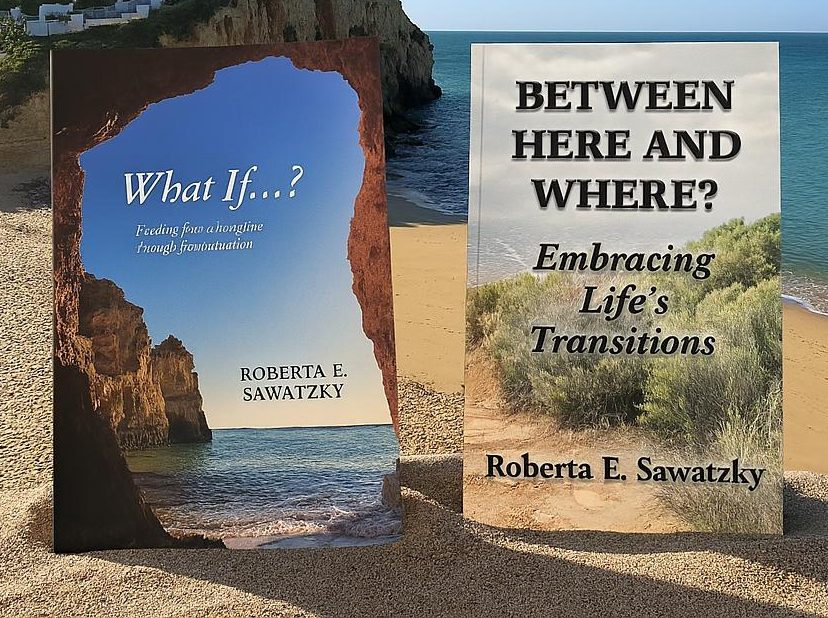
What If…? was born in a season of uncertainty…traveling with obstacles, living alongside illness, choosing curiosity when circumstances refused to cooperate. That book asked a brave, outward‑facing question: What if we go anyway?
Between Here and Where came from a different place. It lingered in the space of transition, change that is forced or chosen, the loneliness of thresholds, the grief that accompanies becoming someone new. It wasn’t about answers so much as about staying present in the in‑between.
What I’m living now is not separate from that work. It is its continuation.
The difference is that this time, the transition has taken my husband with it.
This season doesn’t respond well to pressure. The kind of writing it allows is not linear or ambitious. It arrives in fragments, in memories, sensations, and half‑formed sentences that don’t yet know where they belong.
Some days, writing looks like a single paragraph. Some days, it’s a page I don’t keep. Some days, it’s simply sitting long enough for something true to surface. From the outside, this can look like avoidance. Like a lack of motivation. Like a creative block that needs fixing.
From the inside, it feels like listening.
I used to believe deep writing meant digging harder, about producing more, pushing through resistance. Now I’m learning that deep writing sometimes means staying exactly where you are, without rushing the process, trusting that silence is not empty but active.
The Work of the In‑Between
In my second book, I wrote about the ‘between’, that space where clarity is suspended and identity is quietly reshaped. I described it as painful, lonely, often joyful, and yet necessary.
I didn’t know then how fully I would come to inhabit that definition again. You see, grief rearranges attention. It changes what matters, how time feels, and what the body can hold. The work of this season is not to arrive somewhere quickly, but to remain honest while something new takes shape.
I think that honesty matters more to me now than momentum.
If you’re reading this and finding yourself in a similar place—unmotivated, unfocused, unsure what happened to the version of you who once thought and created with a certain degree of ease, here’s what I’m reminding myself:
I’m not behind. I’m not broken. I’m not failing my work.
Some seasons are meant for asking What if? Some are meant for waiting between here and where. And some seasons ask us simply to be present, to listen, to trust that what feels quiet now is still part of the story.
Books & Podcasts
Podcast:
Are you concerned about the use of AI in your writing? What’s the difference between AI assist and AI generated? I found this podcast episode to be quite helpful in understanding the proper role of AI in our writing. The Podcast is “Fiction Writing made easy”, and the episode I am referring to is #236, entitled “The truth about AI and creative writing”. Listen along as host Savannah Gilbo interviews Ana Del Valle, award-winning novelist, technologist, and founder of the AI Creative Writing Academy.
Here are some valuable thoughts from the interview:
“AI Generation is when you’re essentially asking AI to write the book for you. You hand it an idea, it drafts scenes and chapters, and before long, ChatGPT is doing all the heavy lifting while you’re just reviewing and tweaking.”
“AI Assist is something completely different.” Ana describes it as “using AI throughout the entire life cycle of writing your novel, but you are always the one in the driver’s seat. You might use it to brainstorm subplots, test your story’s structure, explore character motivations, or use it as a kind of developmental editor that gives you feedback. The AI is never writing the story. You are.”
Books:
I’m still making my way through “Living the Artist’s Way: An Intuitive Path to Greater Creativity”. The book focuses on what author Julia Cameron calls the ‘fourth essential tool of writing’. If you have read any of her books, you’ll know those tools are: morning pages, artist dates, walks, and the 4th, writing for guidance. As with her former books, Cameron lays out Living the Artist’s Way like a six-week course, each week having an action step. My approach to the book is to read it through, then go back and practice the weekly lessons. I like knowing where I’m heading with a book like this. In the next newsletter I should have read the book, and if so inspired, have started the suggested exercises. Stay tuned.
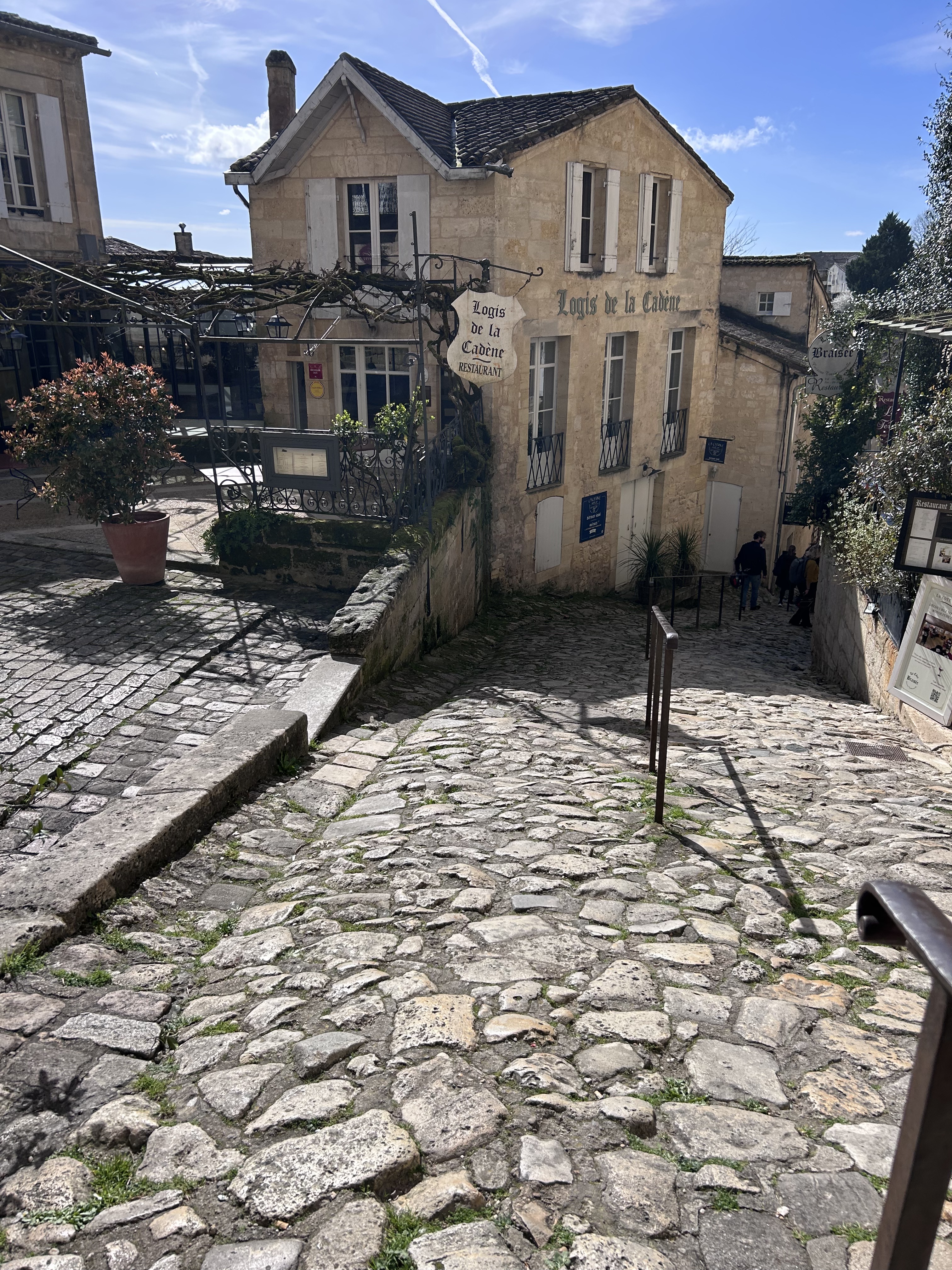
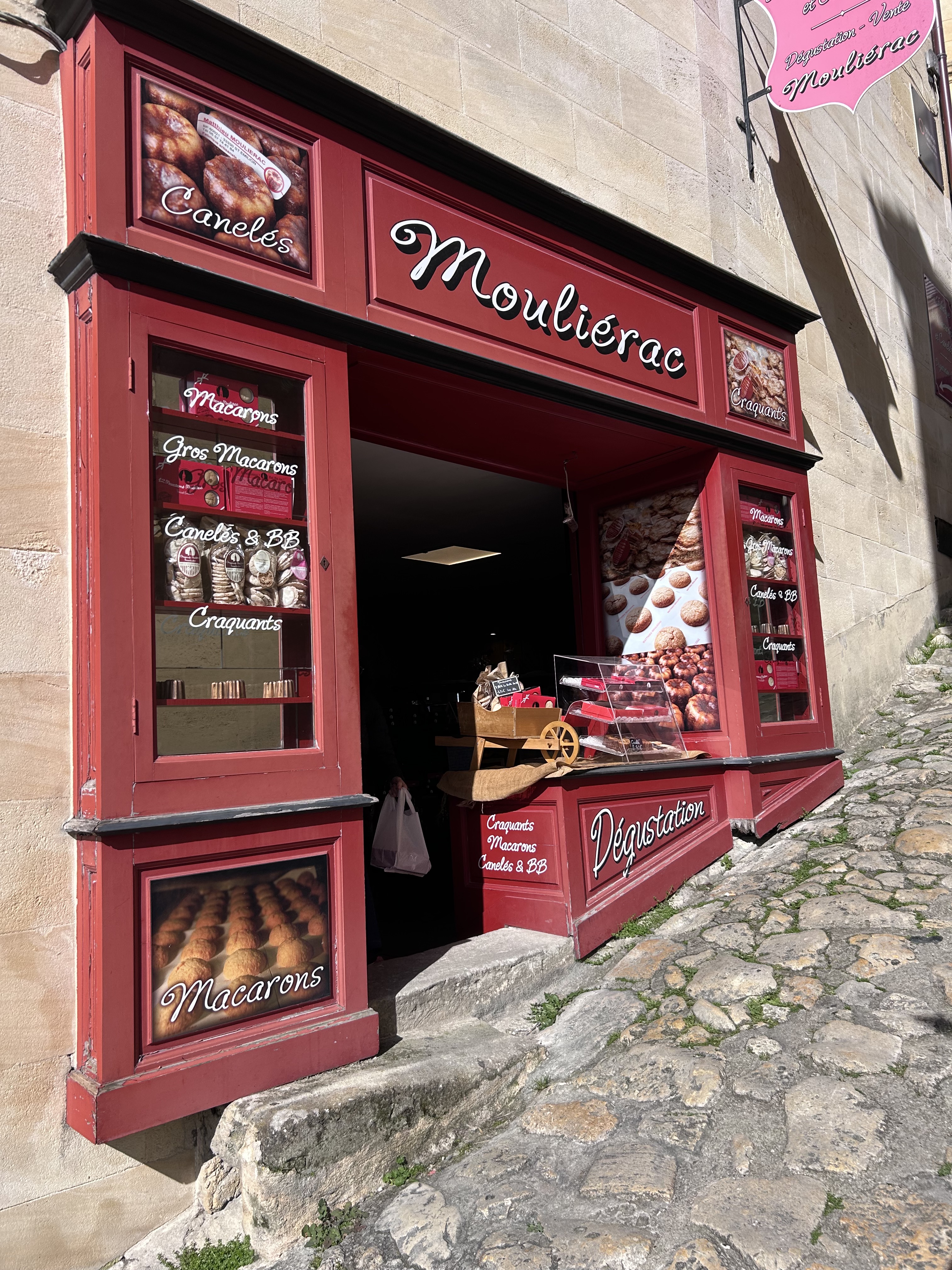
St. Emillion in France…a recent visit while presenting at an International Business Week. One feels inspired just walking the streets while being drawn into it’s history. (This is the village where the macaron originated.)
Tips for giving yourself a break…
Shift Your Perspective on “Productivity”: In my previous blog, I mentioned Karen Wyatt’s insight about writing as a tool for dealing with change. When you’re grieving or stuck, your “logic brain” often takes over, trying to force a result.
The Fix: Stop trying to write the next book for a moment. Instead, use your daily journaling to “witness your own grief” or lack of motivation without judging it. As Julia Cameron suggests in The Right to Write, view writing as a conversation, not a performance.
Lower the Stakes: The pressure of the “first word on the page” for a new book can be paralyzing, especially since if your previous writings came with clarity.
The Fix: Try the “Question Method” referred to in my previous blog. End every writing session (be it a chapter, paragraph or journal) with a single question for tomorrow. This bypasses the “blank page syndrome” because you aren’t starting a book; you’re just answering a question.
Change Your Sensory Environment: Sometimes the “stuck” feeling is physical.
The Fix: If your usual writing spot feels heavy, move. Go to a library, a park, or even just a different chair. For me, I enjoy going to a local cafe where the people ‘buzz’ gently seeps through my ear buds and creates a soothing environment.
Lean into the “Waves”: My most realistic saying… “Grief is like the ocean; it comes in waves.” Creativity is exactly the same.
The Fix: Accept that this is an “ebb” tide. Instead of fighting the low motivation, use this time for “Creative Refilling.”
Writing Prompts (pictures from travels):
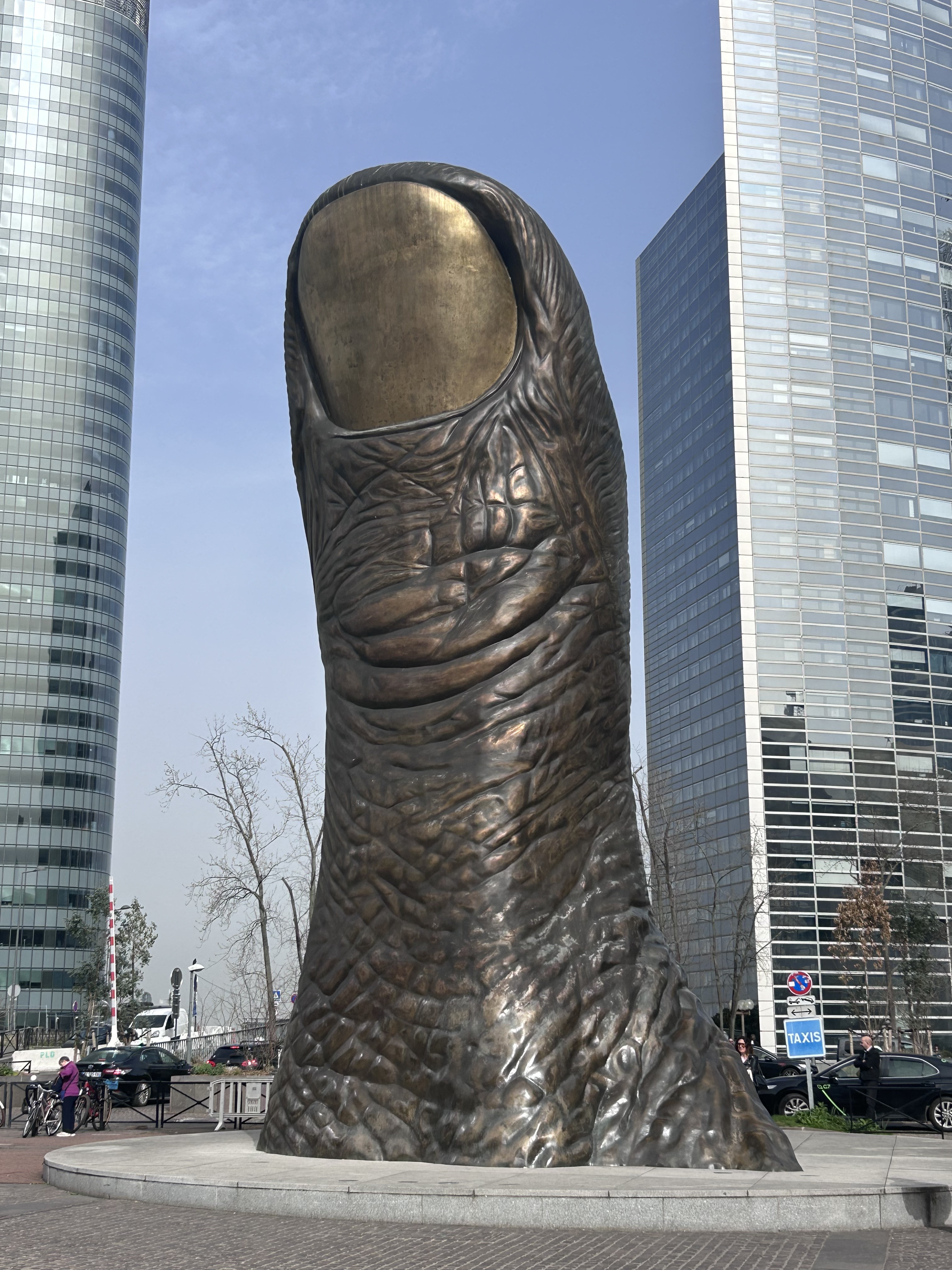
How might a statue (Le Pouch, in Paris), a broken suitcase, or a plate of deliciousness help you express how you feel?


“And slowly, I understood—
even if grief someday grows quieter,
the love behind it will never leave.
Because you are still gone,
and part of me will always miss you.
But sitting with grief?
It’s how I honor what was real. –
My books: For ordering and book information visit my website.
 Probe and Ponder…learning from life & travels with Roberta Sawatzky