Category: Working remotely

Coffee shops with purpose…

Lot Sixty One

In a previous blog I promised to talk about the many specialty cafés we visited while on our remote research trip…and I do mean places to drink a great cup of coffee! 

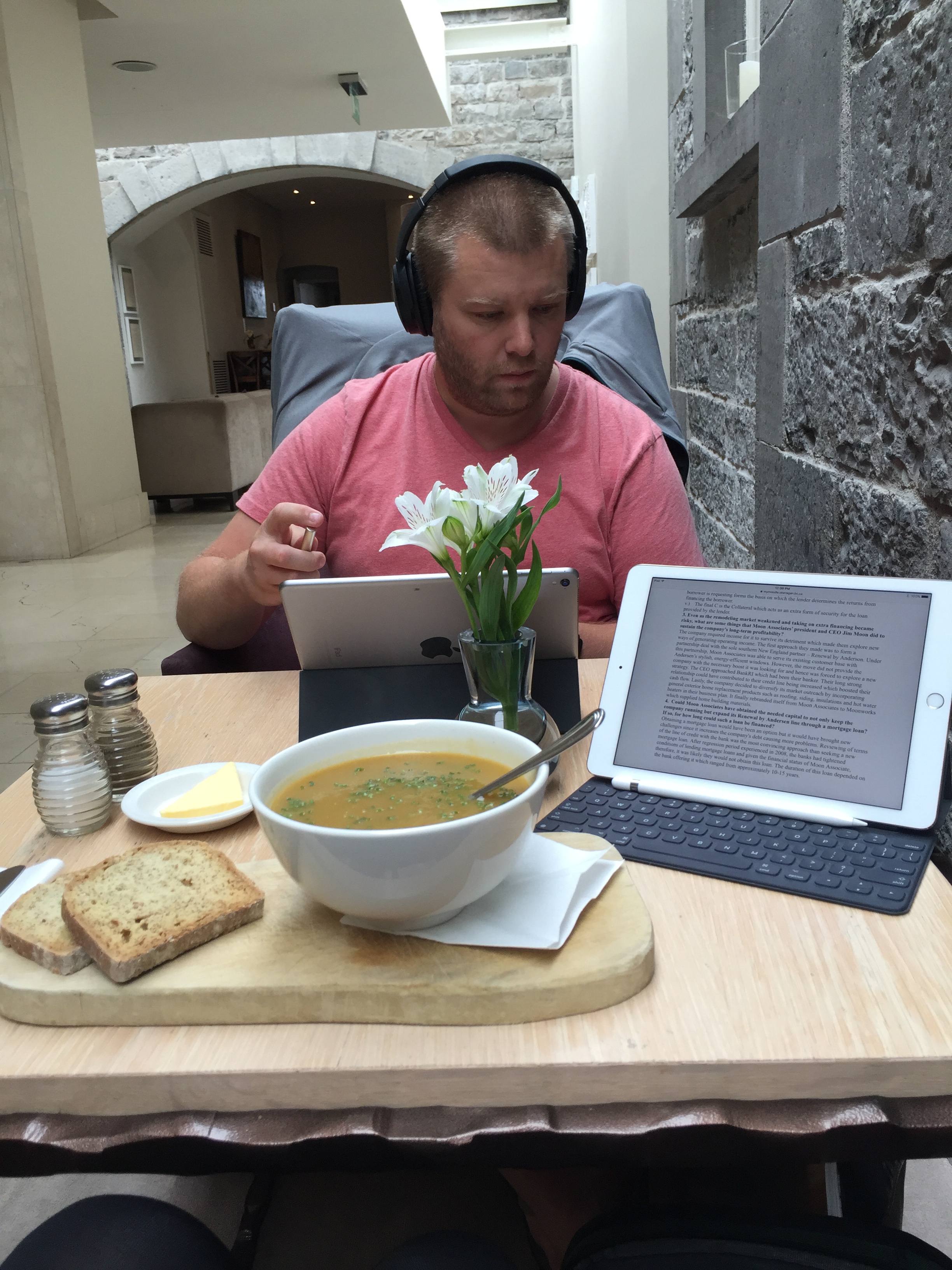
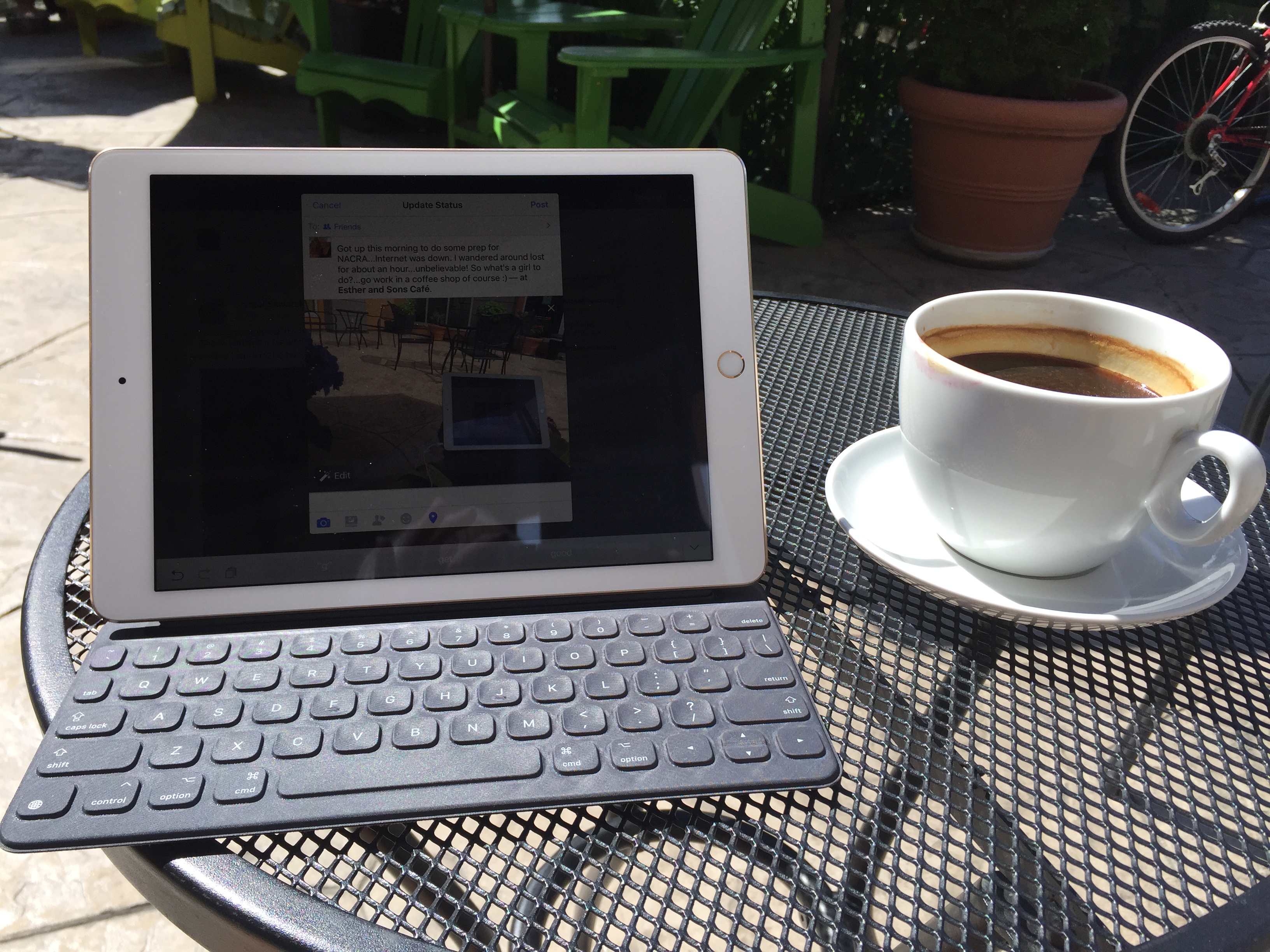
Coffee shops such as Lot Sixty One play an important role in the life of a remote worker…possibly more than originally imagined. For example, while writing this blog I am sitting at one of my favourite coffee shop in Kelowna…my friends and family refer to it as my ‘other office’. In fact, this would be my 3rd space…I have an office at the college, a lovely one at home, yet still I feel the need to come to Esther and Sons Cafe to create and write. (Never underestimate the contribution of caffeine to creativity!) 

I previously talked about the importance of space as it relates to where we work and connect. When researching remote workers, we set up appointments to meet with such individuals in cowork spaces…and we were awarded with some wonderful, insightful, conversations. Reflecting back on those visits, we noticed some things…to be clear, these are simply observations, but we think they warrant further inquiry.

  • The majority of people we met working in co-work spaces seem relatively fixed to that space.
  • Many users are either small businesses, or stationed at a location distant from the organization they work for.
  • The gender demographic appears to be a higher representation of male vs female.
  • The age demographic appeared to be slanted toward a younger generation (younger than boomers).
  • These shared spaces are not frequented as often by ‘traveling’ remote workers (those who frequently travel globally, but do have a home base).
Father Carpenters

So this is where the coffee shop space comes in.  We know there are various forms of remote working…no surprise there. If it is true that a challenge for remote workers is loneliness and isolation (and this certainly was verified through our interviews), and if our observations are accurate, then where do these ‘traveling’ remote workers go to feel some sense of belonging? Enter the coffee shop.

As mentioned in previous blogs, my son Nathan is collaborating with me as I look at remote work. In his travels he often uses coffee shops to work out of…some of which we visited on our recent trip. The cool thing was that as soon as they saw Nathan, he was warmly welcomed and immediately drawn into a ‘catch up’ conversation. Places like Five Elephant Coffee in Berlin,  Lucifer’s Specialty Coffee in Eindhoven, or Kaafi in The Hague.
It’s important to note that he had not been to these specific locations for months! Yet the commitment of the staff and owners was to create a space that didn’t just serve amazing coffee (
and they did), but a space were the customers could feel a sense of belonging.

Another coffee shop we enjoyed was House of Tribes in The Hague. The space was intentionally designed by Jerome Vester of Ninety Nine Architects for people to come and work while enjoying a good brew. We had a choice of a ‘living room’ type space, individual seating, and even a long table that could be booked for 1 hour meetings. No matter where you sat there was a plug in within arms length…intentionally blended in as part of the décor! They advertise strong internet connection (free of course). Add to that the cheery welcome you received as soon as you walked in the door, and you have a place any lonely traveler would love to open a laptop to get some work done.
ED8016C4-96B8-40AA-96E2-30136BB0A173
House of Tribes

I would be negligent if I didn’t mentioned one inherent problem here…how long can someone work in one coffee shop, nursing maybe only 1 or 2 drinks, before overstaying their welcome?  In fact, based on conversations Nathan had this week in London, he shared that “it’s becoming an increasingly difficult issue in the local coffee shops. Too many people are opting to use cafes as their office and feel emboldened to do so by the proliferation of cowork spaces and others doing it. Businesses find themselves in a really difficult spot.”

I don’t have an answer for this, but wonder if there might be an opportunity for some forward thinking café owners to provide a ‘remote worker’ package that includes a certain number of coffees, a snack, and a warm welcome for a predetermined amount of time? Hmmm, worth pondering.


 

Time to go home…

It’s been a great 2 weeks of traveling in Europe learning about remote workers in the tech industry…from remote workers in the tech industry. After initial meetings with people in Kelowna, Penticton and Vancouver, I then met up in Finland with my son (who is himself a remote worker currently based in France), and visited remote workers in Helsinki, Amsterdam, Eindhoven, The Hague, Berlin, and finished up in London.
One thing I’ve been told about research is that it often creates more questions than answers…how true it is. Before heading on the trip, my research had identified various competencies demonstrated by people in the remote tech world, all confirmed through our conversations.  However,  we were also rewarded with some surprising new insights that will impact our learning. It will now take some time to filter through the data and make sense of what we observed, heard, felt, and experienced…I promise to get back to you on all that as the blog series continues.  As well, a quick glimpse at some great coffee shop spaces totally conducive to remote work.

In the meantime, some ponderings from our travels…
• When traveling in Europe, it is possible to be on more trains, planes, busses, trams, and subways in a 2 week period than in one’s lifetime!
• Don’t ever assume you’ve figured out the ‘right’ mode of payment on any mode of transportation…will that be cash, swipe, contactless, get ticket before boarding…??
• Don’t ask for a coffee shop in Amsterdam if you truly are looking for a cup of coffee.
• When putting on 20,000 steps everyday on cobbled paths, foot massages are not considered a luxury…and they hurt! (But worth the pain)
• Never eat fish and chips by the sea without covering them with a napkin.
• Baby seagulls are the cutest things…beauty for them is truly fleeting.
• There is nothing quite so lovely as sitting outside by the Baltic Sea at 10pm, full daylight, enjoying a bevy.
• Kiitos is the most lovely word for ‘thank you’, offered by a gracious country of people.
• Freikörperkultur is a real thing quickly discovered when enjoying a German sauna!
• Appreciating and taking time for a good cup of coffee (and I do mean coffee) is a globally shared passion (at least in the places we visited).
• Having a shower in the kitchen is a wee bit strange.
• Seeing remnants of the Berlin Wall and walking through Memorial to the Murdered Jews of Europe is both awful, and awe-full…lest we forget.
• While carry-on is the way to travel, it sure curtails shoe shopping!
• Avoiding being run over by a bike in the Netherlands is a full time endeavor.
• Everyone should have the privilege of traveling and working with their son (or daughter)…amazing!


The importance of space…

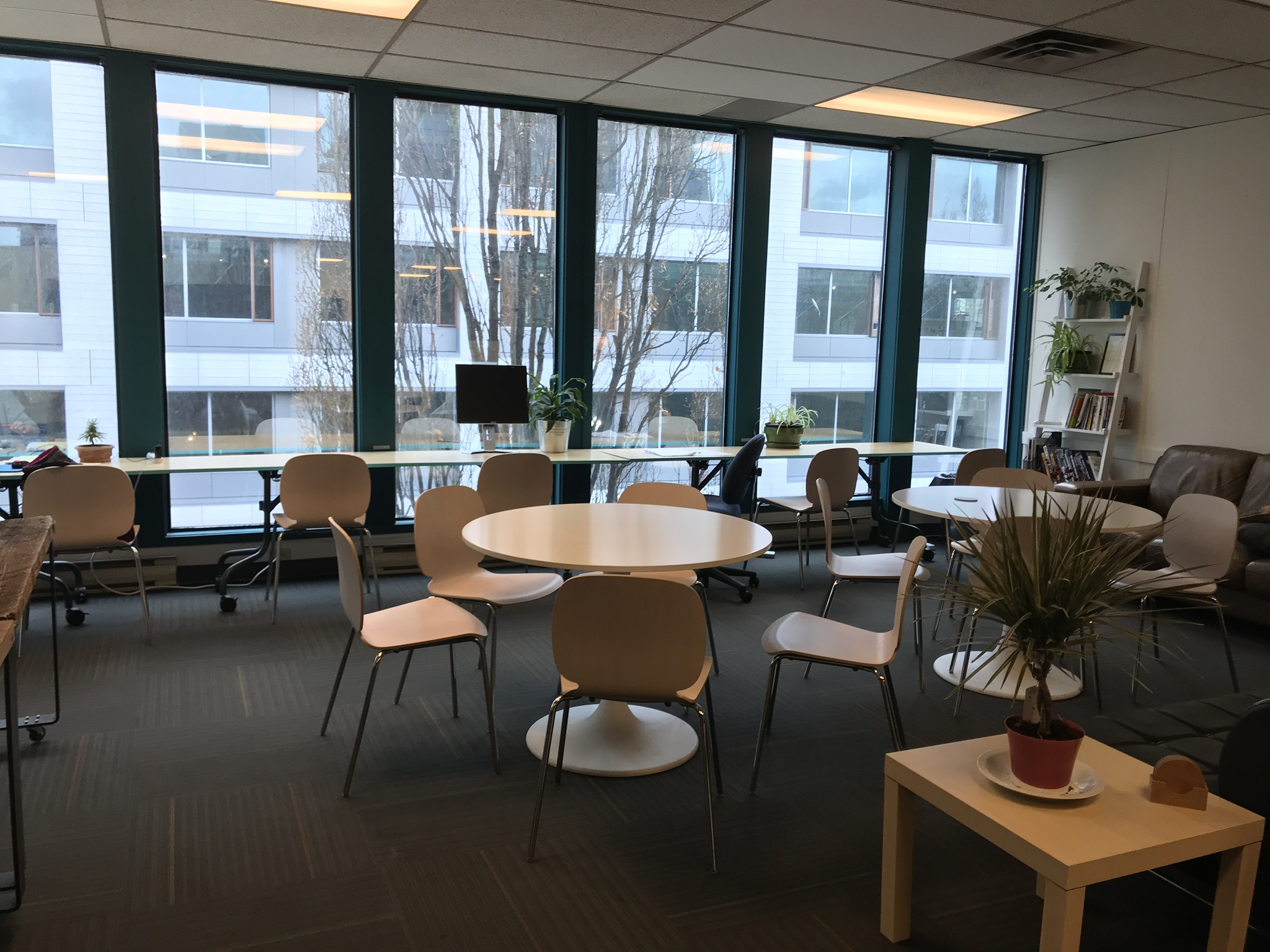
As this remote worker research journey continues, so far we have visited 8 cowork spaces (Canada, Finland, Amsterdam & Germany), and as many specialty coffee shops (ok, more than 8 cafes, but that’s for another blog). Each space presents it’s own unique feel and appearance; some have similar characteristics while others are so diametrically opposed, it’s bizarre. Still, all have the intent of providing a place where individuals and teams can work effectively outside the realm of a traditional collocated work space.

To generalize, we have observed two main areas of differences: 1) the physical layout and elements of the space and 2)the culture or ‘feel’ of the space. Let me give a further explanation of each. Physical layout is easy to describe and observe…as they say, a picture paints a thousand words.

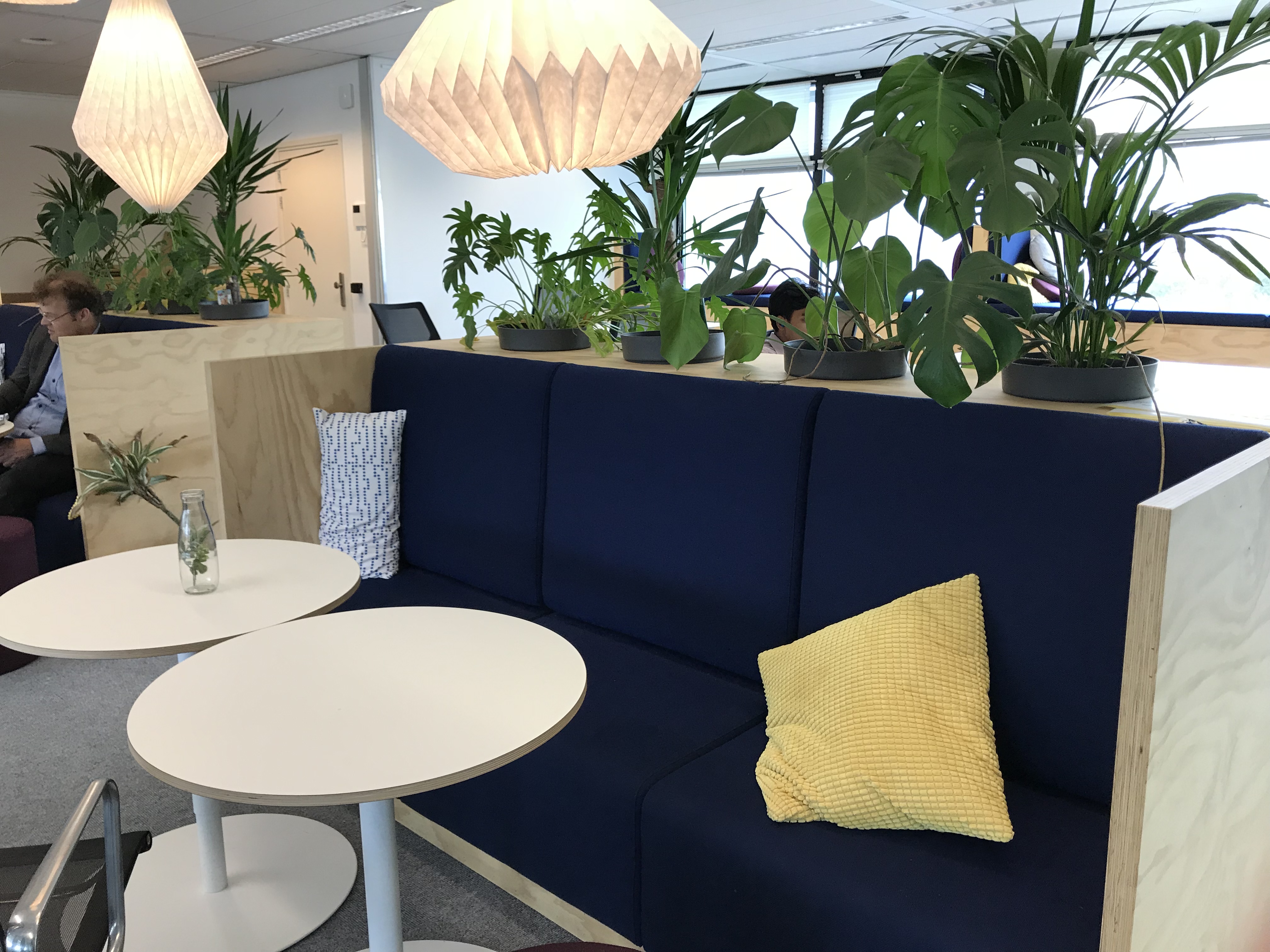
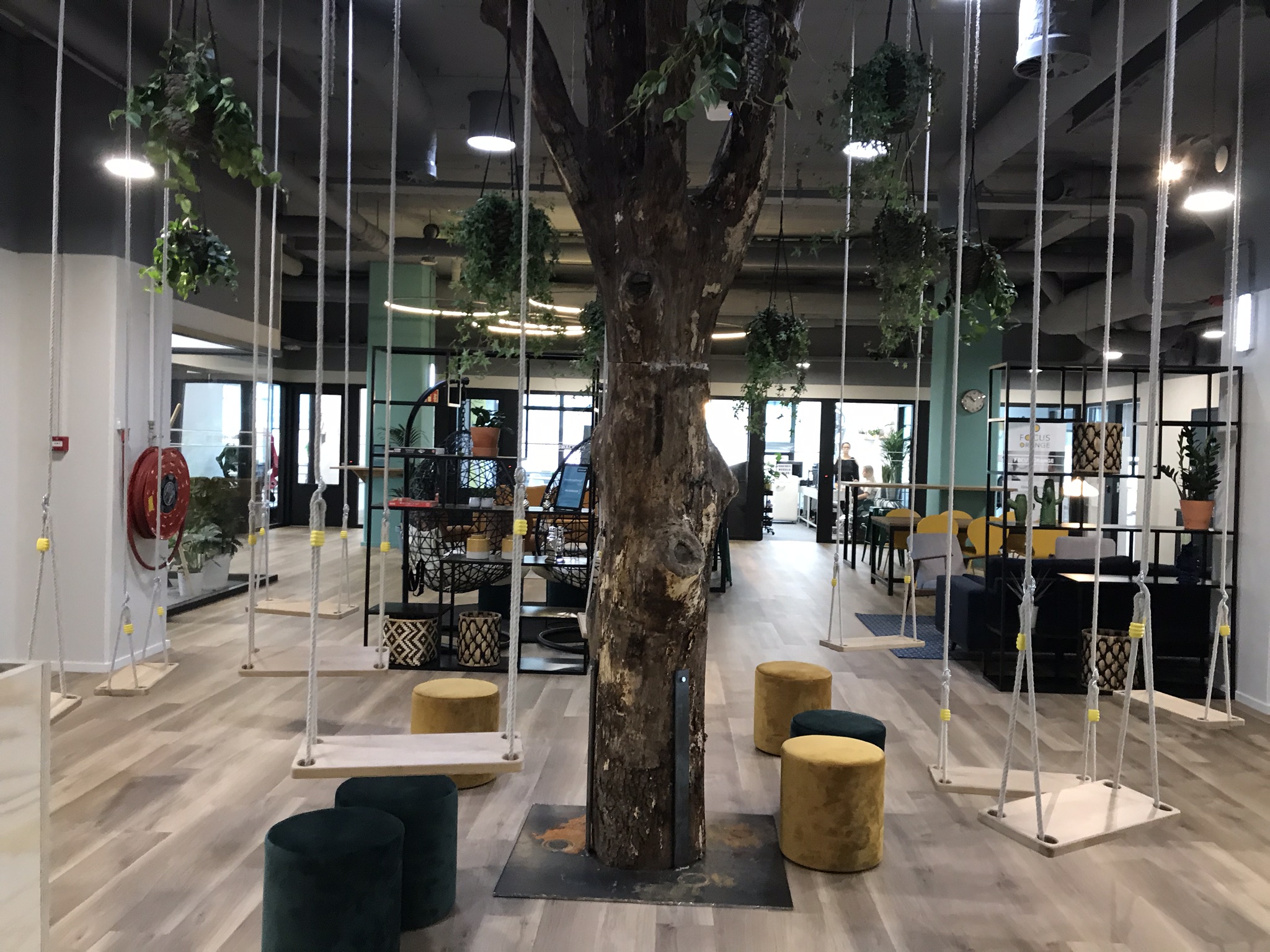
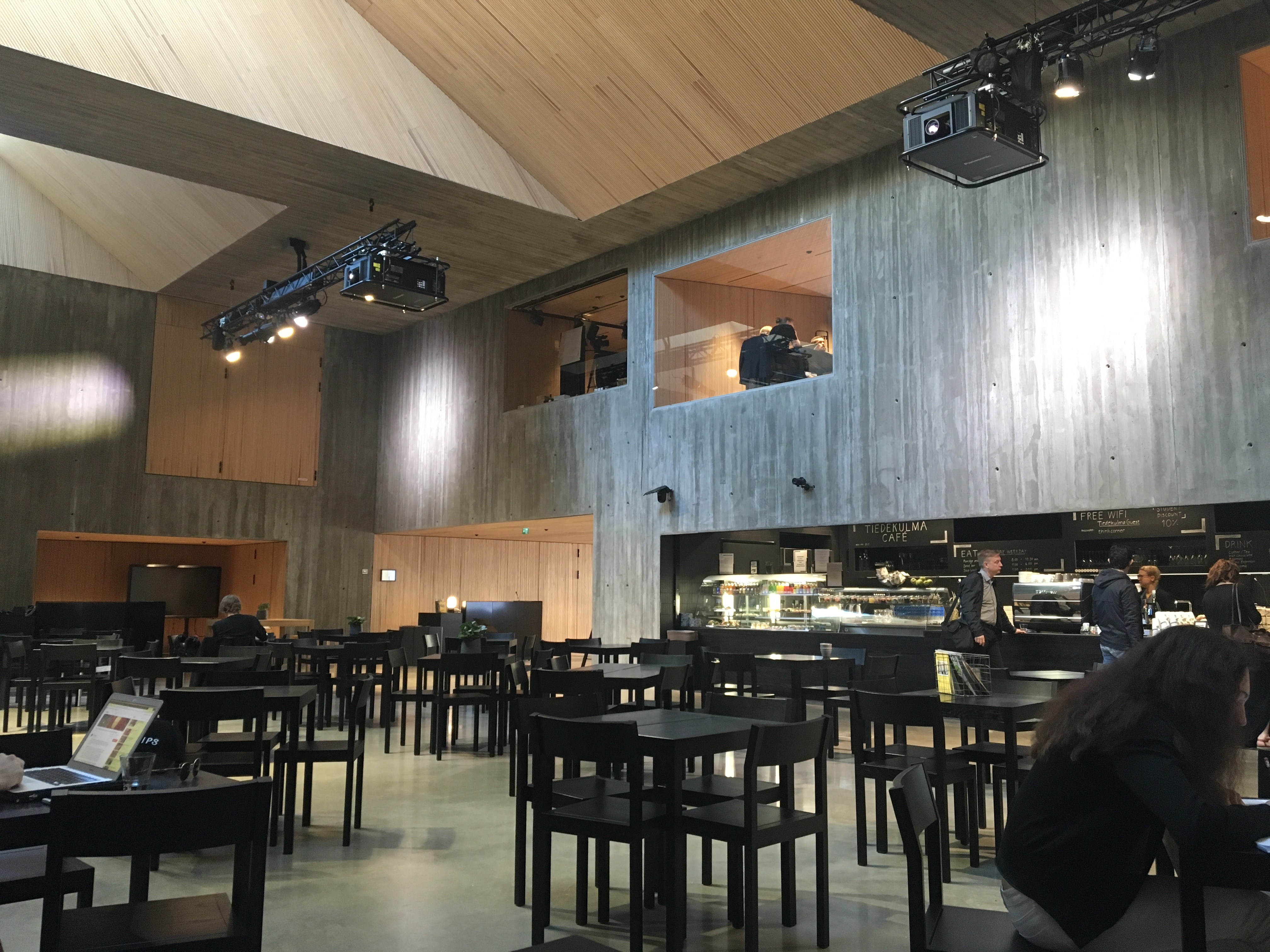
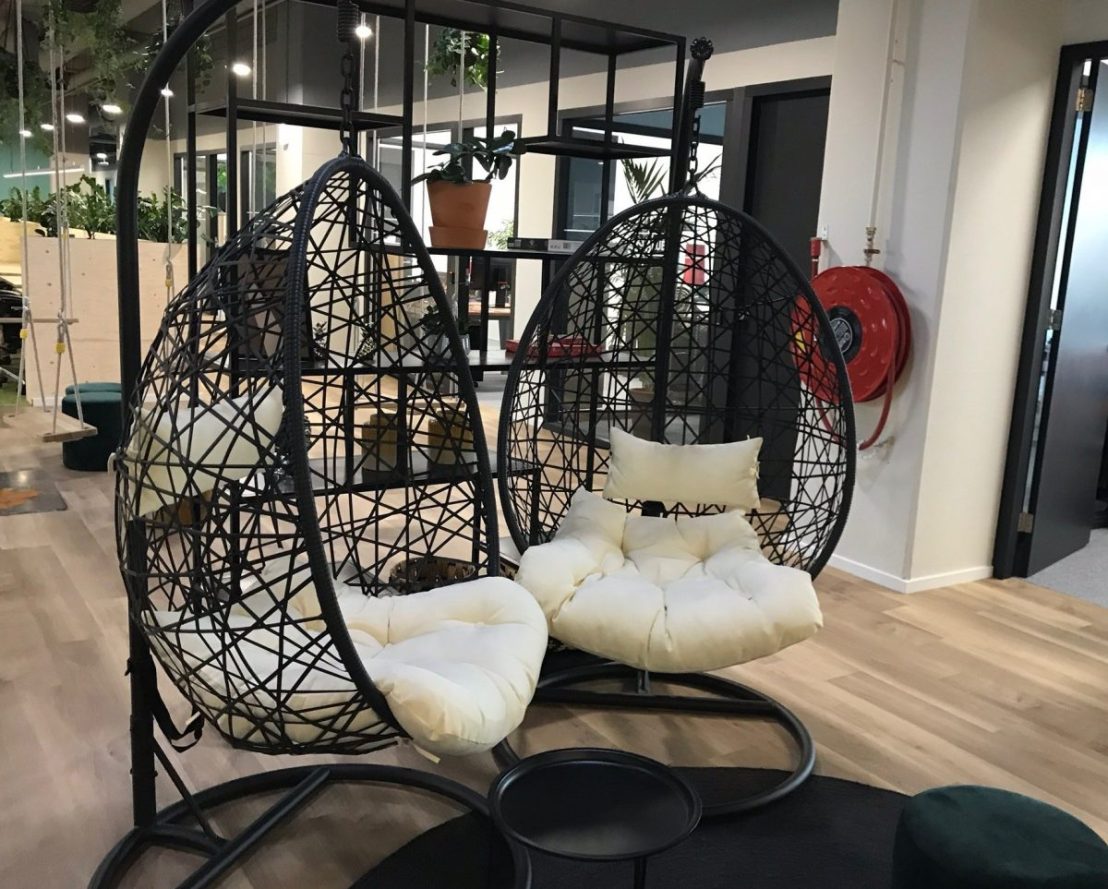
As you can see in these pictures, some spaces are open and airy, most have dedicated office spaces and hot desks you can rent on a monthly basis, or you can choose to ‘drop in’ and use an open space when it suits, simply paying by the day. You can choose to work in a living room type area, or have a conversation while sitting on a swing. Perhaps you need to use a board room for some presentation, or alternatively require a higher level of privacy for an on-line conversation and access a phone booth type space with a drop down desk. One day you may decide that sitting at a large work table with 8 other people is what you want, while the next a quiet, tucked away couch is what’s called for. And, not to be ignored is the need for socializing. That may look like a game of ping pong, or grabbing a cup of tea or coffee with a coworker…or stranger. Alternatively, depending on the day, or time of day, or country, you may help yourself to a beer on tap while you chat with a business startup or a remote worker from another part of the world. You may enjoy wide open work spaces or prefer more intimate, communal type spaces. No matter what your preference, in all likelihood there is a space that fits you.

The cultural differences between spaces are not quite so easy to identify, or describe. Pictures don’t adequately portray the ‘feel’ of the space. And, the ‘feel’ can be rather subjective in many cases. For example, one space we visited felt like a great fit for Nathan, while I felt like a stranger, an outsider when we walked in. Even after working there for82EB5C5C-7103-448E-AE78-0E3D1A883299 a couple of hours, I still felt like I didn’t belong; Nathan could have unpacked his knapsack and set up shop! Yet another space we visited felt uninviting to both of us; it seemed to lack any attention to the importance of aesthetic value in making it’s users (or visitors) get a sense of the occupants and users of the space. On the other hand, a couple of the other spaces we visited provided such a warm and welcome feel that we immediately felt a sense of affinity with the space and it’s users.

Being in these different locations has caused me to consider the importance of space as it relates to how effective, creative, innovative, or productive a person can be in the pursuit of doing their ‘work’. When an individual works for a business that is colocated, their space is provided for them…it is generally dictated by way of assigned offices, departments, geographic location…the worker does not ‘choose’ their workspace, or choose where to set up the framed pictures of their families, friends, or pets. Finding or created a space or spaces to work is not a matter that calls for much thought or attention (not as much perhaps as it should?). This is not as true for individuals who work remotely either as freelancers or for distributed companies. Finding appropriate places and spaces to work, to create, to innovate, calls for greater intentionality when the F5CB46FD-CB4C-49C1-B482-7D360A826E2D
traditional office (or desk) doesn’t exist. Knowing what kind of space to use is also a challenge when the option, or need, to do so has not previously existed. So what’s person to do? I would suggest that a foundational need for the remote worker is to have a clear self awareness and understanding. A perfect work space for me is not the same as a perfect work space for Nathan…even though our values, work ethics, and passions are very similar (never mind the fact that I represent ½ of the duo that raised him). Still, we both recognize the fact that different stages of work development calls for
different spaces, and what a creative space looks like for me may not be the same that of Nathan’s choosing. When work gets frustrating or overwhelming, you may need a space that allows for quiet reflection while a co-worker may need a rousing game of pool. To work through a challenging client issue, you may need a room with several white boards to storyboard the problem, while someone else may need space to walk and talk through the muddle until clarity breaks through.

The point is, the need to know yourself well enough to actually identify the type of space you need in order to work, and simply be the best version of you, could possibly make or break your ability to operate successfully in a remote work context.

55cbec33-125a-48f9-9ad6-66aaa58245bb-e1529530702743.jpeg Continue reading “The importance of space…”

Academia meets Industry

Earlier this week, Nathan and I had the privilege of presenting this research project at JAMK’s Global Colloquium in Jyväskylä, Finland. The focus of the event was the challenge faced by higher education regarding how to deliver and support innovative learning solutions in environments characterized by changing technology, economic condition and globalization. It was great to dialogue around this important topic with faculty from France, England, Turkey, South Africa, USA, and of course, Finland.
I believe it is important to keep asking the ‘why’ behind all the research we undertake. When we get our heads around ‘why’, only then can we move forward with more ‘how’ type questions. In a previous blog, ‘Remote Workers-what makes you great’ I touched on the ‘why’ behind this remote research… but what might the ‘how’ questions be? What design thinking type questions will open new doors of possibilities once the research findings have been gathered and analyzed?
As we posed these questions to the colloquium attendees…wonderful ideas began to emerge!

  • How might we deliver learning in innovative spaces such as we do with trades and technology?
  • How might we help students experience the life of a remote worker?
  • How might we prepare our students for the global impact of work?
  • How might we design our curriculum in such a way as to prepare for the competencies or ‘soft skills’ needed by our students to be successful in this context?
425268FD-837D-4A46-B324-142B907826EA
Innovative classroom at JAMK’s Tiimiakatemia

The exciting thing is that as educators:

  • We have direct access to the workers of the future…we owe it to them to provide insights as to what they need to be successful (opportunity)
  • We are charged with preparing these young minds (responsibility)
  • We have the ability to reframe education in a way that reflects industry (ability), and,
  • Our students need to know how they can thrive in an every changing world (compulsion)

In an ever changing world, we may not be able to prepare students for the specifics of the jobs they will do, so perhaps we need to focus more on the nature of how the work will get done. I suggest this kind of rethinking around how we prepare students must be done in collaboration with industry, with the experts, with remote workers and those who fully support remote work. Which circles right back to the research regarding what are the keys to success for remote workers, and in what ways do they need to receive feedback and support.

Next blog…what we’ve learned so far from interviews with remote workers in Kelowna, Vernon, Vancouver and Helsinki.

And we’re off…well almost

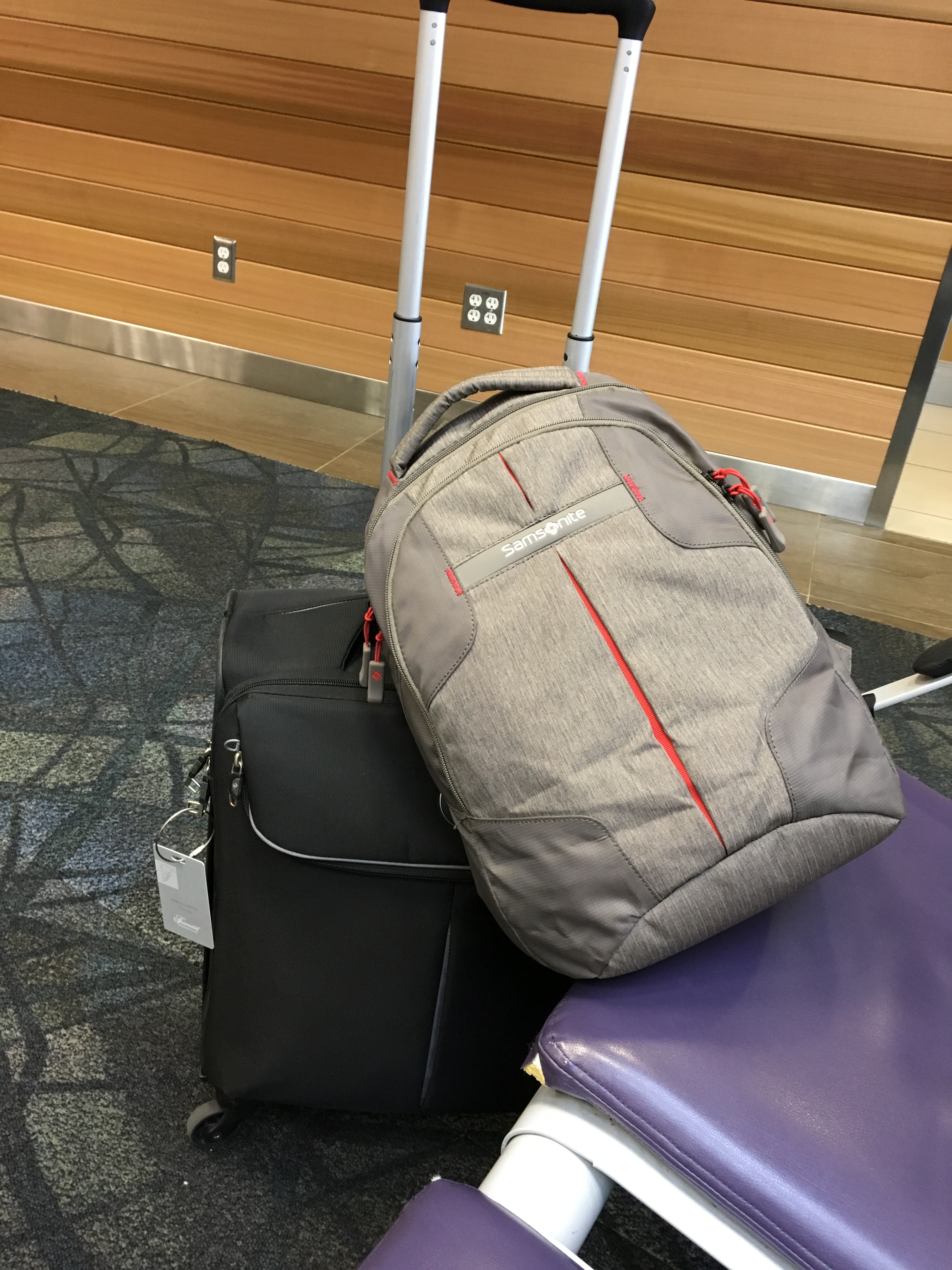
I am sitting at the Kelowna airport for the first leg of my research trip…still sitting because my flight got cancelled due to mechanical issue. I had hoped to get to Vancouver in time to attend a social event at WeWork and make some connections in preparation for the meetup scheduled there tomorrow. Not to be. It’s ironic that one of the key competencies for remote workers is flexibility…check!

Seriously though, travel is often part of working remotely. At times it’s because an individual has chosen remote work for the freedom of working from anywhere they desire. At other times it’s because their remote or virtual work calls for them to travel for a meeting with a client. When travel is for personal reasons, while frustrating, schedules can be more accommodating (unless you have airport connections). However, if a client is expecting you to arrive for an important meeting at a certain time, these schedule changes can be more problematic. Nathan Sawatzky, my research collaborator, experienced this only a couple of weeks ago when 3 meetings were cancelled because of multiple flight delays. Or what about the last minute cancellations made by the clients? Don’t they know how important this was to you? Flexibility, adaptability…you get the idea.

How do you deal with these unavoidable challenges? Practically, whenever possible, plan for them. Ideally, book to arrive a day ahead (my meeting is at 10am tomorrow…yup this isn’t my first cancelled flight). But even the best laid plans can go amuck calling for rearranging and rebooking of meetings. And what about the emotional toll it can take on the remote worker? Often these appointments have been made after considerable communication with existing, and potential, clients…much is on the line. How do you pick yourself up from the let down and start working on marking those new arrangements? I would suggest you make that kind of decision ahead of time. Will you choose to adapt? Will you pass on the ‘right’ to nurse a poor attitude about how ‘those’ people just can’t be depended on?

We’ve all heard the saying ‘two sides of the coin’. Well, there are two sides to the flexibility coin. The vast majority of remote workers I have chatted with cite that flexibility is one of the reasons they love their chosen work situations. They can build their work around their lives, allowing them to work when and where they choose, basically being the master of their own calendar. Flexibility also means honouring the schedules of others…when a ‘better offer’ comes along, be it for personal or professional reasons, the responsibly side of flexibility says that you get to choose which route to take. Do you honour the commitment to a client, or do you flex your ‘freedom’ muscles and go for the better offer. Again, you need to decide. It may help to consider that you may be the flip side of someone else’s flexibility coin.

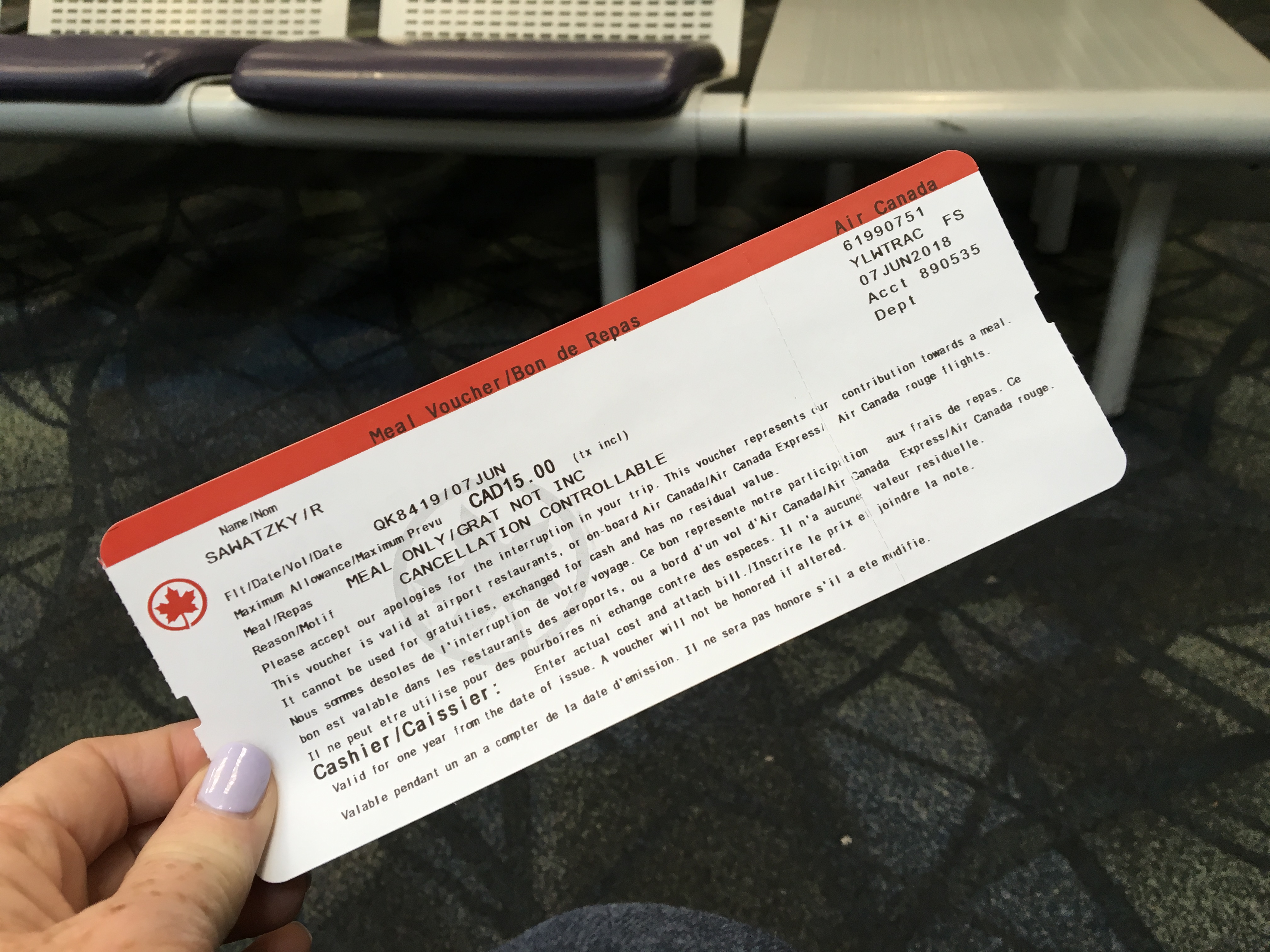
I’m rebooked on a flight 5 hours later. I am hopeful that I’ll get to my meeting tomorrow (and my afternoon flight to Finland)…and the friendly Air Canada check-in lady gave me a $15 meal voucher instead of a $10 one…things are looking up.

Remote Workers…what makes you great?

Curious, Self-directed, Empathetic …three of the competencies that are vital for the success of a remote worker. How do I know? I asked a bunch of remote workers, and they answered…but we have only just begun asking!

Thanks to a grant (CSBER)  from the Okanagan School of Business in Kelowna, BC, Canada (I’m a business prof there), I am formally embarking on a research study of remote workers. I want to know what competencies contribute to the success of remote workers? What effective feedback looks like, and from whom? What qualifies as a great workspace?

Why am I asking?

  • Because remote work is the new reality of a growing and changing workforce;
  • because organizations need to know how to best support their people who work remotely;
  • because we need to know how to prepare our business students for the nature of the careers they will be entering, and
  • because the best people to learn from are those already working remotely…they know what works and what is important.
WeWork, Vancouver BC

Because remote workers are not restrained by co-located offices, hours of operation, nor physical location, it’s important that the scope of this research is globally focused. The remote worker can change locations–even continents–every month or so. The various maturity of each co-work space reflects the unique cultures developing around this growing working context (this is a topic we will jump into in a later blog…amazing spaces!)

The Dock, Victoria, BC

I’m excited about the co-work locations on the itinerary so far: Kelowna, Penticton, Vernon, Edmonton, Vancouver, all in Canada, then Jyväskylä and Helsinki (Finland), London (England), Amsterdam and Einhoven (Netherlands), and Berlin (Germany). Each of these locations supports several co-work spaces of varying maturity, design, and purpose.

Add to this is the privilege of collaborating with Nathan Sawatzky, a global remote worker (and my son), who has already spent a great deal of time working from various co-work spaces across Europe. I can truly say that he has introduced me to a world of amazing people who experience opportunities, challenges, AND great rewards.

So, whether you are a remote worker, support one, know one, or want to be one…follow along and explore the world of work ‘outside the walls’.

Remote work and motivation…

Mid October and I am full into teaching again at the Okanagan School of Business. That means my scholarly/academic hat is on, but always tempered with ‘why?’ and ‘so what?’ questions (from myself, to myself). One of the topics we explore is motivation; what causes people to do what they do? How do you move people from solely working for a pay check (we all still need that), to also working towards contributing to something greater than themselves? This doesn’t have to be solving world hunger, or obliterating child exploitation (although these are right up there in the hierarchy of importance). Most great organizations have a cause, a reason to exist, a purpose, a why?, that fuels the motivation for their people to see beyond the day to day tasks.


Maslow’s Hierarchy of Needs is one theory that we offer up to our students…the ultimate level being self-actualization. Meeting the needs of our employees should be foremost in the minds of all managers, something that those working with remote workers need to pay special attention to. This issue was well addressed in an article by Yonder ‘What Does Maslow Have to do with Remote Work?
Self-actualization is great, but for me it has always come up short…it feels rather self-focused and self-centred. Needless to say I was intrigued when presented with the idea that Maslow’s later work actually added a 6th level…Self-less Actualization. This moves the individual from self fulfillment, to helping others realize fulfillment.
Koltko-Rivera (2005) sums it up as

“At the level of self-actualization, the individual works to actualize the individual’s own potential [whereas] at the level of transcendence, the individual’s own needs are put aside, to a great extent, in favor of service to others …”

Ok, a little heavy for a blog on supporting remote workers…I get it, but stay with me on this. If the greatest level of motivation happens when we take the reality of who we are: the gifts, talents, and strengths we have, and use those for the betterment of others, then we immediately realize the importance of also helping our remote workers be able to connect with and contribute to a cause outside of their need for connectedness, trust, or communication. What does that look like? Is it possible to measure that for success, and not simply performance outputs and deliverables?

This challenges and expands the traditional scorecard…how do we measure a worker’s contribution to the growth and well-being of others?

So what have I learned so far about remote working…

For the past 5 months I have been looking into the area of remote workers…I have learned much and I know I have only begun to scratch the surface. So, as summer comes to a close I want to hit pause and reflect on what I have gleaned so far.

  • Remote work is alive and well across all industries, in all sizes of organizations from start ups to those that are well established.
  • Remote work is not a ‘fad’…it’s here to stay and will only grow in it’s reach and impact.
  • People are at the centre of a successful remote workforce
  • Many reasons exist for people to choose this form of work: freedom, flexibility, increased productivity, and greater opportunity for creativity to name a few.
Unsure of the destination, but the journey is delightful!
  • There are also challenges inherent to working remote: limited communication, lonliness, poor or limited technology, time management, self discipline, focus …however, each can successfully be overcome.
  • Trust is the key ingredient that will make or break a successful romote working arrangement.
  • Communication needs to be intentional and customized to each situation.
  • Face to face interactions still need to happen, even if only once every 6 months.
  • Distributed vs co-located work arrangements does not necessarily mean organizations will save money…that can’t be the motivation.
  • Organizational fears that remote workers will slack off is unfounded; research actually shows the opposite is true…remote workers have a tendency to over-work.
  • Great locations like Co-Lab in Kelowna are available around the world so that remote workers (and those amazing digital nomads) have a place to connect and collaborate.
http://okcolab.com
  • The resources available on this topic are excellent…people continue to learn, to perfect, to mentor, to share, and to dedicate their efforts to support others entering into this exciting world of remote work.
  • Working remote is not for everyone…and that’s ok.

So where do I go from here? I keep learning, keep experiencing, keep asking questions, and do whatever I can to share what I learn with those who want to know.

Some ideas? Continue to include this critical aspect of work with my business students (both in class and on-line); create a case study on the topic; be a resource to managers transitioning from supporting co-located teams to supporting distribute teams…pretty exciting from where I sit as a remote worker, business coach, and professor

Remote Working ~ Intentional Communication

According to Jeff Robbins with Yonder,

All communication needs to be intentional.

Seems fairly simply and straight forward…but is it?

Think about it…how much time do we honestly put into choosing our words? To be fair, some of us take time to measure and analyze our thoughts before giving voice to them while others are more apt to give voice and then reflect…or not!

In face to face interactions, even though our thoughts have been voiced, we generally have the opportunity to ‘take back’, or clarify as soon as we realize the message was not received in the manner intended. Not so easy to do when communication is shared through virtual channels.

Not only do we need to pay attention to the content of our messages, but also to the channel, the breadth of who receives the message, the frequency of communication, and the amount of information shared.

Working remotely, or virtually, calls for excellence – and intentionality – in communication. In fact, it can be our life line to clients, colleagues, contractors, and bosses! So how can we ensure that we are communicating to the best of our ability…and beyond? How can we be so intentional about our communications that ‘delete’ is not the first reaction when our name shows up on someone’s screen?

I believe this can be as simple as 4WH…yup, the old who, what, where, why, when, and how. Let’s build that out…

It's for you!
It’s for you!

WHO addresses the receivers. Who needs the information that I am communicating? Who really needs to be included in the communication? Do I honestly need to hit ‘reply to all’?

WHAT considers the core or content of the message. What is the most important information that needs to be communicated?

WHERE thinks through the location of both sender and receiver. Where should each be when the communication takes place. Does the communication call for interaction that is best suited for a phone call, FaceTime, or Skype? Is privacy of utmost importance? Is dependable internet vital? Should there be limited noise?

WHEN pays attention to the timeliness of the communication. When does this information need to be communicated? When does the receiver need to receive this material: Immediately? By the end of day? No urgency at all? I like this excerpt from Fried and Hansson’s Remote: Office not Required

Questions you can wait hours to learn the answers to are fine to put in an email. Questions that require answers in the next few minutes can go into an instant message. For crises that truly merit a sky-is-falling designation, you can use that old-fashioned invention called the telephone.

HOW thinks about the channel of communication. How can I communicate this information in the most concise manner without compromising the content, urgency, sensitivity, or clarity?

WHY…perhaps the most important question of all. Why am I sending this message? What is the purpose? What is the expected outcome? What is my motive?

When you think about it, we can think through each of the 4WH filters in a very short amount of time, but the result of doing so will have long term benefit. Ready to give it a try? Ready to be intentional in your communication?

Remote workers – trust & face to face

In my previous blog, I discussed how trust is a valuable and oft times rare commodity that doesn’t happen by accident. Rather, it is the result of intentional and focused effort, and a willingness to dedicate time to create such relationships. I also listed 5 challenges faced by remote workers as identified by Jeff Robbins, the first of which was the lack of non-verbal communication. This, I would suggest, can be a barrier to building trusting relationships with clients, and managers.

Face to face connection by the Baltic Sea!

As I speak with both remote workers and their managers, a common piece of advise offered is, whenever possible, build in face to face time before the hire, during the process, and on an on-going basis after the contract has been signed. Yes, this adds to the financial cost of doing business, but it is money well spent in order to build a solid foundation of trust.

We are aware of the importance of non-verbal communication. Peter F. Drucker has been quoted as saying

“The most important thing in communication is hearing what isn’t said.”

The importance of non-verbal communication‘, a blog created by ethos3 provides excellent insight, and tips, on how to increase your non-verbal communication when speaking in public…presenting, negotiating, leading meetings, in fact anytime you are face to face and wanting to clearly communicate both a message and build trust with your listeners.

Let’s put this into the remote context. If this can be accomplished when we are face to face with others, how can we replicate it if the situation does not allow for such interactions? (The academic in me feels the need to provide you with further research into this.)

The right tool can make any place your virtual office

While there may not yet be a substitute for pure face to face, the addition of a Skype, FaceTime, or video conference call can increase the likelihood of connecting on such a level, providing a  starting point on which to build a trust relationship. (Good site for virtual meeting tools)

When in the recruiting and selection process, the difference in a person from what I have imagined through cover letters, resumes, or even phone conversations, to when we actually meet face to face in an interview never ceases to amaze me. Not only does a face to face interaction remove the screen that can hide the tell tale signs of exaggeration, or dare I say, out right lies, but it can provide a lovely opportunity that opens the door to connect on a level that lets me see the gem shrouded on the pages of documents submitted. It would be a mistake to think that because you’ve had this f2f connection, you’ve covered all the bases…three months down the road you may again see an even different person! However, this is a great first step that is crucial for subsequent interactions that will result in a successful, right-fit hire.

A commitment to building trust through face to face doesn’t end once a connection has been made…it needs to be fostered in order to realize continued growth and development. In a conversation with Clint Schnee  (founder & designer UXperts), he shared from his remote worker management and support experiences. His advise? “Following initial on-boarding face to face interactions, the maximum amount of time to wait between such times is 6 months.” This applies no matter where the employee is located around the world. He went on to say that “any longer than that and you will see the attrition and turnover rate greatly increase”.

While challenging, I do love the fact that as humans we still thrive when in face to face community with others, making those trusting connections…a practice worth striving for and fostering.