Tag: mental health

When writing goes quiet ~ blog 146

A Probe & Ponder Newsletter…March Issue

Exploring books, learning, travel, life experiences & adventure with author, Roberta E Sawatzky


Welcome to Issue #4 of my newsletter!

If you’re someone who’s curious, courageous, and eager to grow through fresh ideas, practical writing tips, thoughtful prompts, and real-life reflections, you’re in the right place. Here, I share my ponderings and discoveries with a community of readers and writers who’ve connected with me through my books—and who love exploring how writing shapes the way we learn, create, and experience life. Let’s dive in together.


What am I up to?

There are seasons when writing feels like movement, with pages accumulating, ideas connecting, momentum building.

And then there are seasons like this one. I’ve been asked, gently and often, how the writing is going. I understand the question. I’ve asked it of others myself. But the answer doesn’t land easily these days, because it isn’t really about productivity or progress.

It’s about presence.

This season has changed the way my attention works. Grief has a way of narrowing the field, of quieting what once felt urgent, of asking different questions altogether. I haven’t stopped writing—but the writing has slowed, deepened, and turned inward in ways I didn’t anticipate. For a while, I told myself I was stuck.

Now I see something else. A familiar space, entered again.

When I look back on my two books, I see a thread that has been weaving quietly for years.

What If…? was born in a season of uncertainty…traveling with obstacles, living alongside illness, choosing curiosity when circumstances refused to cooperate. That book asked a brave, outward‑facing question: What if we go anyway?

Between Here and Where came from a different place. It lingered in the space of transition, change that is forced or chosen, the loneliness of thresholds, the grief that accompanies becoming someone new. It wasn’t about answers so much as about staying present in the in‑between.

What I’m living now is not separate from that work. It is its continuation.

The difference is that this time, the transition has taken my husband with it.

This season doesn’t respond well to pressure. The kind of writing it allows is not linear or ambitious. It arrives in fragments, in memories, sensations, and half‑formed sentences that don’t yet know where they belong.

Some days, writing looks like a single paragraph. Some days, it’s a page I don’t keep. Some days, it’s simply sitting long enough for something true to surface. From the outside, this can look like avoidance. Like a lack of motivation. Like a creative block that needs fixing.

From the inside, it feels like listening.

I used to believe deep writing meant digging harder, about producing more, pushing through resistance. Now I’m learning that deep writing sometimes means staying exactly where you are, without rushing the process, trusting that silence is not empty but active.

The Work of the In‑Between

In my second book, I wrote about the ‘between’, that space where clarity is suspended and identity is quietly reshaped. I described it as painful, lonely, often joyful, and yet necessary.

I didn’t know then how fully I would come to inhabit that definition again. You see, grief rearranges attention. It changes what matters, how time feels, and what the body can hold. The work of this season is not to arrive somewhere quickly, but to remain honest while something new takes shape.

I think that honesty matters more to me now than momentum.

If you’re reading this and finding yourself in a similar place—unmotivated, unfocused, unsure what happened to the version of you who once thought and created with a certain degree of ease, here’s what I’m reminding myself:

I’m not behind. I’m not broken. I’m not failing my work.

Some seasons are meant for asking What if? Some are meant for waiting between here and where. And some seasons ask us simply to be present, to listen, to trust that what feels quiet now is still part of the story.


Books & Podcasts

Podcast:

Are you concerned about the use of AI in your writing? What’s the difference between AI assist and AI generated? I found this podcast episode to be quite helpful in understanding the proper role of AI in our writing. The Podcast is “Fiction Writing made easy”, and the episode I am referring to is #236, entitled “The truth about AI and creative writing”. Listen along as host Savannah Gilbo interviews Ana Del Valle, award-winning novelist, technologist, and founder of the AI Creative Writing Academy.

Here are some valuable thoughts from the interview:

AI Generation is when you’re essentially asking AI to write the book for you. You hand it an idea, it drafts scenes and chapters, and before long, ChatGPT is doing all the heavy lifting while you’re just reviewing and tweaking.”

“AI Assist is something completely different.” Ana describes it as “using AI throughout the entire life cycle of writing your novel, but you are always the one in the driver’s seat. You might use it to brainstorm subplots, test your story’s structure, explore character motivations, or use it as a kind of developmental editor that gives you feedback. The AI is never writing the story. You are.”

Books:

I’m still making my way through “Living the Artist’s Way: An Intuitive Path to Greater Creativity”. The book focuses on what author Julia Cameron calls the ‘fourth essential tool of writing’. If you have read any of her books, you’ll know those tools are: morning pages, artist dates, walks, and the 4th, writing for guidance. As with her former books, Cameron lays out Living the Artist’s Way like a six-week course, each week having an action step. My approach to the book is to read it through, then go back and practice the weekly lessons. I like knowing where I’m heading with a book like this. In the next newsletter I should have read the book, and if so inspired, have started the suggested exercises. Stay tuned.


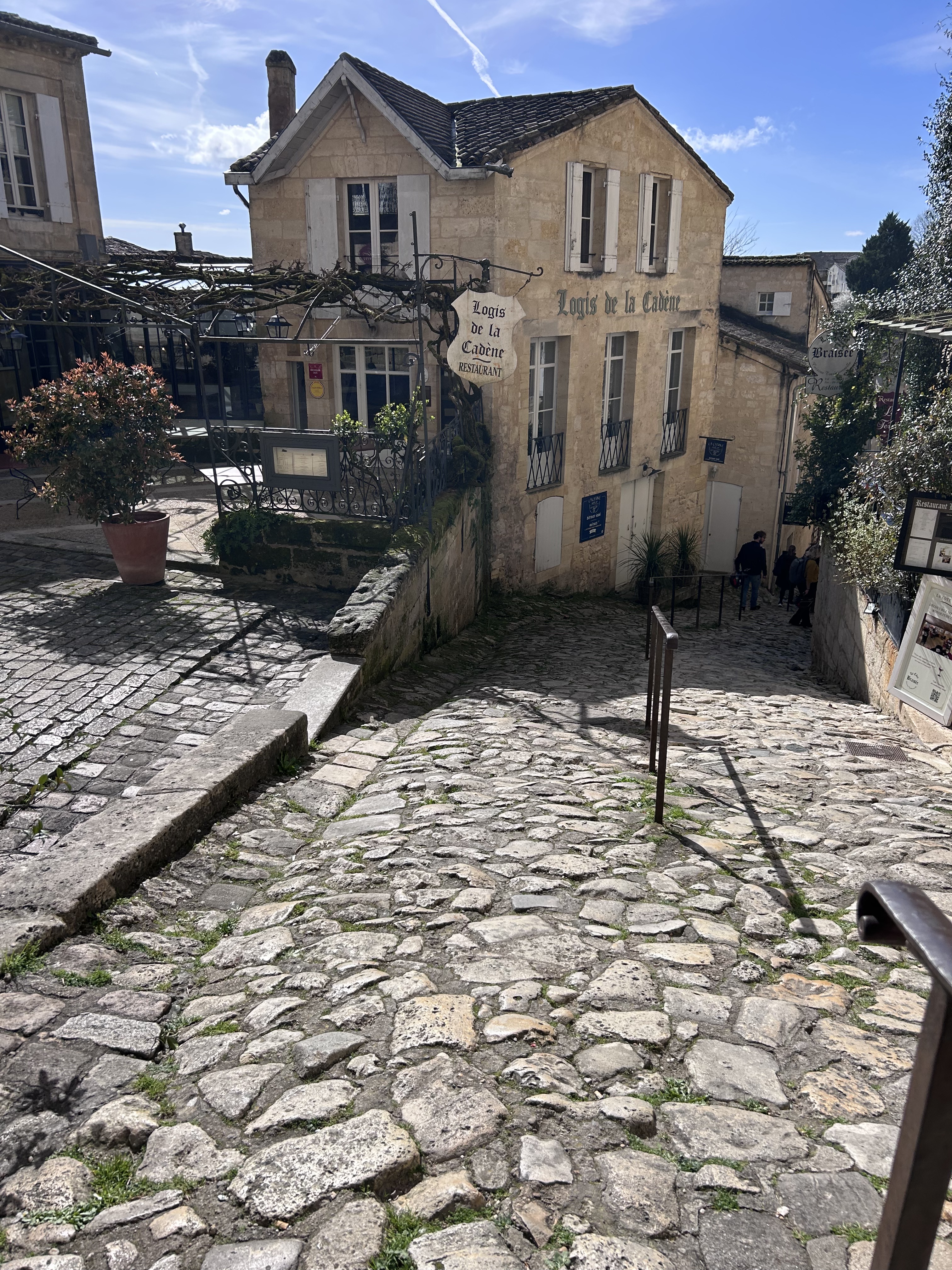
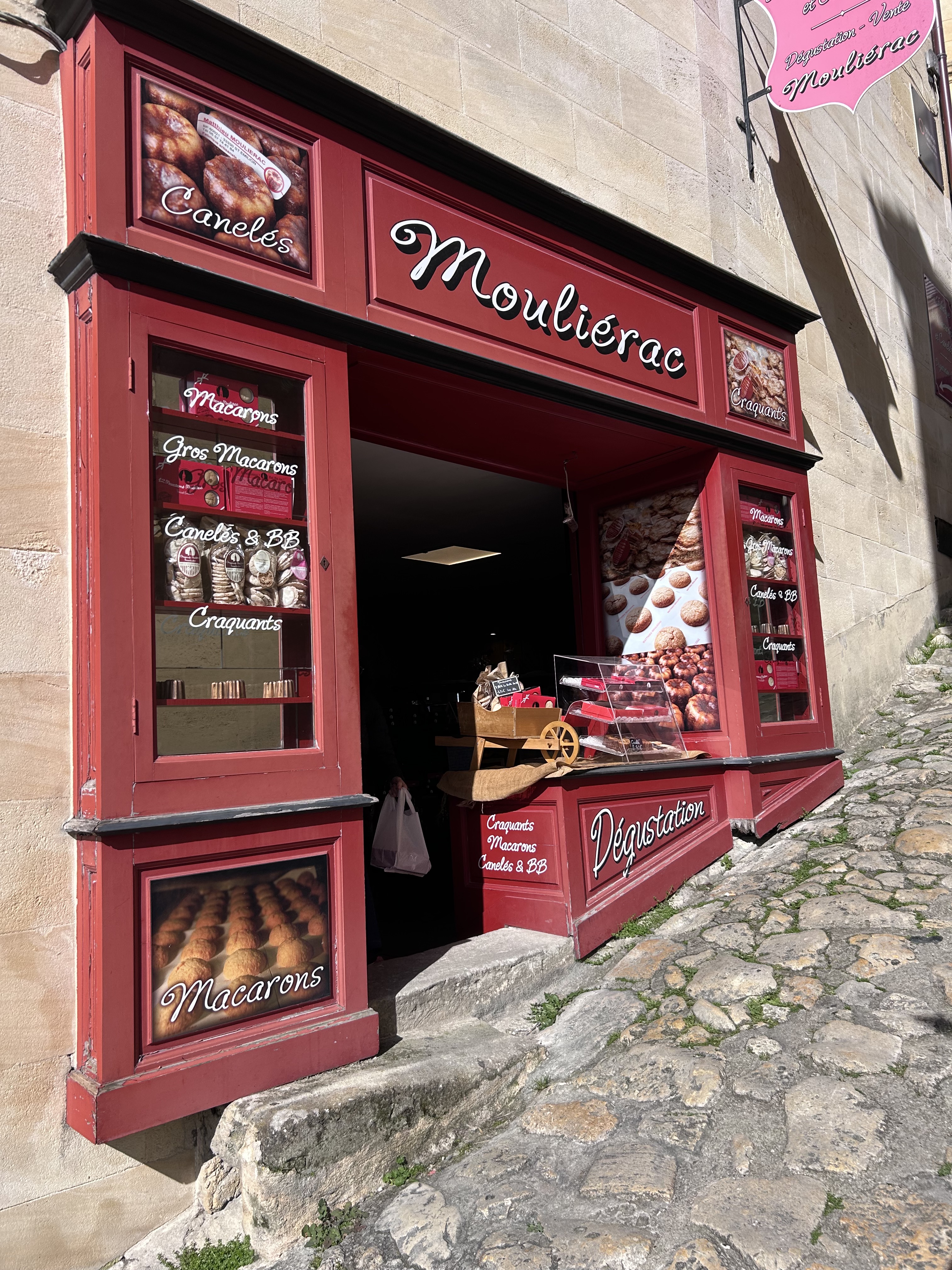
St. Emillion in France…a recent visit while presenting at an International Business Week. One feels inspired just walking the streets while being drawn into it’s history. (This is the village where the macaron originated.)
Tips for giving yourself a break…

Shift Your Perspective on “Productivity”: In my previous blog, I mentioned Karen Wyatt’s insight about writing as a tool for dealing with change. When you’re grieving or stuck, your “logic brain” often takes over, trying to force a result.

The Fix: Stop trying to write the next book for a moment. Instead, use your daily journaling to “witness your own grief” or lack of motivation without judging it. As Julia Cameron suggests in The Right to Write, view writing as a conversation, not a performance.

Lower the Stakes: The pressure of the “first word on the page” for a new book can be paralyzing, especially since if your previous writings came with clarity.

The Fix: Try the “Question Method” referred to in my previous blog. End every writing session (be it a chapter, paragraph or journal) with a single question for tomorrow. This bypasses the “blank page syndrome” because you aren’t starting a book; you’re just answering a question.

Change Your Sensory Environment: Sometimes the “stuck” feeling is physical.

The Fix: If your usual writing spot feels heavy, move. Go to a library, a park, or even just a different chair. For me, I enjoy going to a local cafe where the people ‘buzz’ gently seeps through my ear buds and creates a soothing environment.

Lean into the “Waves”: My most realistic saying… “Grief is like the ocean; it comes in waves.” Creativity is exactly the same.

The Fix: Accept that this is an “ebb” tide. Instead of fighting the low motivation, use this time for “Creative Refilling.”


Writing Prompts (pictures from travels):

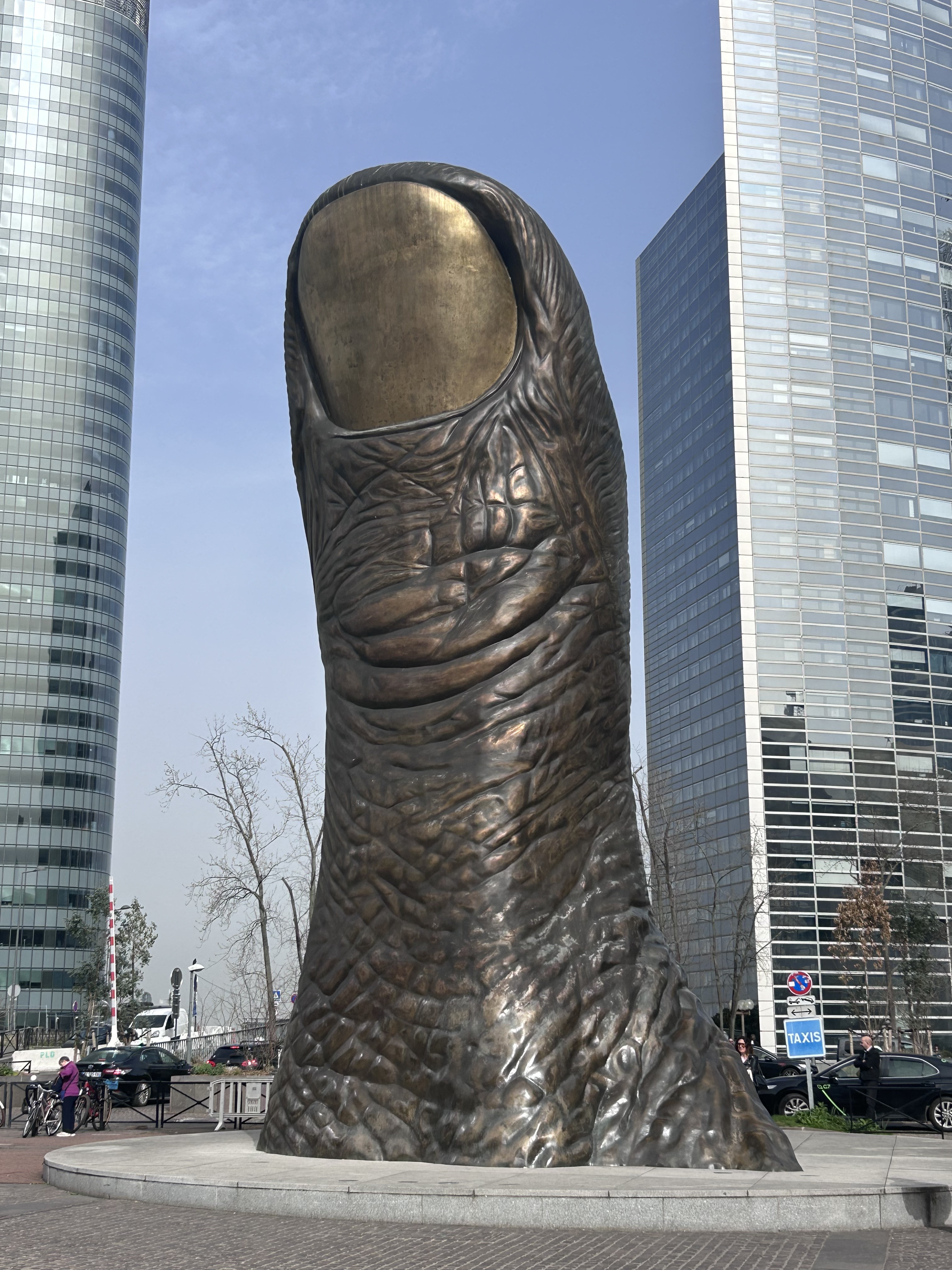
How might a statue (Le Pouch, in Paris), a broken suitcase, or a plate of deliciousness help you express how you feel?


And slowly, I understood—
even if grief someday grows quieter,
the love behind it will never leave.
Because you are still gone,
and part of me will always miss you.
But sitting with grief?
It’s how I honor what was real. –

Author unknown


My books: For ordering and book information visit my website.
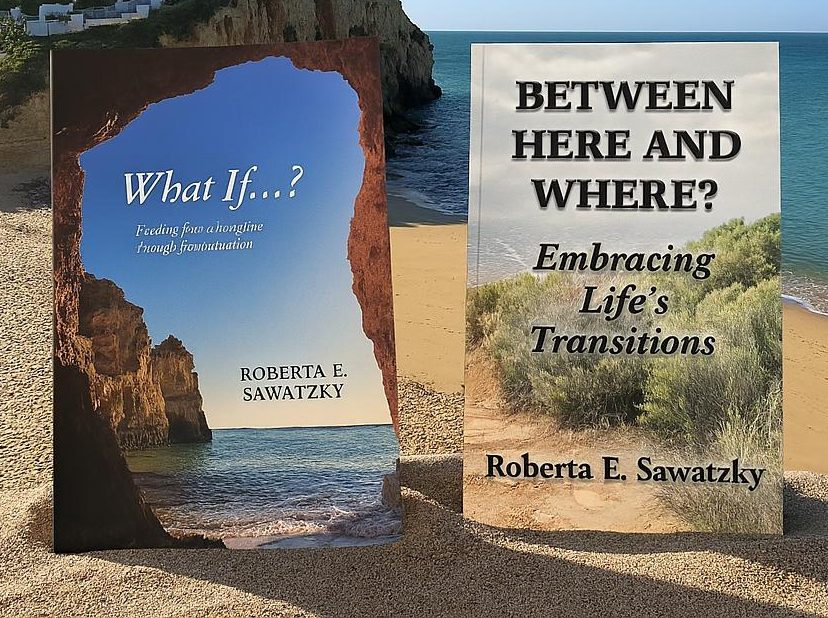
What If…? Finding new adventures through life’s obstacles

Between Here and Where? Embracing life’s transitions.

Writing through grief ~ blog 145

A Probe & Ponder Newsletter…February Issue

Exploring books, learning, travel, life experiences & adventure with author, Roberta E Sawatzky


Welcome to Issue #3 of my newsletter!

If you’re someone who’s curious, courageous, and eager to grow through fresh ideas, practical writing tips, thoughtful prompts, and real-life reflections, you’re in the right place. Here, I share my ponderings and discoveries with a community of readers and writers who’ve connected with me through my books—and who love exploring how writing shapes the way we learn, create, and experience life. Let’s dive in together.


“One of the things I love about writing is it’s a place you can witness your own grief.”
—David Kessler


What am I up to?

It’s amazing how life can change in a moment. From reading my books, you will know that my husband of 47 years had been dependant on kidney dialysis for the past five years. This, combined with lymphoma offered many life challenges. However, because of his amazing and positive attidude, combined with my determination, we enjoyed much travel and adventure until travel became medically impossible for him. On January 7, his body finally had enough and my husband passed away. His final days were surrounded with family and friends, as together we expressed our love for Rob and for each other.

My writing has taken on a new focus for now. Actually not new, just more intentional. You see throughout our lives, Rob and I talked about everything; we texted or called each other often throughout the day, talked about the joys and challenges each of us was facing, and shared our dreams for the future (mostly as we walked or biked to our favourite coffee shops). We shared our lives while still honouring each other’s space. You can imagine the impact when this connection is no longer possible. At least not the way it had been.

I have been a journaler for quite a few years, more so in the past five years since his original diagnosis. The jouralling was a record of my own reflections on life. However, my journal entries are now written to Rob. It’s not the rich two-way conversation we so enjoyed, but it is a way for me to share my struggles, my grief and pain over his passing. It also allows me to tell him about what I’m reflecting on and how I want to live my life in a way that honours him.

Travel has always been one of the great shared joys of our life together. It was important to Rob that I continue exploring the world, even after him. Still, it feels almost impossible to imagine travelling without him by my side.

Recently, while listening to a podcast interview with Mary-Frances O’Connor, author of The Grieving Body, I heard words that settled gently into my heart:

That is how I want to travel now. Not away from him, but with him — through the ways he shaped how I see, notice, and cherish the world. And each evening, before I turn off the light, I will continue filling the pages of my leather journals with all the things I get to do because my life was shaped by his love.


Books & Podcasts

Podcast:

A podcast I continue learning from is The Creative Penn with author Joanna Penn. This specific interview is with physician and author Karen Wyatt as they discuss Writing as a Tool for Grief and Dealing with Change. Throughout the discussion they talk about different types of grief we experience, addressing topics like: why write about grief and end of life; using writing to deal with the complex emotions around grief; and transforming personal writing into publication. Wyatt also shares how journalling her thoughts during a time of grieving helped her get out of her logic brain and awaken the creative side of the brain. Wyatt shares,

I’m sure you’ll find the episode inspiring, no matter what kind of loss you may be experiencing

Books:

As I listened to the podcast with Karen Wyatt, I was reminded about author Julia Cameron. One of her books I thoroughly enjoyed was “The Right to Write: an invitiation and initiation into the writing life.” I read it early in my writing experience and have begun to reread it. One of the thoughts expressed in the book spoke to me as I continue to engage in journalling,

By the way, I just ordered her latest book, released in 2024, called “Living the Artist’s Way: An Intuitive Path to Greater Creativity”. In my next newsletter I’ll let you know my thougths on it.


Where my deepest thoughts happen…

Tips for Writing Through Your Grief

(all from a great article in Psychology Today)

  1. Identify a set time of day to write, and put it in your calendar as you would any other appointment.
  2. Get a beautiful journal if you write with pen and paper. Make some tea, light a candle, snuggle under a cozy blanket…whatever you need to create an inviting space.
  3. Don’t be judgy. Write what you feel. Remember that nobody else will see what you write unless you want them to.
  4. Enlist a writing buddy. If going solo doesn’t work for you, invite a friend and hold each other accountable.
  5. End each writing session with a question you’re going to respond to on the next go-round. That way you’re never faced with a blank page.

Writing Prompts (pictures from travels):

Think about how each of these picture prompts might inspire you to complete the sentence: “Grief is like…”


    Grief is like the ocean; it comes in waves, ebbing and flowing. Sometimes the water is calm, and sometimes it is overwhelming. All we can do is learn to swim.” – Vicki Harrison


    My books: For ordering and book information visit my website.

    What If…? Finding new adventures through life’s obstacles

    Between Here and Where? Embracing life’s transitions.

    Mental Health in the Workplace is everybody’s issue.

    I was asked by a friend to write something that normally would not have been a topic of choice, an area that feels very exposing. However, if I truly believe in integrity and transparency, I need to pull open the blinds of a challenge shared by many.

    Time to take off the masks.
    Time to take off the masks.

    It all starts with volunteering… something I believe strongly in, not out of a sense of duty, but because I want to, and I know how rewarding it can be when you find the right fit.

    The cause I am currently engaged with is the Canadian Mental Health Association; I believe in the work CMHA does, I can relate to the issues they deal with, and the folks at our local association deeply care about what they do, and who they do it with.

    What do you think of when you hear the term ‘mental health’? Does it make you cringe? Is it something that only affects ‘other’ people? Or does it stir up feelings that are all too real…too close to home. You’re not alone! The specific area that I’m engaged with is mental health in the workplace, an issue that is very real to employers and employees alike. Did you know that everyday in Canada; over 500,000 people miss work due to mental health issues? That’s huge! Think of the impact those absentees have on the individual, their families, their co-workers, their organizations! And yes, the cost to business is in the neighbourhood of $33 billion each year. Take a read through this sobering Maclean’s article. These are people we rub shoulders with on a daily basis…and many of us are one of those people.

    It doesn’t matter what you call it; stress, anxiety, burn-out…it’s the pile up of demands (personal, professional), expectations (others and our own), deadlines, conflicts, pressures that get us to the point of _______ … you finish the sentence. For me it looks like heart palpitations, shortness of breath, and an inability to make even the simplest of decisions.

    As a training and development professional and business professor, I speak with many people who feel like an elastic band that’s about to snap; these people are from a variety of industries, representing all generations, are male and female, formally educated (or not), experienced, and capable individuals. CEO’s, leaders, and managers be aware, these are the people who are the very core and life of your organizations…many are even sitting beside you in the boardroom.

    CMHA’s Mental Health Voices represents the need for greater awareness to be brought to such matters in the workplace. If you are in a role of people leadership or run a business, this is a cause that begs your attention. If you live in the Okanagan, BC, I would invite you to attend our Mental Health Voices breakfast with Brett Wilson on November 4th. Check out the website www.cmhakelowna.com/mental-health-voices for both information on the event and ticket purchase.

    No matter your location, I would invite you to take some time to think through how your place of business could be proactive about this growing area of concern and join the growing crowd of business leaders who are endeavouring to take the stigma out of the mental health issue.

    “In times of stress, the best thing we can do for each other is to listen with our ears and our hearts and to be assured that our questions are just as important as our answers.”
    Fred Rogers, The World According to Mister Rogers: Important Things to Remember

    “Unless someone like you cares a whole awful lot, nothing is going to get better. It’s not.”
    Dr. Seuss, The Lorax