Category: culture

Introducing…Blog #110

I’m happy to introduce my guest blogger, someone who is also a traveller, learner, and always curious about life. And, he is passionate about coffee! Welcome to Probe and Ponder, Nathan Sawatzky (yup, my son 😁) Nathan has just launched his newest blog sitecheck it out!

Photo by Dom J on Pexels.com

“Dear Howard,

I was a partner at Starbucks (on and off) for six years. It took me three tries to get a job, and after my first stint with Starbucks, I was let go before my probation period was up. I’m pretty sure I was a great barista, but I was young and probably had things to learn. This experience was the first of many formational experiences that I would receive at Starbucks.

A YEAR LATER, when I joined again, I was trained by a store manager named Jamie, who used to sing to the customers in line. They loved him, and I learned so much from him. He embodied the third space , and he deeply loved coffee! I learned from him how contagious a love for coffee was, and still to this day, I love sharing my passion for coffee, making a french press for friends and coworkers, and then just talking through what we taste in the coffee.

I spent a couple of years working in a mall where, after we introduced Frappuccino’s to the world, that’s all anyone wanted. We were blending coffee, and at this very busy mall kiosk, I learned how little time I had to make an impact on someone’s day. I learned how critical 30 seconds can be, and I learned how to make the most of those 30 seconds. At every opportunity, I shared my favourite coffee, I would joke about what was happening in the world, and I watched customer after customer smile as they left our kiosk (except for the one lady I congratulated for being pregnant, I learned never to do that again).

Eventually, I became a supervisor and learned how to balance operations with inspiration. I may not have been the quickest closer, but I’m confident that those on shift with me felt fulfilled after their shifts. Here I learned that leadership was more than just being inspirational and charismatic; it was also being the person who would work harder and take on the tasks no one else wanted.

Pike Place; first Starbucks Store

My last post at Starbucks was as part of a team that opened a high-volume store with a drive-through. I was exhausted after every shift, but by that point in my time at Starbucks, I got to spend a lot of time training new partners, and I loved it! It wasn’t as common to have managers who loved coffee as much as Jamie did anymore. Still, I did my best to channel Jamie’s love for coffee and made it a personal mission to excite as many people as I could about how vital coffee was, not just because it’s the best tasting liquid on the planet, but because of how it brings people together. The third space was, and still is, wholly intertwined with crafted beverages. I remember hearing about how you would sometimes take a shift at the Pike Place store and do tastings with guests and partners. Here I gained another lesson in leadership; you should never be too important to get involved with the core business.

I left Starbucks to join a soon-to-launch virtual world called Club Penguin. If memory serves, you too had stepped away from your post at the company.

During my time at Club Penguin, I’m not afraid to admit that so much of the training our support and safety reps was based on the training I received (and delivered) during my time at Starbucks. I’m only a little shy to admit that probably half of our early employees were recruited directly from the store. If I received good service, I would hand them a card and invite them to come in for an interview. You might at least be happy to know that many of those former partners went on to do really amazing things in my industry.

Eventually, Disney purchased our company, and we began to open global offices. I was in Australia building our new team around the time that you announced your return to the CEO role, and I saw a bunch of stores closed that week in Sydney. I also remember the day that you shut down the stores around the world (I think I was in Brazil) to reconnect the partners with coffee and the espresso machine. I was so impressed that we did a whole training module with our now global teams about how important it is never to forget what your core business is.

I’ve since gone on to work for several large (and small) technology companies. My focus these days is on online safety and digital civility. I still love coffee, although I will confess that some of the smaller roasters here in Europe have taken a prominent role in my coffee rotation. But, as I travel the world, finding a local Starbucks has been a priority wherever I go. I love seeing how the vision I was taught so many years earlier is expressed in different cultures. I think you’d admit that keeping those values front and centre wasn’t easy; I can relate. As Club Penguin grew, trying to keep the passion for our players at the heart of all our teams was increasingly difficult. I think you’d probably have some significant bits of wisdom to share about what you’ve learned over the years; I hope to drink some coffee with you one day and hear that wisdom.

My kids just finished reading “Pour Your Heart Into It,” and they loved it. My four oldest can make a fantastic cup of coffee in both a pour-over and an AeroPress. Starbucks, and yourself, continue to inspire a new generation of people trying to figure out how to find their passion and bring their best to the market.

You’ve just become the CEO again, and I am rooting for you. Congrats on all that you’ve accomplished, but more so, thank you for all you’ve taught me. Your vision and style have deeply influenced me and, in turn, have influenced others.

Warmly,

Nathan Sawatzky

PS. We almost met once, but some events transpired, and that opportunity was lost. I am led to believe, though, that you at least heard about how deeply Starbucks inspired the community team at Club Penguin. In case you didn’t, though, now you have.”

If you want to know more about Nathan and all he’s into, you’ll find him right here!
Tourists in our city: Valencia…Blog #109

Mercat Central Valencia

They say it never rains in Valencia, they haven’t lived in Valencia for the past 4 weeks! When friends ask what the weather is like here, I compare it to growing up in Ireland, or being in Vancouver, Canada in the Fall. We never expected Spain to be this bone chilling, windy, or grey. But…there is a light at the end of the tunnel, and it looks like a big, beautiful ball of fire in the sky. At least for most of the days to come.  

While it’s yet another rainy day in Valencia, we did have some lovely days this past week, and we enjoyed them to the fullest! In my last post you would have heard me describe the effects and impact of culture shock. Well, this past week we also had a welcome reprieve from that challenging state of existence…four of our good friends came to visit! Seeing them was like a breath of fresh air, like new life being breathed into us. For a week I closed my lap top, put aside the research and studying, put aside our effort to be ‘locals’, and fully embraced being tourists…and did we ever enjoy it. If you have never taken on the challenge of being a ‘tourist in your own town’, I highly encourage it. You see things through different eyes, and experience things so much taken for granted. Even though we are still temporary newbies in Valencia, it did feel like we were, in a way, welcoming our friends to our place, our city. However, along with what has become familiar to us, like taking busses, trams, foot power, and favourite eateries, we explored our as yet uncharted Valencia together. 

Our first meal together was at Boa Beach restaurant in Cabanyal, close to our flat, and to where our friends were staying. We celebrated being together again with laughter, great food, excellent wine and beer, and catching up with each other’s lives. Boa Beach provided the perfect environment for our reunion.

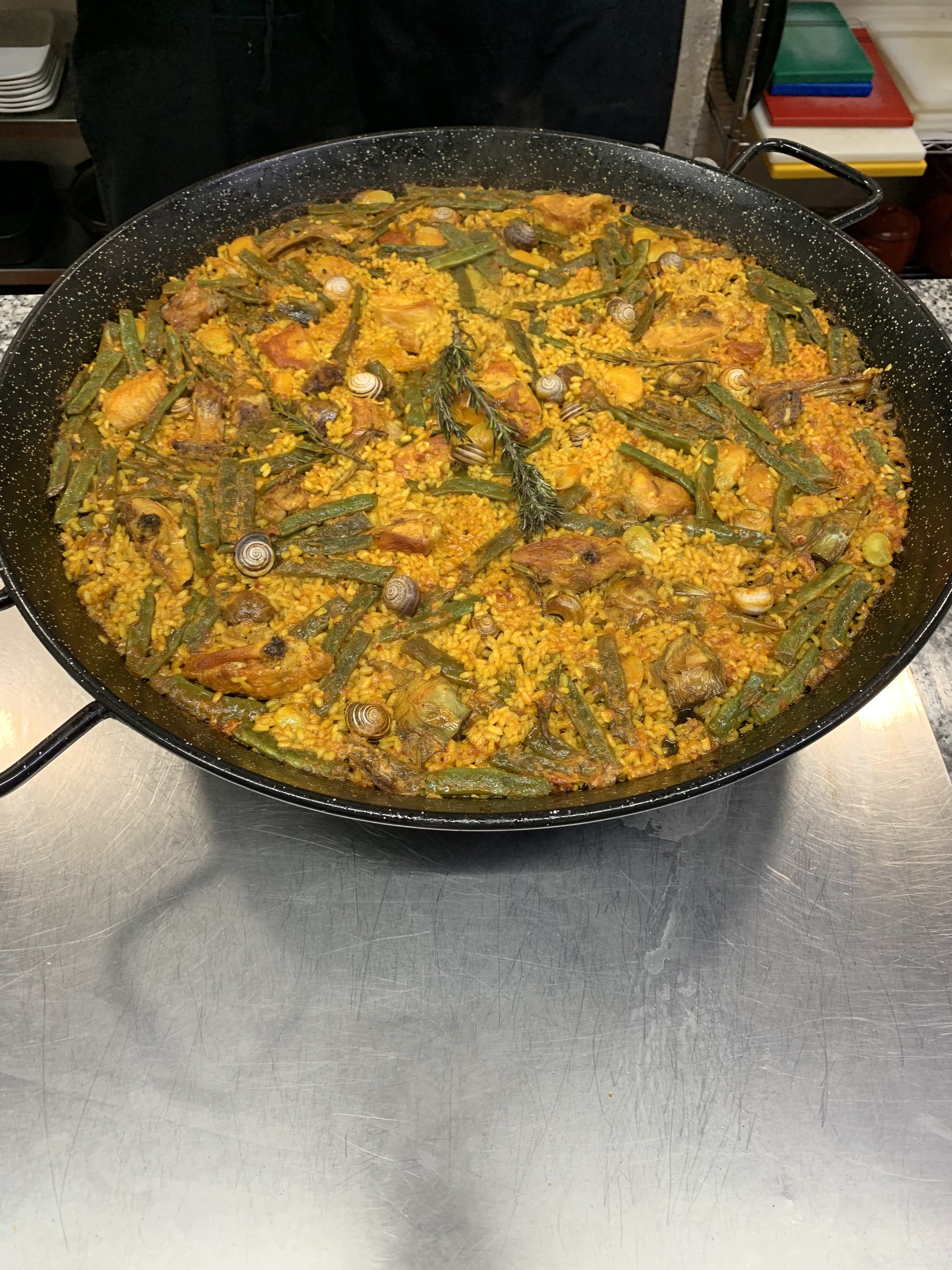
Experiencing the gastronomy of a location is important…so much culture is reflected in the food enjoyed. Paella is a rice dish originating in Valencia, and is so delicious. The traditional Paella is made with chicken and rabbit, while an authentic alternative features seafood. We discovered that the best way to enjoy it is to actually take a Paella cooking class (a no-brainer after the Carbonara cooking class my hubby and I took a couple of weeks previous). Monday morning, we hopped on the bus to a not yet explored Mercat de Russafa where we met our Paella chef and hostess. After shopping for the ingredients in the market, we headed to our culinary classroom for an experience not to be forgotten. First lesson…make Sangria and enjoy chef prepared tapas. We were off to an amazing start. The chefs then took us step by step through the preparation process, explaining the history of Paella, along with the essentials that go into creating an authentic Paella…and the best part came when we all sat at tables and relished the fruits of our labour. This is a Valencia experience I highly recommend!

The next day we found ourselves wandering around Old Town, taking in the sights and sounds unique to this area. Lunch was enjoyed in a small tapa’s restaurant, prepared in a kitchen so small, no one could have imagined the delicious food served from it. One of the treasures we found among the narrow streets and ornate balcony lined buildings was a silk artisan. Her work was stunning, so much so we just had to make some purchases; the pièce de résistance for our delightful and talented artisan – we were the first Canadian customers to purchase her work. What an honour for us to show off her work back home!  The remainder of the day gave us an opportunity to introduce our friends to some of our own cool discoveries, like the river that’s now a linear park – Jardí del Túria. So how did the river Turia become a beautiful, nine kilometre long park? The amazing story is all here for you to read and appreciate.

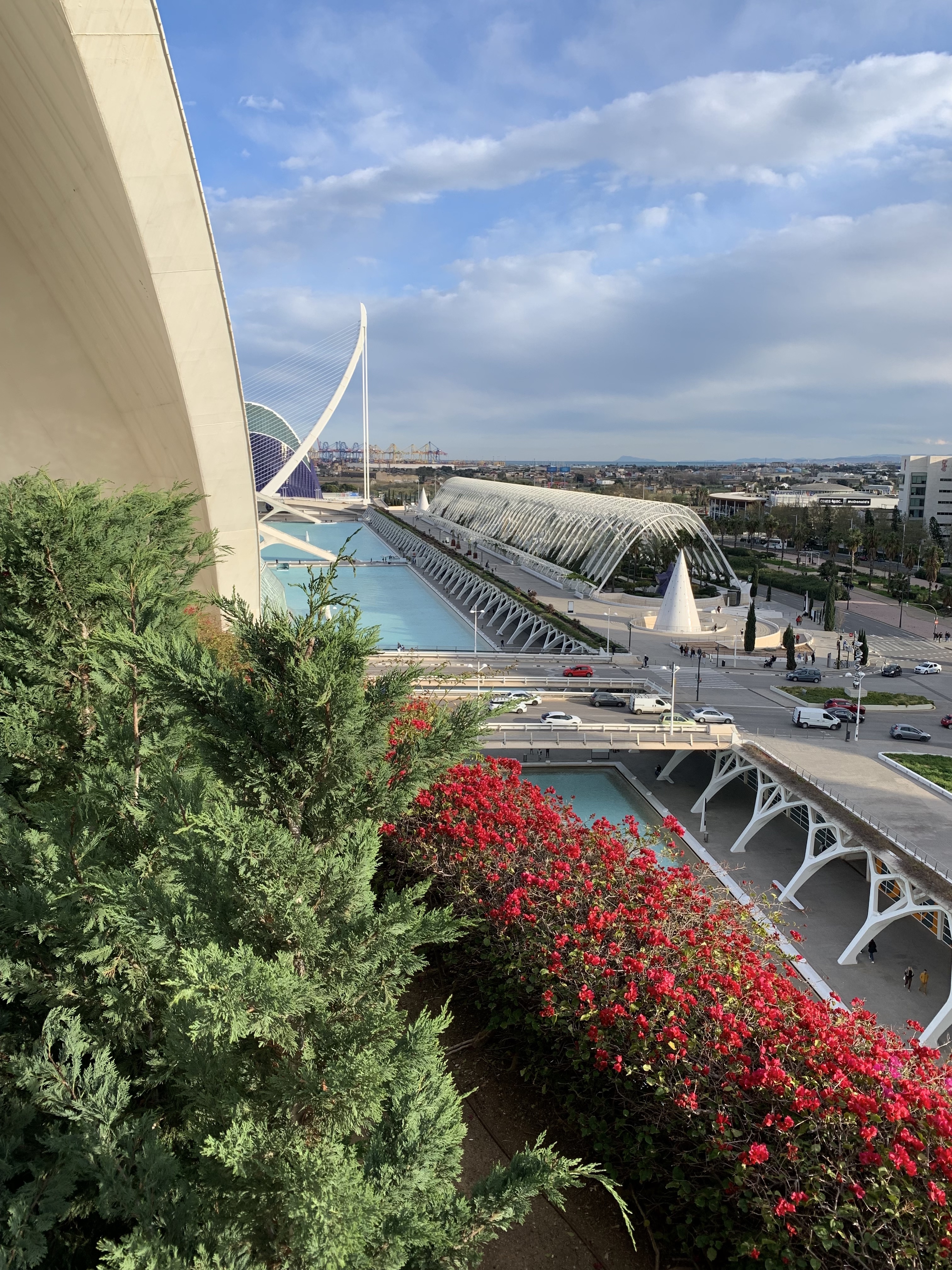
Many people had strongly suggested we visit the City of Arts and Science, which we decided to do mid-week. Tickets purchased, we arrived at our first stop, the Oceanografic, just in time for opening. I realise that some folks take issue with animals being captive in such places…I respect that. However, I have to say that from our perspective, this is an amazing place to visit. We were in awe of the beauty of the animals whose habitat was this carefully and thoughtfully designed structure of buildings, pools, averies…all created for visibility, interaction where appropriate, and immense beauty to behold. If you are having a bad day, I would challenge you to walk around and take in these amazing creations; I guarantee you will soon find yourself smiling, laughing, or simply being in awe of all you are experiencing. Next step…follow up your Oceanografic adventure with a visit to The Hemisfèric. We chose to see the Blue Ocean, and once more were in awe. This IMAX Cinema boasts a digital 3D screen measuring about 22 x11 metres. It was huge! The chairs were in a semi-lying position, enabling the guests to view the most spectacular under, and above, water life imaginable. And, the message of preserving our oceans came across loud and clear! Our visit to the Ciudad de las Artes y las Ciencias was completed by time spent in the Arts and Science Centre. While we all enjoyed the exhibits as adults, we couldn’t help thinking how much our grandchildren would be enthralled with all the hands-on activities the attraction offered. 

By this time…we were exhausted, ready to head back to Cabanyal for dinner at another of our favourite eateries, La Princesa Restaurante. Once more the food was amazing, great conversation about the joys and wonders we had just experienced, and of course, the ever present challenge of ordering food in an area where the English language is rarely understood. The confusion was such that we ended up paying for four desserts rather than two, five sangria (which were amazing), rather than three, had a delicious dish of venison cheeks delivered that we didn’t order. And, we turned away another two plates of food not requested. The overcharges on the bill weren’t noticed until the next day; still, when our friends approached Princesa’s the next day, they immediately righted the mistake, and all was well.  

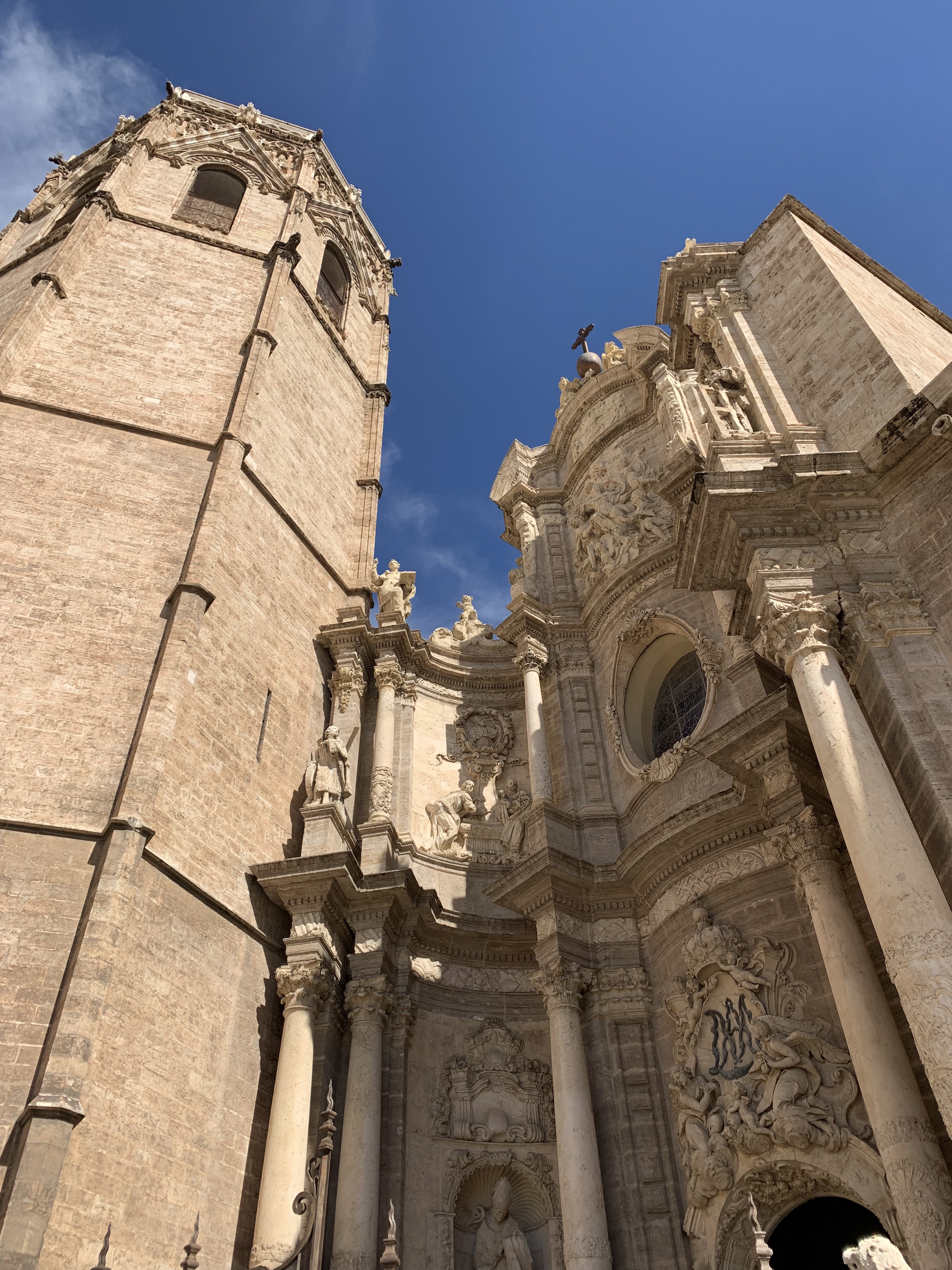
207 spiraling stairs up this tower

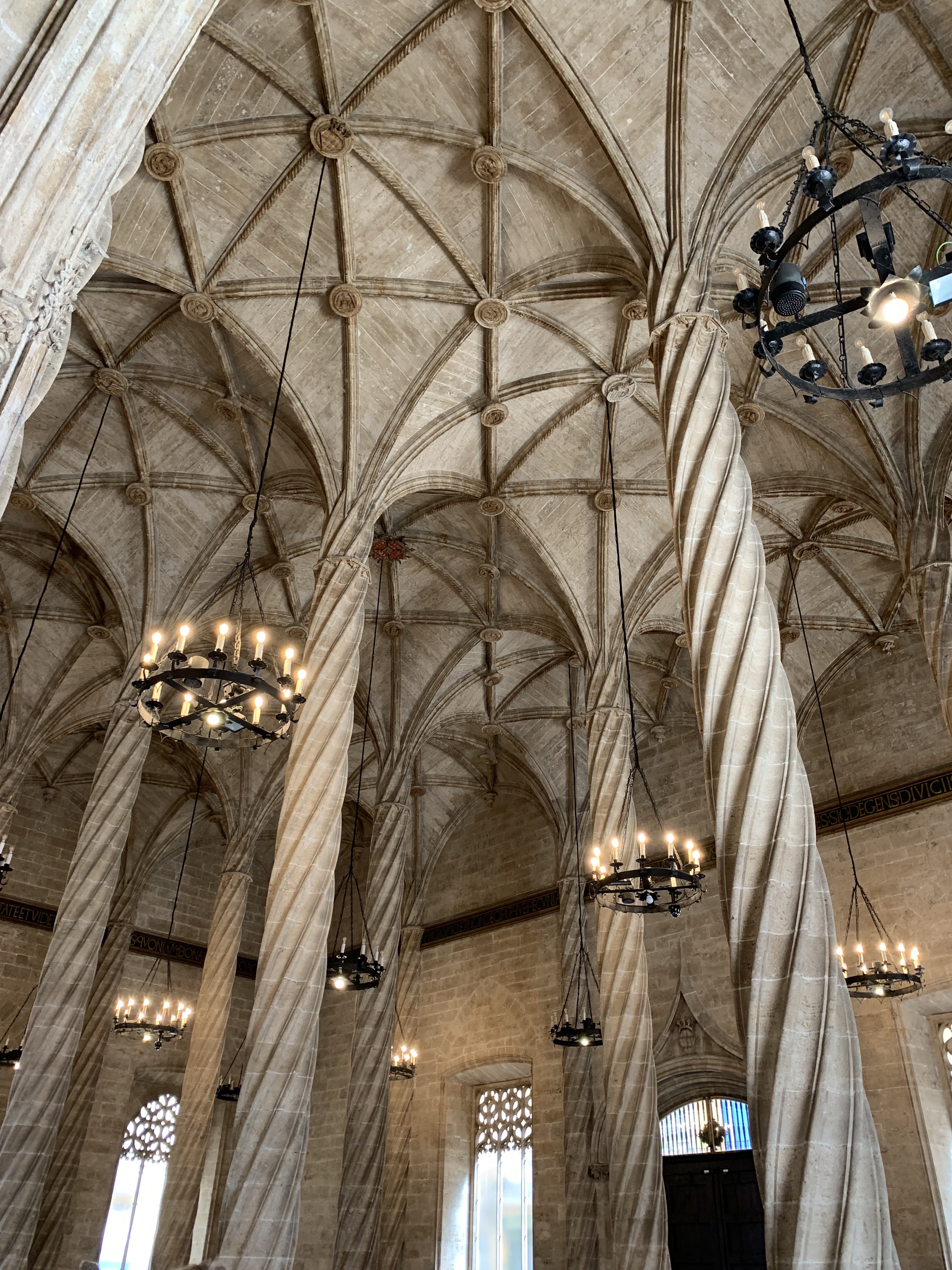
A walking tour of Old Town on Thursday was capped with a trip to the Valencia Central Market where our friends purchased what was reputed to be the best olive oil in Spain (recommended by our paella chefs). Following another superb gastronomical treat, three of us climbed the 207 steps of the MIguelete Bell Tower of Valencia’s Cathedral and were rewarded with a spectacular view of the city of Valencia, and the four PM chime of the bells! Two euros well spent!

One thing you need to know about our friends, music is a shared passion. Not just music observers, but performers, composers, music teachers, orchestra members, pianists extraordinaire, and vocalists. Needless to say, when we learned that renowned oboe player Francois Leleux was performing with the Valencia Orchestra under the direction of Conductor and Artistic Director Alexander Liebreich, purchasing tickets was a must. The concert was inspiring, uplifting, and memorable. The Auditori can seat 1.490 spectators, and is truly spectacular. It can be found in the same area as La Ciutat de les Arts i les Ciències.

Our friends left at the end of the week to explore more of Spain, but in that short, but packed week, we created more wonderful memories to add to our many adventures together. There is no doubt it’s difficult to be away from family and friends as we sojourn in Europe, making us all the more thankful for these times when we can share our journey with them – they are part of our story. 

As far as our culture shock experience, it is diminishing; however, we are accepting the reality that we will continue to work it through until we leave, and that’s just the way it is. That’s what living and learning through travel is all about.

Culture shock…Blog #108

House is 6 floors high, 107cm wide. In La Seu, Valencia

I’ve heard about it, been aware of it, down played it, and now experienced it…culture shock! Shock is a great descriptor.

When I was 11, still living in Ireland, my dad, was recognized as the top sales person in his company and thus won an all expense trip for the family to a location of his choosing; my parents decided on Ibiza, Spain. It was truly amazing, very different from our home country. The language was different and the food was not quite the same as we were accustomed to. I remember one particular dinner at the hotel in which we were staying. I can’t recall what was on the menu, but whatever it was, we thought, called for ketchup. Admittedly, ketchup was like a side dish for us. Once the food was served my brother naturally asked for ketchup. The look on the server’s face removed any doubt that this was not customary for our dish…or any dish served in this establishment. Still, he returned with the requested condiment, and with the chef. They stood by my brother and watched what he was going to do with the ketchup, then shook their heads and walked away. We thought this was funny, continued on with our delicious meal, and decided that the Spanish people had strange ideas about food, and easily accepted it as being a cultural thing. No big deal. The language barrier was overcome with non-verbal hand descriptions aptly demonstrated by my dad, and learning very basic, and important, words and phrases: baño, por favor, Cuánto cuesta este?, Muchas gracias, and, Podemos tener más papel higiénico? (can we have more toilet paper?). For 2 weeks we were able to get by. 

We observed another very strange thing…around 2pm, everyone seemed to disappear, leaving the pool at the full disposal of our family! We were so excited, and enjoyed our choice of deck chairs, servers, and of course, no one to worry about when splashing to our heart’s content. Later that evening, we learned of our error. 2pm marked the time when the sun was at its hottest, and the smart people of Ibiza knew to escape to the cool of their rooms. So here we were with our virgin Irish skin, washing off what little sun tan lotion we had applied by jumping into the chlorinated pool, towelling off…repeat. By bedtime we were in such pain! Our red scorched skin replaced the need for any lights being turned on that night! Again, we learned, and quickly mimicked the practice honoured by everyone around us on the resort. For 2 weeks we were able to get by.

A few decades later I am once again in Spain; it’s not so easy, and we are not on vacation, and it’s not just about the sun or getting more toilet paper, and we are not in the comfort of a resort. We are living in the old fisherman’s quarter of El Barrio del Cabanyal. The area is steeped in history; a walk around reveals glimpses of a turbulent past. It truly is a neighbourhood, not a tourist attraction. And, English is not spoken by, well, anyone! For this we were not prepared. It’s not just the language, we feel like outsiders, like we don’t belong. We’re not the ‘longed for welcomed guests’…we are trying to insert ourselves into someone else’s home, and it is hard! Not only is the language different, but the non-verbal actions are challenging to interpret. It’s almost a feeling of indifference that we are getting. Please don’t misunderstand me, this is what we are seeing and feeling…it is not an exposé on the character or hospitality of the Spanish people. When we do find someone who can speak English, they are more than happy to help, the challenge is finding those people.

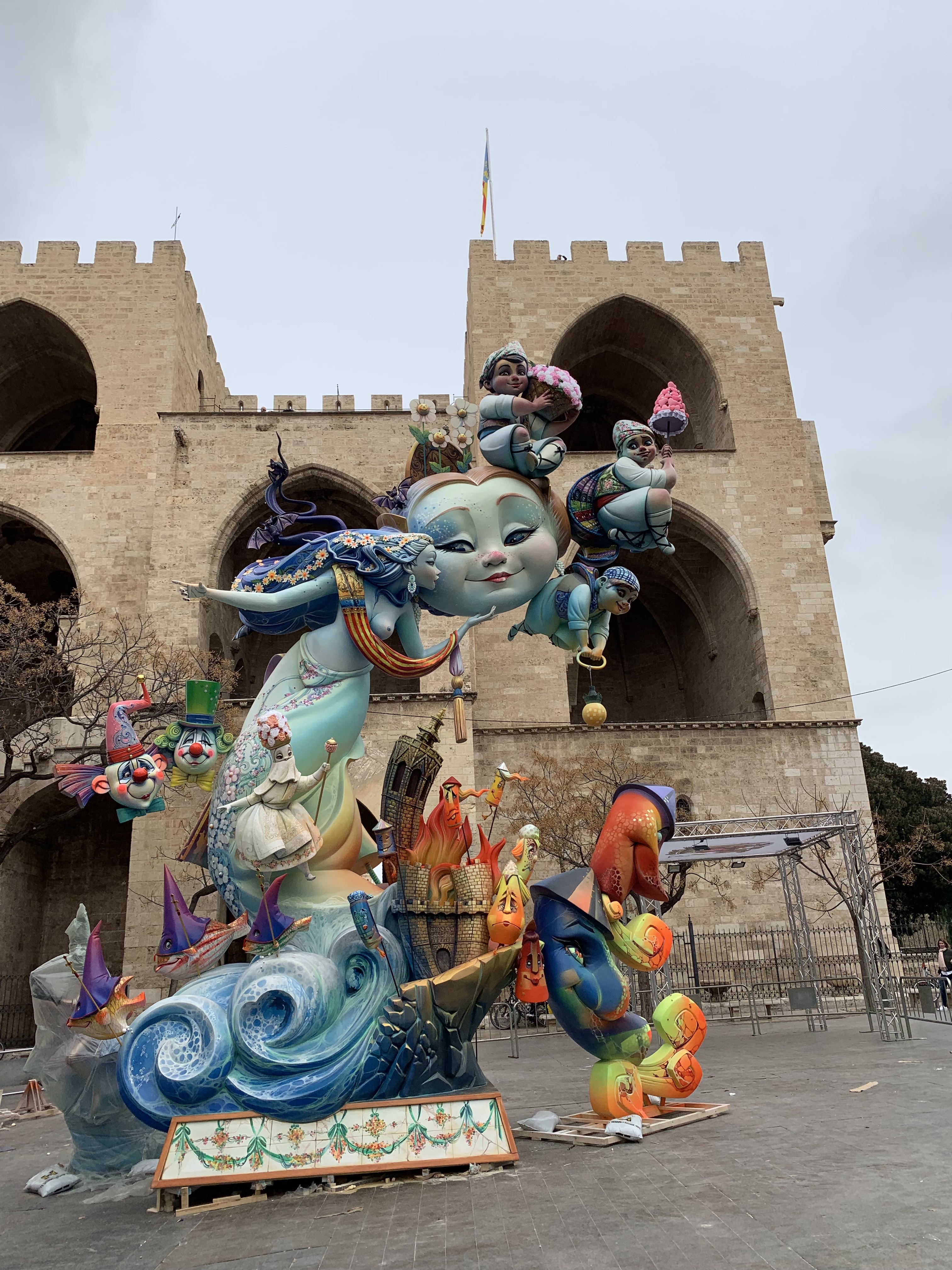
One of the Fallas monuments in Valencia El Carme

Another surprise awaiting us was the constant setting off of fireworks. According to Mario, our amazing tour guide, Spaniards love fireworks; the noise, the smoke, the smell of gunpowder, everything about them. And, it is early March…time for Las Fallas. Officially, the festival runs from March 15th -19th, with Noche de la Cremà  finishing off the celebration. However, the locals start celebrating March 1, with firecrackers going off every few seconds…be still my heart! For those who enjoy an elevated BOOM, a thunderous firecracker show called a mascletà is held every day at 2 p.m. in Plaza del Ayuntamiento. My husband attended while I remained as far away as possible…by the Central Market. It was unbelievable…the ground literally shook under my feet! I know I can’t do justice to describing this event, so please visit this Fallas site to get a better sense of what this celebration is all about.

Getting the chicken ready for paella

As we walk around our neighbourhood we see large groups of people celebrating and enjoying being together; it’s like multiple block parties with paella being cooked on open fires in the middle of the road, lots of laughter, and drinking. We walk by, watching, observing, but not joining. We are outsiders, not part of their history, or present, or future. It really is lovely to see the community created by these folks, it makes me miss home.

One of my projects while on extended study leave, is to study for and write the exam for my GPHR (Global Professional in Human Resources) designation. The module I am currently studying relates to culture, in particular culture shock. The context relates to organisations supporting expatriates as they go on assignments to other countries. As I read through the general ‘symptoms’ I was amazed at how many I was personally experiencing. The list includes: irritation, homesickness, loneliness, nervousness, loss of appetite (no, not in my case!), sleeplessness, feeling tired, extreme pride in one’s home culture, hypersensitivity, confusion. Pretty significant, and relevant. The good news is that, according to my study material, “culture shock is temporary, and everybody goes through it to some extent in the process of cultural adaptation.

Good to know. What struck me about all this when considering the desire of many to work from anywhere, to mix work with travel, to relocate to a different country while working from your home country, is the lack of dialogue I’m hearing about the potential for culture shock when making these big life decisions. Organisations, when sending employees to work abroad, need to take the responsibility to support and adequately prepare their people for such tasks. However, who prepares individuals and families for such undertakings? Let me strongly suggest those of you considering such a move to do your homework, take time to make informed decisions, learn the language, make connections in your host country, and don’t underestimate the impact of culture shock.   

For us? In the 2½  months until we return to Canada, we are going to continue using our on-line programs to learn Spanish, dig into understanding as much of this unique culture as possible, watch bonfires, admire ninots that make up the Fallas monuments, find the best paella valencia around, learn to make paella, spend as much time as possible at the sea, watch and observe and respect and take in all the Spanish culture has to offer. And we will be richer for it.

El Cabanyal beach on the beautiful Mediterranean Sea, a mere 5 minutes walk from our flat

Welcome to Spain…Blog #107

Seville, Spain

From the peaceful, natural beauty of Portugal’s Algarve to Spain’s 3rd largest city, Valencia. What a change! The Algarve provided rest for my soul and a visual buffet for my senses. Everywhere you turned there was another picture to take…and I did! I really do miss those views. (Check out past blogs for a glimpse of what I’m talking about.)

However, before coming to Valencia, many folks told us it was one of their favourite places to visit, and live. I never asked why. It’s on the Mediterranean Sea, how could it not be as spectacular as the Algarve’s coastline? It’s different…so different. We also set out on this trip to experience new cultures, but never did I expect the culture shock that hit once we arrived in Spain. But, I get ahead of myself.

Since leaving Albufeira just over a week ago, we drove to Seville, Spain, stayed for one night, drove to Torremolinos, stayed one night, and then drove to Valencia, all in a beast of a Mercedes Van! Now, those of you living in North America may not fully get the magnitude of this task…let me paint a picture for you.

Two Canadians, used to driving a small SUV, are driving a massive, seven person Mercedes Van in small, narrow, people laden streets of Old Town Seville, all the while depending on a GPS that keeps getting lost; this is not a task for the faint at heart! Infact, it is downright stressful. A fact to keep in mind, these narrow streets are one way only, so if you happen to miss the ‘obvious’ turn Siri is sure you need to take, the recalculations take so much time that you have also missed two or three more turns that should get you back to where you got lost in the first place! Once you have finally reached your destination there’s no place to park the ‘beast’. But…thank goodness, you spot a space that says something we decide to interpret as, ‘only park here if you are checking into the Hotel Las Casas de la Juderia’. We park, and nonchalauntly walk about 50 metres back to our hotel. (By the way, our interpretation was pretty accurate!). We got checked in, and took advantage of valet parking for an additional fee…money well spent I might add. The wonderful valet whisked our car away and helped us with our mega heavy luggage and medical supplies. 

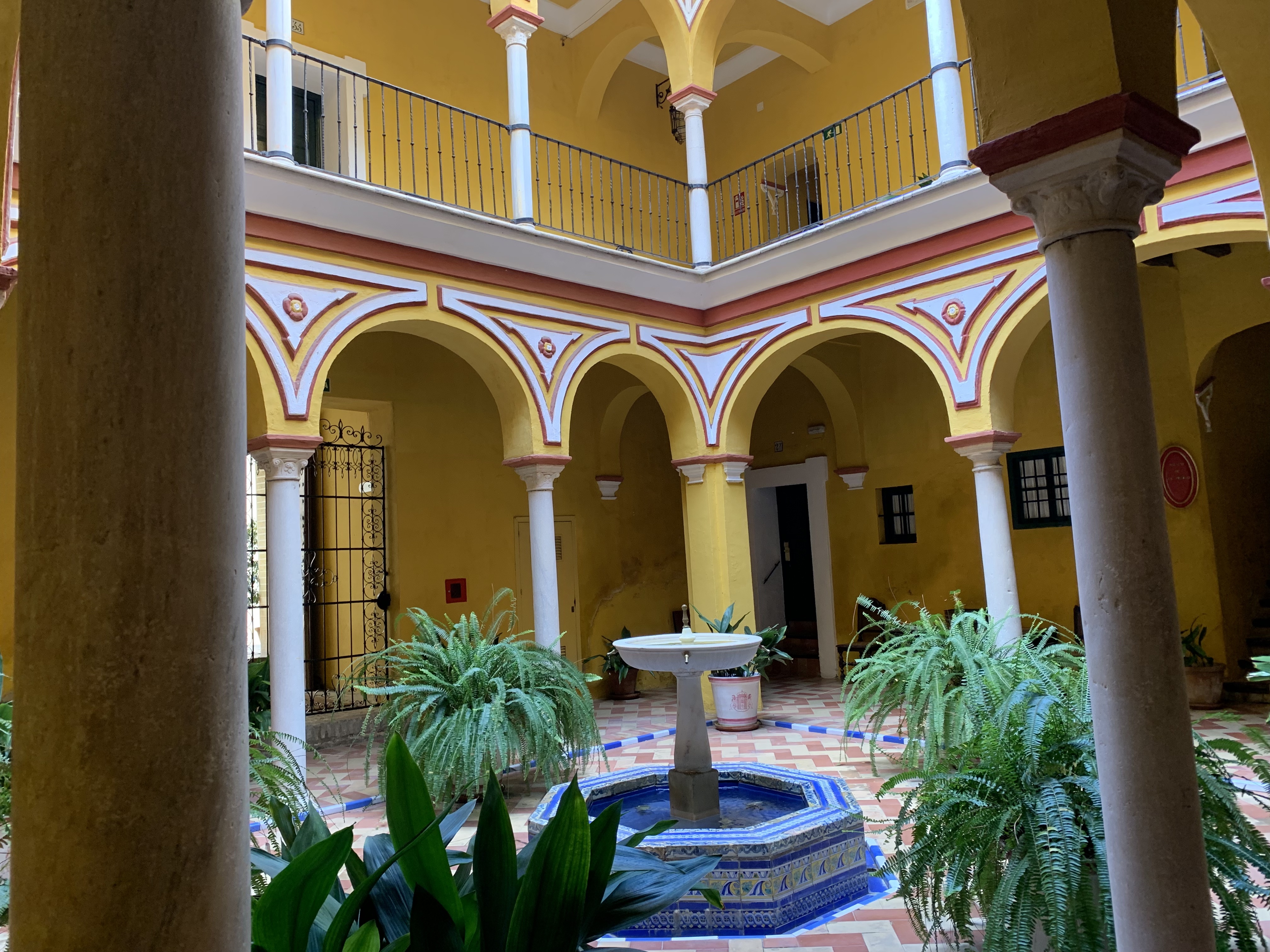
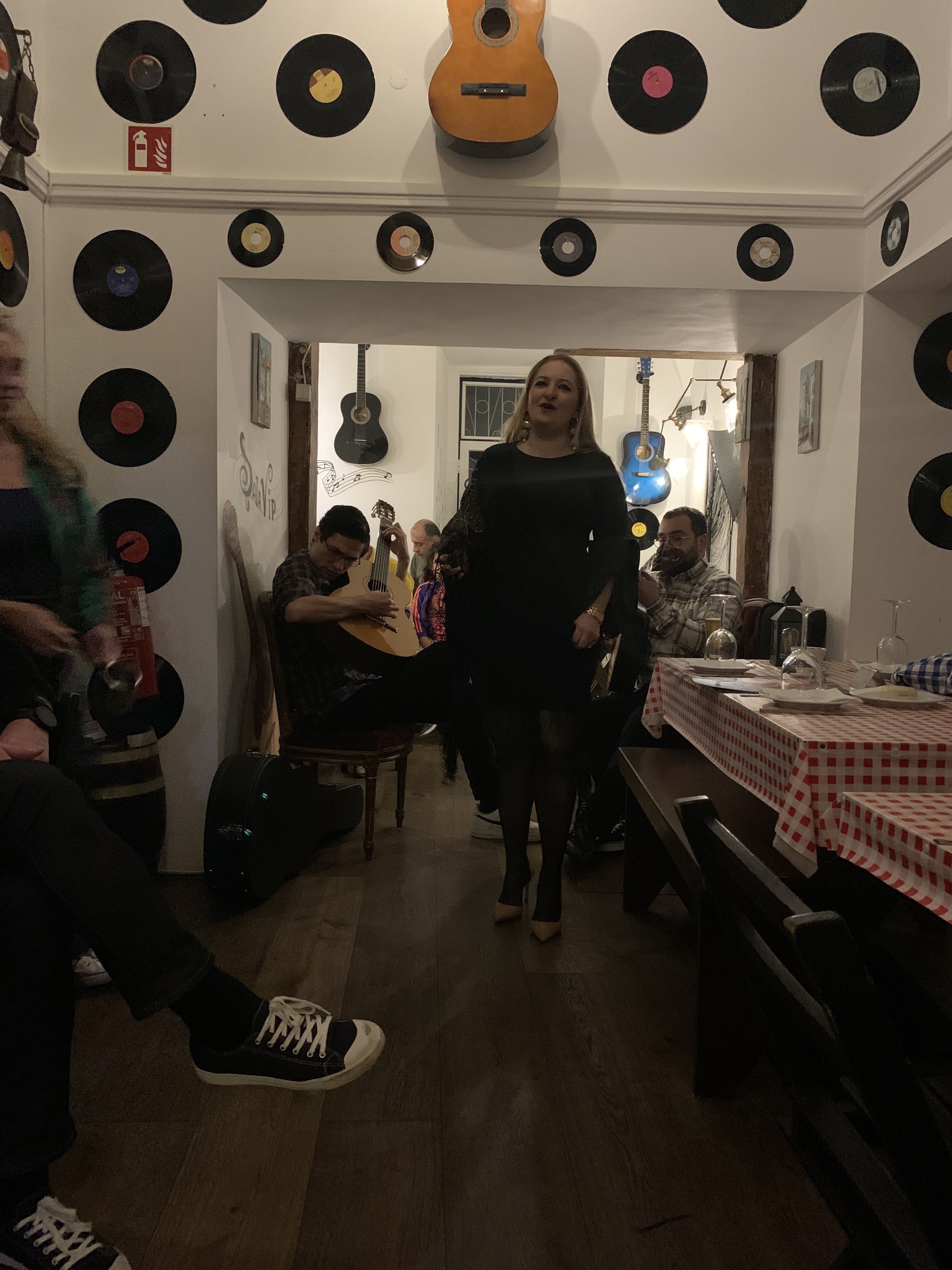
A note about the hotel…it was amazing! The most unique one we have ever stayed in. Hotel Las Casas de la Juderia consists of 22 buildings that have been restored from the 18th century, all the while preserving its culture, furniture, and maze of hallways to navigate. Awesome! And, it is located right in the middle of Barrio Santa Cruz – Seville Old Town . We only had a short time to spend in this amazing town, so to make the most of it we did a bit of walking, had a wine and tapa break, engaged a horse drawn buggy to show us the sights, indulged ourselves with delicacies from a Patisserie, treated ourselves to a fantastic Flamenco Show, out for more tapas for dinner where we were serenaded by a talented young man while we FaceTimed our daughter back home, then collapsed into bed! Wow…it was all fantastic, but we had only scratched the surface of incredible place.

After a great buffet breakfast at the hotel, we were back in the beast, finding our way out of Old Town, through Seville, and on to Torremolinos. The terrain was beautiful, so varied and with an abundance of olive groves that spread out as far as the eye could see. It was pretty surreal when we started seeing directions for Africa as we approached Málaga. Africa will have to wait for another trip, another adventure.  

We finally made it to our destination where the GPS wrought havoc once more. When it says to turn right at the next turn, you figure it’s pretty safe to do so. Well, not when it is a dead end street that ends in an underground parking lot with no way to turn around without heading into the bowels of the parkade; a one floor, basement parkade, with maybe 15 parking spots fit for tiny cars and scooters. Not a Mercedes Van. Again, my husband’s driving skills were tested as I directed the inch by inch turnaround, inside the parkade, and back up the 12% grade, spiral type road to exit. (The exit was also the entrance…fortunately no other vehicles decided to enter while we were exiting). Phew! Nerves shot, pulse racing, marriage intact! GPS? No comment there!

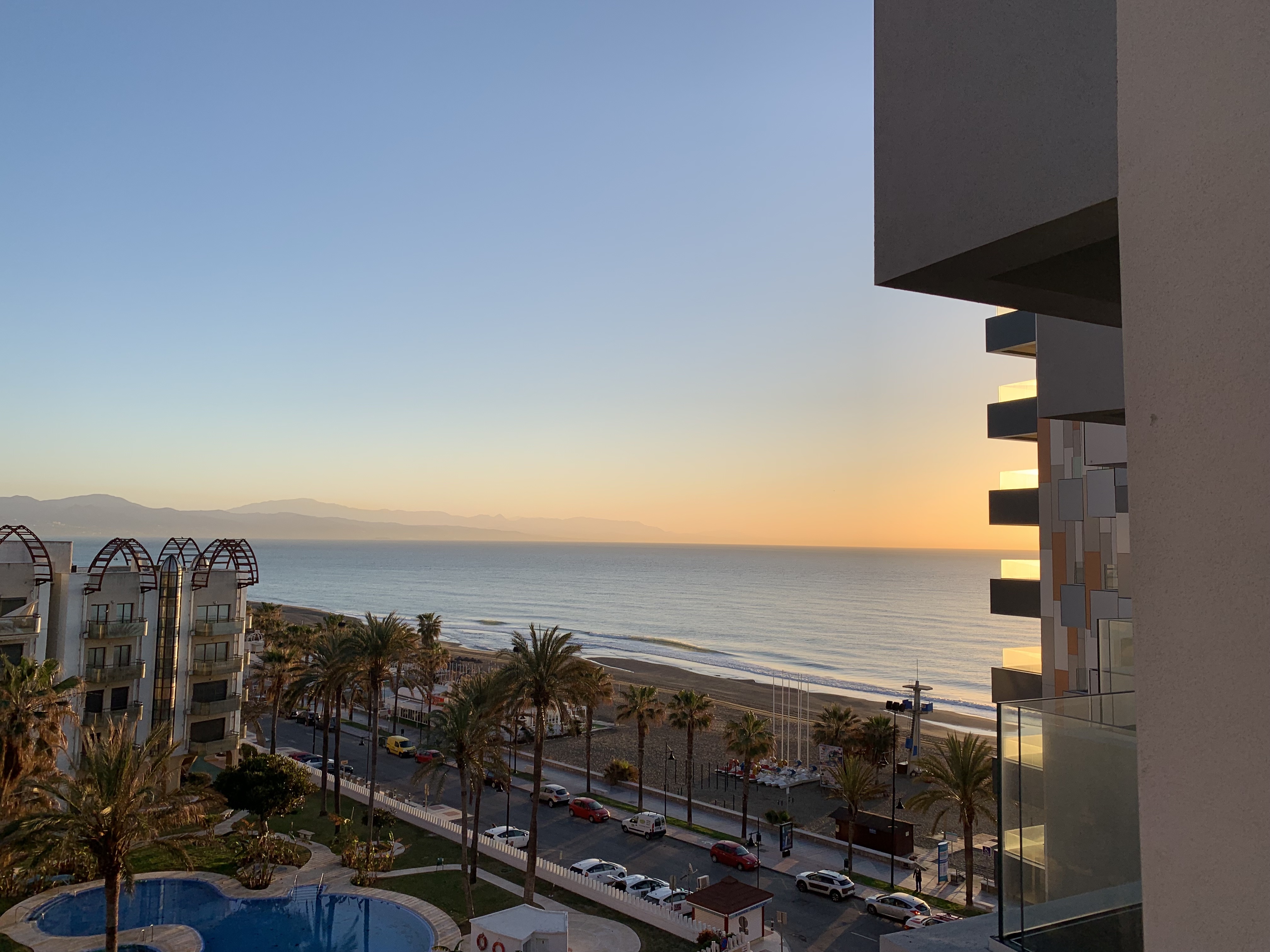
Torremolinos is on the Mediterranean Sea, but sadly the weather was dull, overcast, and windy, so it did not show off its enticing beauty. However, the next morning it redeemed itself as the view from our hotel balcony provided a front row seat to the sun coming up over the sea. Lovely!

After the most delectable breakfast I’ve ever devoured, champagne and all, we hopped in the van for a long drive to Valencia where more challenges, learning, adventures, and discoveries awaited us. 

You’ll have to wait until next blog to hear more about the culture shock we are experiencing, until then…

When Google Translate doesn’t help…Blog #105

Fado…a ‘must see’ Lisbon experience.

We first discovered Google Translate during our trip to Prague some years ago. It was amazing, and helped out in so many ways from reading menus to asking for directions. Our time in Portugal has also been aided by this helpful app. While most menus provide an English translation, we have had the need for language support in several other areas. Grocery shopping, for example, was an immediate area of challenge. The first day upon arrival in Lisbon we needed groceries. No car? No problem. Grocery stores were within close walking distance from our AirBnB. For the most part, buying meat, cheese, fruits, and vegetables was easy (as long as one could identify what the fruit or veggie was). What wasn’t so easy was knowing what kind of yogurt, oatmeal, milk, or even shampoo and conditioner was before us on the shelves. Open  Google Translate, use the camera feature, and we were good to go! 

In one instance while dining at a favourite eatery, Basilio, there was a sign hanging on the basket of ginger on the counter by our table. The symbol was a dog sitting, with a line across the picture. We have similar types of signage in Canada to indicate such things as no smoking, or no cell phones. You know the ones. Looking at the placement and context of where the sign was located, we were certain the message was clear.  My husband and I had a lengthy discussion around why ginger may be dangerous for dogs, and why a restaurant would need to provide signage to that effect. Being curious, and wanting to share this knowledge with family and friends, I took a picture. It wasn’t until we returned to our apartment that I actually asked Google to translate the words accompanying the picture; ‘Nao sentar’. 

Ok, those Portuguese speaking readers will immediately realize our mistake. The ginger basket was simply a vehicle on which the owners could hang the sign until needed to mark a table for incoming customers. For those of you, like us, not familiar with the language, Nao sentar means ‘don’t sit’. To be fair, had we used Google in the restaurant we would have learned this, but would have missed out on a very interesting conversation about the perils of ginger and our canine friends.

We recently had incident where we wished Google Translate could have helped. In preparing to leave Portugal to move to our new European location in Spain, we had to pick up a vehicle in Faro. After a rather frustrating experience (too long to get into here), we were upgraded to a Mercedes van (a little extreme for the two of us). However, it provides comfort, and plenty of room for us, our luggage, and other supplies we need to take along. We should have known we were in trouble when the customer service people told us the vehicle was from Spain, having been dropped off by one way travellers. 

My husband started the vehicle, and successfully drove out of the car lot, figured out where the gear changer was located, and headed back to Albufeira. Everything was good, until he touched something, causing the car to get stuck in first gear! Finding a place to pull over, he pushed, tapped, and pulled on every available lever and button (of which there were many). It began to feel like our youngest grand daughter pushing buttons, pulling levers, and turning wheels to make things happen on her Fisher Price car! To be fair, the car was trying to tell us what to do by way of information showing up on the control panel. The trouble was, all instructions were in Spanish! There is nothing in the basic Spanish lessons we are both taking that equipped us to know what should be done to get us out of this predicament, nor could our precious app get close enough to provide any kind of translation. Finally, after much random button and lever maneuvering, the gear changer was released…although my husband had no idea which was the magic move. 

Unsure of which road to take to get us home, rather than using my phone I decided to use the car GPS. You can guess what happened…Spanish! AND GPS gadgets that more resembled a gaming controller than a car GPS! For sanity sake, I used my phone. 🤷‍♀️

Knowing we only spoke English, why no-one at the rental place thought to introduce us to the foreign machine we had just rented remains a mystery. However, we did stop at one of their drop off locations once we made it back to Albufeira, where one of their service agents kindly switched the system to English, linked my phone via bluetooth, and introduced us to the various bells and whistles possessed by the van. We breathed a sigh of relief. 

My husband and I have both been driving for more years than I choose to mention. We have driven all kinds and sizes of cars, in various countries, but have never found ourselves in this kind of predicament. It’s interesting how inadequate and foolish you can feel, trying to do something you have done for years, but being completed lost and overwhelmed because what was once familiar, changed. I think many leaders are feeling like this. They have been leading teams, creating processes, fostering cultures successfully throughout their careers, but now find they have to re-think and re-learn everything. They knew how to be effective, but what was familiar has now changed. Learning how to lead and support their people in the fast changing contexts in which they find themselves can be like operating in an unfamiliar language. 

A word of advice? Seek out people who know this new environment, this exciting, yet overwhelming working environment, and ask for help. Believe me, you will learn to enjoy the ride once you do.    

Carvoeiro, one of our favourite places in the Algarve.

The rubber band snapped!…Blog #104

Still overwhelmed by such beauty!

Two more weeks in Albufeira, Portugal, before heading to Valencia, Spain. We are thoroughly enjoying, and appreciating, balmy 16-20 degree celsius weather, boasting azure skies, sometimes dotted with fluffy clouds, and the occasional refreshing rain. Most days start with breakfast on the deck, where we can look out between buildings and clearly see the ocean spread out before us. The background sounds combine the squawks of seagulls, sweet songs of various birds, people calling to each other on the street, or from their balconies, and vehicles manoeuvring through steep, winding streets. The morning routine of hanging laundry out to dry and walking your garbage to the end of the street is embraced by all. Mail is delivered by a CTT delivery person often driving a scooter, with parcels dropped off by the delivery van. Mid-morning see’s an elderly couple walk down the hill for their morning coffee, while several locals gather outside the cafe for a morning espresso and chat. All this from my office balcony perch on our 4th floor apartment.

View from ‘my’ table

Somedays I head to my favourite cafe, Roca Beach Bar, right on the beach. Not only is the coffee good, but the Pastéis de Nata are amazing, served warm with cinnamon to sprinkle on top. I’ve become a regular, and receive such a warm greeting each time, with a genuine ‘check-in’ to see how my work is going. They have even dubbed a table as being ‘your table’, one that welcomes me with a breath-taking view of the vast beach and ocean just steps away.

Then the inevitable thing happens. Around 17:00, the sun loses its warmth, and slowly slips from view, eventually causing the air to drop to single digit temperatures. I had no idea how cold it would be in the evenings here in the south of Portugal. Ok, not as cold as at home in Canada, but still cold. We learned that the buildings are constructed to provide cool in the blistering summer heat, but in no way equipped to warm their inhabitants during the winter. From white concrete walls, to beautifully tiled floors, summer efficiency doesn’t feel so great when trying to warm oneself while huddled around a fireplace. Sure, it does a great job of taking the chill off the air, but once you stray more than a few feet away from its blaze, the chill quickly wraps itself around you.

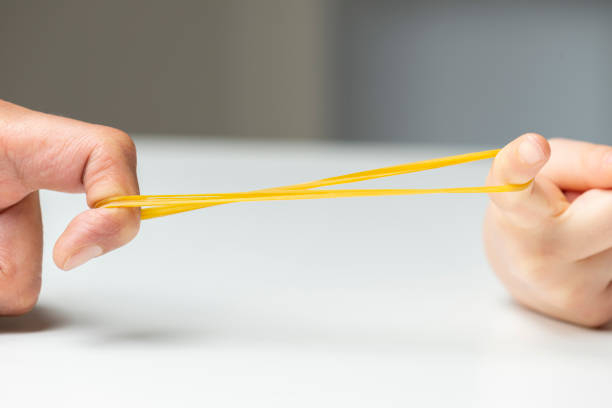
This is where the rubber band snapping comes in. Finding wood for a fire is easy here in Albufeira; you simply add it to the grocery list and pick up with your regular staples…oat milk, granola, eggs, fire starter, logs, firewood. Easy. Except these 9 kilos plus bundles are stacked in bins that require one to bend over, lift, twist, and drop into a shopping cart. I’ve been doing it successfully for 2½  months, until a few days ago. I have no idea what I did differently, except that my back decided enough was enough, and snap! Instant pain, instant ‘I can hardly move’, instant inconvenience! The shopping cart became my crutch until reaching the ‘comfort’ of our car.

With the aid of a heating pad, topical cream, Tylenol, and rest, I am well on my way to healing. The past few days, however, have made getting comfortable a real challenge. Sitting for too long hurts, lying down makes me ache, and walking has dropped a few gears to slow motion. However, even though I knew the bricks creating the footpaths had gaping cracks, the roads had many potholes, the stairs were totally uneven, and the walk to the beach was a downhill trek (not to mention the uphill return climb), the pain that shot through my back with each crack, dip, step, and hill, drew attention to these irregular surface conditions. Nothing changed about the footpaths, roads, or hills over the past few days, but my attention was drawn to them because something in my body had broken down, making it difficult for me to ‘make do’ with such uneven terrain. 

It got me thinking about life and work in general. When things are going well, when there are no new challenges that come along to disrupt the flow, we don’t pay much attention to problems or issues. Sure, they exist, but we work around them, we put up with them, until we can’t. Why is it that something, be it catastrophic or minor, has to happen before we give attention to those things that we can actually change in order to make life, systems, processes, or relationships better? Why do we settle for mediocrity when we could actually implement changes that just maybe, would bring growth and increased joy or efficiency to our personal and professional lives?

I obviously can’t do anything to change the surface conditions in Albufeira, nor can I change the building construction; however, my rubber band experience can serve as a reminder to pay attention to what I can change (yup, even how I lift). And more than that…do something to effect that change.

Culture: celebrating similarities & differences… Blog #102

Cliffs at Sagres

In my previous post, I expressed the hope that being in a place for four months (as we are in Portugal and then Spain) would afford us some of the cultural insights that are unique to these areas. We have not been disappointed; culture and daily living is different than in Canada. Sitting at a restaurant, on the beach, sipping some delicious Portuguese wine, my husband and I had a great discussion around what we were observing as cultural differences between this location and at home in Canada. We laughed, the very fact that we had been sitting, sipping, for over two hours with no-one hovering wondering when we were leaving, no server coming to offer the conta (bill), or asking if we want anything else, was a stark contrast to what we would have experienced at home. Portuguese people know how to relax and truly enjoy the moment. No one is in a hurry, even if you really do need to leave the restaurant for an appointment! We adjusted, and have learned to ask for the bill a while before needing to leave. It is a joy, however, to have this travel time with a minimal schedule, where waiting to pay is not an issue.

Several of our experiences have caused us to recognize cultural differences, one such phenomenon relates to when places are open, or not. Because of the time of year in Albufeira, many places are simply closed until the arrival of tourists some time around the end of February. When in February? Well, that’s rather vague. Many places were already closed in November when we arrived, with either no signage indicating when they would re-open, or simply ‘closed for the holidays’. What holidays? Not sure…some opened for two weeks around Christmas, but closed again at the end of the first week in January, when once more they were ‘closed for the holidays’. Apparently holidays could be four months, two weeks, sporadic, or even five days a week. One place we kept trying to go to for Sunday pot roast turned out to be quite a challenge. First time we went most menu items were not actually available due to recent restrictions that would have them limit patrons for a predetermined number of days before Christmas until after the New Year. Understandable. The second time we went, arriving for dinner at 4:30pm, we were told they only served food until 4pm. No problem, we would come back next Sunday for their special pot roast, or roast chicken dinner, served from noon to 4pm. The day came, and my husband was pumped! He was salivating over the prospects of yorkshire puddings, bringing back warm memories of Sunday dinners at my parent’s home…Mom had mastered the art of cooking pot roast and yorkshire puddings! We arrived, sat down and were quickly told that the cook decided to take the week off, so they weren’t serving food that week. Really?? 

At this point, it simply became laughable. Even the British culture of the proprietor had been influenced by the Portuguese culture they had been part of for so many years. Seeing our disappointment, and ‘what can you do,’ laugh, they assured us that next Sunday, pot roast would be served up, guaranteed! We were there, and it did not disappoint.

However, as we left the restaurant, I had a real sense of feeling cheated. Not because of the quality of food, or the generous quantity that overflowed the dinner plates, but because I was in Portugal, eating a traditional English Sunday lunch, drinking Guinness, surrounded by British people. I truly missed hearing a cacophony of conversations, in multiple languages.

One of the beauties of Europe is that while you are residing in one country, everywhere you go you’ll encounter folks from many countries and cultures; just be quiet, listen, and take it all in. It can be intimidating and exciting all at once, but there is such a beauty to it. Fortunately for us, the majority of people speak some degree of English (how I wish I had learned a second language!). To give you an example, we were enjoying breakfast at a cafe last week. Over the course of our time there, we visited with people from Ireland, England, Wales, Germany, India, and of course, Portugal. It was so much fun. The common thread of course was travel, and a love for learning about others experiences. Some encounters, however, aren’t quite so successful. 

Yes, that is a man fishing on the edge!

This week my husband and I visited the end of the world, Sagres, at least that’s what Europeans considered it until the 15th century. Sagres is a small village of 2000 people, located on the very south-western tip of Portugal and is a place unlike no other we have experienced. A small place, it’s beauty is truly breathtaking, from the landscape, to the 100 plus species of flora, to the cliff-side walks overlooking vistas of unending ocean, to the 25 isolated beaches with avid surfers, and of course we can’t forget the fearless line fishing happening on the precipice of 200 foot high cliffs! This truly blew my mind! Do these people not know the potential danger and certain death they were inches away from? That several of their co-adventurers fall to their death every year? Well, apparently they do, but it hasn’t curtailed these brave souls from fishing here for many years. These are one of the many sights that remind me I’m from Canada…our authorities would have shut such activity down years ago due to potential danger. I’ve lost count of how many times we have commented on this very thing throughout our travels…apparently we North Americans need someone else to let us know what is dangerous, then set up rules to save us from ourselves. Hmmm!

I digress…while walking around the peaceful Fortaleza de Sagres,  we passed a lovely, elderly couple who were clearly enjoying their time exploring this wonderful area together. By the third time our paths crossed, it seemed right that we should have some kind of an interaction. Which we did. We exchanged greetings, neither speaking the other’s language.. We learned they were from France. When we said we were from Canada, they immediately assumed we also spoke French! They excitedly talked about some of the places they visited in Canada: Montreal, Quebec City, Montcalm, Gatineau, to name a few. However, when we somehow communicated that we were from the West Coast of Canada, and couldn’t speak a word of French, they offered a rather pathetic “Vous ne parlez pas français aussi?” Which I rightly assumed meant they were expressing empathy towards our lack of French speaking ability. (I had to get my multilingual niece to help with this interpretation!). Still, using hand signals, body language, and tiny words, we were able to share a moment together celebrating the awesomeness of the creation we were enraptured with. We said ‘Au revoir’, they said ‘Goodbye’, and we parted company. Even that short encounter brings certain joy when shared by fellow travellers who have a deep appreciation for not only our similarities, but also our differences. 

Fortaleza de Sagres

Culture = habits? … Blog #101

Sunday evening, church services were done, and the sitting room was all set up ready for company. Mom had been preparing for our visitors over the past couple of days, and the spread she presented was nothing short of front-cover-cookbook ready. The sandwiches were trimmed and cut into triangles, the scones were the perfect three bite size, ready to be lathered with Devonshire cream and homemade strawberry jam. Mince tarts, chocolate fudge shortbread, ‘plain’ shortbread, and Victoria Sponge cake were all part of the fare, served on a triple layer cake plate. Now, with the fireplace blazing, the room provided a warm and welcoming atmosphere for some good Irish craic with friends.  

If you think Mom put on this spread for a special occasion, you’d be greatly mistaken; this was a normal, regular, and most enjoyable cultural entertaining norm for a family in Northern Ireland, right up to when we immigrated to Canada in 1970. People would feel free to drop in anytime, knowing the kettle was boiled and ready to ‘wet the tea’ and let it ‘draw’ for the appropriate amount of time. As well, the pantry always had a tea treat at the ready for those welcomed guests who would simply drop in for an unannounced visit.

This was our ‘habit’ each Sunday evening. Similar times were enjoyed at my grandparents home in Annalong, Ireland. I have fond memories of sitting around the fire listening to my granda, with his gentle Irish brogue, recite stories and poems from years gone by, while granny cooked up her delicious tomato soup in the tiniest kitchen possible (I’ve no idea how they raised six boys in that tiny home!).

When our family immigrated to Canada, we expected those habits of culture to continue for us. Dad and mom expected neighbours to drop by anytime for a visit, they expected Sunday evenings after church to be times of visiting with new friends. Sure, my parents still invited people over, and guests were delighted by the table spread before them (albeit, with a greatly reduced salary the fare was more simple, though every bit as delicious), but such visits only happened when intentionally planned for. No one dropped by for a visit and a cup of tea. Mom waited, but no knocks ever sounded on the front door. It didn’t take long before her confidence started to crack; did people not like her? Was she an inadequate hostess? Would she ever have close friends again? It was a devastating turn of events for this accomplished homemaker who freely expressed her love and appreciation for others through hospitality.

Culture was not a topic of conversation back then. People were people. We didn’t encounter folks from other countries on our small island (the cultural landscape of Ireland has certainly changed over the years…a lovely thing to see). In our new home called Canada, we knew things were different, but had no words to describe it, only expressions of sadness, hurt, and longing for what had been.

Eventually, as a result of a heart attack, my dad met an Irish doctor who opened our eyes to the ‘Canadian way’. Dr. Mark quickly became a family friend, and provided our first lessons on cultural training. Who would have thought it would be considered an imposition to drop in for a visit? As time passed we would soon discover not only the differences in our cultures, but also in our common words of expression. Apparently it wasn’t a good idea for a student to use the term ‘stupid ass’ in class. Nor was it a compliment to tell someone their home was homely. (We learned that ‘homey’ was the complementary word we were after.) Another cultural practice, or habit, was drinking tea. Let me be clear, there is nothing wrong with tea…it is still a pleasure to be enjoyed by young and old alike, no matter where they call home. 

However, our habit was to have tea first thing in the morning, mid-morning, before going to the market, when we came home from the market, with lunch, afternoon tea, dinner, and of course supper (the snack we had just before bed). Not until my then boyfriend (now husband) came into the family did we realize this was not the norm. 

Culture is a beautiful thing, but even some cultural practices, or habits, can be a barrier to fully enjoying the many wonders of life and living. Let me share this example. As a young woman I was suffering with constant headaches. I saw one specialist after another, and none of their brilliant minds could figure out the problem. Until one. This doctor was an eye, ear, nose and throat specialist (ENT), but most significant was his heritage: he was British. In our first consultation, he inquired about my tea drinking habits. When I recounted a normal day, we added up how many cups of tea I was actually consuming…more than ten cups a day, well beyond the recommended daily allowance of caffeine! His prescription was for me to stop drinking tea for a period of time. I did, missed the tea desperately, but did not miss the headaches that magically disappeared at the same time I cut out my tea drinking rituals. 

Our culture, our habits, were so ingrained in who we were, we had no idea others would not share the same. Growing up, I had no exposure to other cultures, our family travels were mostly to the South of Ireland, England, Scotland, Wales, and just before immigrating we visited Ibiza and Canada. There is a great difference between visiting a place and residing in a place. Marriam Webster offers this as a definition of reside…’to be present as an element or quality.’ How long does it take to move from simply living to residing in a location? I don’t know…but I certainly hope that being in a place for four months (as we are in Portugal and then Spain) will afford us some of the cultural insights that are unique to these areas.

The idea of culture being habits, has created a bit of a mind shift for me over the course of my current research.  Organization culture or team culture is a topic of great interest in these changing times. We read articles and books about adapting to culture, learning culture, creating a culture, or embracing culture, among other topics, but the challenge seems to be most apparent when we start looking at changing culture.

“Culture will not change by propagating different values. Culture can only change by changing habits and behaviours. These in turn will change values, plans, procedures, and norms and finally the ‘stories we tell ourselves about ourselves’ regarding our bottomline assumptions and beliefs.”  

Jutta Ekstein and John Buck, experts in the ‘Agile’ space.

While changing my behaviour around drinking copious amounts of tea may not revolutionize an organization, it was a change in my habits, my culture, that certainly brought healing and growth to how I live my life. And, opened up a whole new world of coffee (decaffeinated of course!)

We continue to live in a time of change, change that often calls for a re-examining of organizational culture. Is it possible that such an examination might reveal some habits that, if changed, may be the first step in shifting a culture towards one that more realistically aligns with the values, plans, procedures and norms aspired to as an organization? 

The Cambridge Dictionary defines a catalyst as ‘someone or something that causes a big change’. Is it possible that individuals within organizations could be the catalysts for a necessary cultural shift in an organization by intentionally changing one habit at a time? I wonder what some of those habits might be for your organization?

Praia da Oura Leste, Albufeira, Portugal

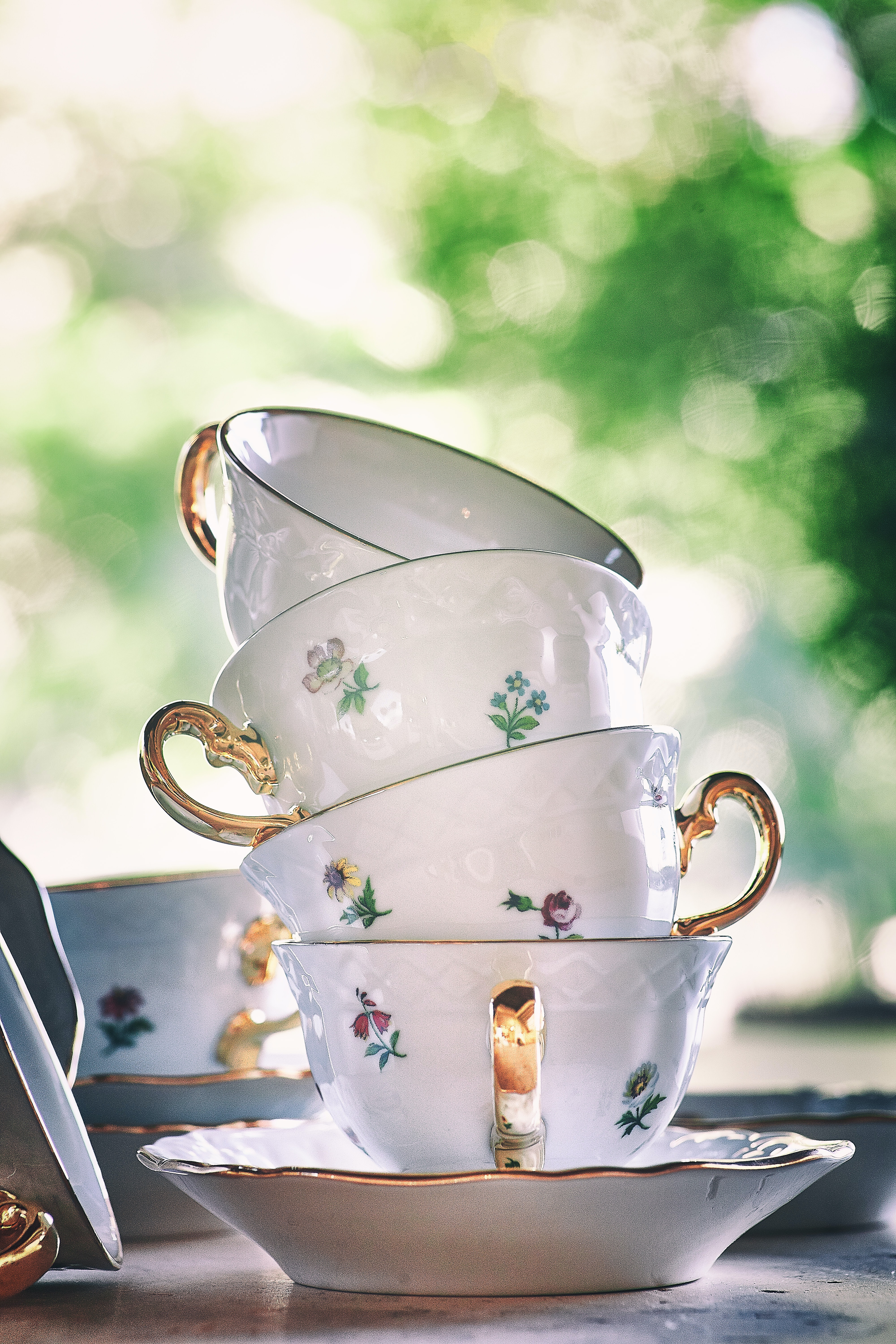
Tea cups photo by Rodolfo Marques on Unsplash English tea service photo by Sebastian Coman Photography on Unsplash

Networking – I really dislike that word…Blog #90

I stood on the outside balcony of the beautiful lake front hotel. The sun shone, the lake sparkled, the music volume was at just the right level for conversation, and every one of the 400 people in attendance were thoroughly enjoying themselves. Actually, make that 399 were enjoying themselves. I was not. My heart was racing, my palms sweaty, and I wanted to bolt!

Just the day before, I and four other new business start-ups had agreed to go to the highest attended annual networking event in Kelowna. You know, safety in numbers. None of us were comfortable ‘selling ourselves’ to a crowd of strangers, somehow letting them know that we ‘had what they needed’. So, we set a plan in place. We would pair up, approach the attendees, smile, have our new, shiny business cards ready to hand out, collect all the cards we could. We were prepared, what could possibly go wrong? 

So, there I was, right on time, standing on the balcony like the Queen of England waiting to greet her subjects. That’s when my cell vibrated with notification of a text. 

I’m so sorry, but I can’t make it tonight, something’s come up.”

“That’s ok”, I replied “these things happen.”

No problem, three of us can still work the plan, just breath Roberta. Then another vibration. 

I hate to do this, but I just don’t feel good. I need to bail tonight. You understand, don’t you?”

Two down, still two standing. We got this! Breaths are coming almost in spasms. And then the unthinkable happened. You guessed it. “My boyfriend just came into town for a surprize visit! I can’t leave after he drove all this way. Sorry. I knew you’d understand.”

I would understand? Are you kidding me?! I could have come up with a million valid reasons (ok, maybe two or three) for not making the event, but I didn’t. I was there. I was alone. The air had been sucked out of my bubble!

Let me just insert here, that I am truly an introvert. When I teach, or present at a conference, you would never know it, but I am. If you are familiar with Myers-Briggs Type Indicator, I’m an INTP. (I still have a difficult time getting my head around this tool). That ‘I’ stands for Introverted. If I’m representing something, or someone else, or if I have a task to do at a function, I’m ok. But put me in a situation with strangers and charge me with drawing attention to myself, I’m not a happy camper. I’m in panic mode. 

What happened next made me believe in angels. As my eyes scanned the crowd they spotted a lady I had only recently met. Our eyes met; she recognized me! And, she waved for me to come and join her! Thank you God! When I reached the spot where she stood waiting, I quickly blurted out my dilemma, hardly stopping to breathe, and asked if I could hang out with her. Remember, I had only recently met this lady, so I’m sure my emotional eruption must have taken her aback. Her next words were music to my ears. “Of course you can. Let me introduce you to some people and show you how it’s done.” The birds once more started to sing.

For the next two hours, I witnessed what I could only describe as ‘the networking dance’. This lady moved fluidly from conversation to conversation, introducing me, asking questions of each person, smiling, connecting, inquiring of life happenings in their lives, all the while holding on to a glass of wine, passing out business cards, and simply floating. The breath I was holding for so long had slowly released, liked at the end of Seasons of Life during a performance of Rent; I was in awe! 

My heart was no longer racing, I could shake someone’s hand without fear of leaving a sweaty impression. I heard myself laughing and asking questions; I was actually having fun. 

A discovery, a lightbulb moment, had just occurred worth every bit of anxiety previously experienced. Networking is not about telling people about me. It’s about being curious, listening, paying attention to what others say, hearing their struggles, their joys, their pain. And, if appropriate, offering myself, my product or service to help meet their needs. That’s it. 

Being an introvert is actually a strength when in these situations. We don’t need to be the centre of attention or the life of the party. Rather, we get to facilitate others so they can be the centre of attention and the life of the party. 

As I traveled to different countries (and yes, I do look forward to doing again), present at conferences, meet new people, I still feel like the ocean undertow is threatening to suck me in. Having a co-worker (or hubby) with me is a lifeline, but not always possible. However, when I remember to take my eyes off me, and focus on others, I have been so gratified to meet many awesome people who are more than willing to tell me their stories and share their experiences. You see, networking doesn’t just happen in huge crowds, but also between strangers standing on the train platform outside of Glasgow, or waiting for a bus in Amsterdam, or having coffee in a local café in Florence. Networking is about connections (I actually don’t even like the term ‘networking’, so it is now nixed from my vocabulary!) Connections bring people together. Connections are like a beautiful symphony performed when individual musicians join their skills and passions together to make harmonious music. Making new connections is worth the discomfort of sweaty palms, shortness of breath, and even fear of rejection. 

I can’t wait to build more connections as I journey to places unknown. 

This was my view from the Delta Grand Hotel in Kelowna, BC

Immigrants of 50 years!..Blog #78

It’s amazing how life happens, and great intentions get pushed aside. That’s what is happening to my blog…life! (be prepared, this is a long one!)

Bangor, N. Ireland (before my sister was born)

However, our family hit a milestone yesterday that simply screams for reflection. October 1, 2020 was our 50th anniversary of immigrating from N. Ireland to Canada. 50 years! I can hardly believe it. How life has changed over that time. And what a courageous decision for our parents to make – they sold everything and packed up 3 kids to fly across the ocean to embark on a new life. Landing in Ontario early October brought with it the most picturesque autumn colours…little did we realize that we were being lulled into the transition of Ontario winters.

I recall the first snowfall while living in Bracebridge, Ontario. We had never seen that much snow, 6 feet of pure glory (at least that’s what we kids thought). The downside was the freezing temperatures that came with that white wonderland; the gooey content in our noses froze shut as we walked what seemed like 10 miles to school.

There are so many stories I could share of the adjusting, adapting, re-learning, culture shock, missing family and friends back in Ireland. Still, it was the best thing that could have happened to us. That ‘starting life over’ decision made by Dad and Mum lay the foundation for such amazing opportunities for me and my siblings. We have all chosen different career paths, live in different parts of Canada, but share a common bond and love for all that Ireland instilled into the very core of our beings.

Obviously, this immigrant family of 5 grew over the past 50 years. Our parents started a clan of what now includes 3 amazing in-law spouses, 7 wonderful grandkids, and 15 of the most adorable great grandkids. Sadly, Mum developed early on-set Alzheimer’s and didn’t live long enough to meet any of her great grandkids…such a loss for her, and her grandkids. Dad hasn’t fared much better, vascular dementia and geographical distance presented a barrier we just couldn’t beat. He is now in a care facility.

Sadness and loss aside, life has been amazing! As I was reflecting on this major life re-direction, I was struck by the thought that while this immigration greatly impact my brother, sister and me, it might also have had an impact on our kids…so I asked three of the grandkids, ‘what difference do you think it made in your lives having a parent raised during their formative years in another country?’ I love their responses so thought I would share them with you (with their permission of course).     

Nanny McReady, mum, and me having a picnic at the sea.

Shannon (mother of the youngest great grandchild): My mom was born in Ireland and due to that I have always had a fascination and a small sense of pride for the country. It had always been my dream to travel to Ireland and experience the culture myself. I have now been 3 times, with the most recent trip taking me to the city where my mom was born, Belfast. At that time, I heard a bit of the history which created so many questions creating the need for a conversation with my mom; it left me wanting to know more from her perspective. Since visiting there, I have a greater sense of pride for Ireland; even though I wasn’t born there I feel Ireland is part of me. Having had a parent born in a different country, which they love and have many fond memories of, means I have two cultures to celebrate.

Nathan (father of 6 great grandkids): My mother’s Irish-ness was revealed to me in subtle ways as I grew up. Despite many attempts, I could never get her to talk in an Irish accent, and I heard very few stories of what her years in Ireland were like. Even still, I knew that her childhood was a deep part of her, even if it was a secret part of her. I’d later learn how much she felt a need to establish a new identity once she arrived in Canada, and how that sadly meant suppressing some of the very things that made her, her. It would be many years before I’d come to see how deeply Ireland was part of my mum.

As an adult, I moved to Ireland with my wife and children. Mum and dad’s first visit allowed me to begin to get to know my mother’s ‘secret identify.’ Whether it was in the way she approached the Irish Sea with holy reverence, or the way she cherished Guinness as only an Irish born woman can, or even in her deeply emotional reaction as we drove through Belfast and felt the deep fear held in memory by the murals depicting the fighters of “peace.”

I suppose for me, without really knowing it, Ireland has always been a part of me because of her, and I knew this to be true the first time I took in the rolling green hills and wild seas myself. I felt…home? No, not home, but at least I felt like I belonged there, just as she always will.

Alicia (mother of two great grandkids, and oldest grandchild): Growing up I really didn’t think anything of the fact that my dad had spent his formative years in Northern Ireland. It wasn’t like he looked different, or even sounded any different than any of my friends’ parents. I mean, I guess the red hair (what was left of it at that point), and the freckles that cover about 98% of his body did stand out, now that I think about it. And then there were the odd expressions…I remember going to someone’s house with him, and he told my brothers and I to go “knock the door”. My smarty-pants (can I say smart-ass) brother inquired where exactly we should knock the door to? And then there’s the cutlery. Heaven forbid you eat a meal without a knife! How on earth could you get food on a fork if not for a knife? I jest.

In all seriousness, having a parent raised in a different country informs so much of how we were raised. Going to Grammar School in Northern Ireland created in my dad such a strong work ethic. Schoolwork and grades were always something so important and such a priority for us. Thankfully, he didn’t adopt the strict rules he grew up with in school, and thankfully he never implemented the Ruler as a form of punishment either. For my dad, growing up meant soccer, or more accurately “football”, and seeing him instill his love for that sport, as well as rugby, in my brothers and myself, is something that has fostered in us a love of sports, and competition. Being born and raised in another country, and then as a family choosing to leave that country and come to a new one, starting a brand-new life is such a huge decision. While that wasn’t my dad’s decision independently, but rather his family’s decision, it is still something that informed so much of who he is, and how he and my mom chose to raise their family. I see that through that uprooting, family becomes so much more important, something not to be taken for granted. And while, we may not have always lived close to family, we have always been intentional about being a part of each other’s lives. It was also always so fascinating to see my dad refer back to his Irishness, his lilt if not a full accent, when we were with his extended family. It was like we got to see a bit more of his true self. My dad fought hard not to stick out when they moved here, his aforementioned flaming red hair and freckles, as well as the fact that he was tiny after having been skipped ahead a couple of grades made him stand out. And so, he tried to blend in, tried to fit in, tried to lose his accent. And while, as a teenage girl I totally got that – that need to assimilate – as I grew up, it also made me want to stand out, to be proud of being half-Irish. Perhaps as a result of that, and my love of that accent, it has pushed me to really embrace my Irish heritage. I am proud of the choice that my family made to leave Northern Ireland, but I am also proud to be Irish.

We are a truly blessed family, and even though we are spread out across the globe, there is a deep love for each other and an immense gratitude to Dad and Mum for their sacrifice. And we are, and always will be, Irish at our very core.

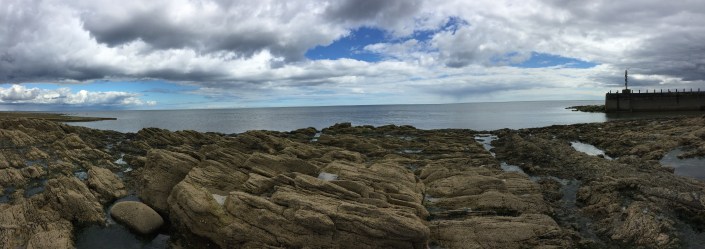
The shore of the Irish Sea