Category: Digital nomad

Remote work and communication…a dynamic duo!

I may sound like a broken record, but bare with me…the importance of communication cannot be overstated in the remote environment. Ask anyone who works with anybody and they will tell you that good communication is vital for effective work. Ask anyone who works in a virtual context and they will tell you that clear and concise communication is a life line for their work to be conducted with excellence! I would even go so far as to say your reputation as a professional could hinge on it.

Why is that? Here’s some of the input we received from remote workers regarding the importance of communication.

Remote workers support the necessity of this skill because it is critical…

• in relaying accurate information;
• in eliminating ambiguity;
• because miscommunication leads to misunderstanding;
• in preventing miscommunication due to language differences which can lead to misinformation, resulting in serious errors;
• for accuracy and clarity on all levels to ensure context is preserved;
• because the absence of non-verbal messaging calls for excellence in the written word…full thoughts, meaningful words, concise, accurate;
• in creating common understanding,
• and requires active listening, engagement, and full contribution from all parties.

In other words, the language of ‘texting’ is not going to cut it when your work context calls for a ‘paper’ trail (documentation) outlining decisions, agreements, complaints, discussions, proposals, conflict resolutions, or reports. Nor can a remote worker always rely on technology that supports face to face, virtual meetings. Besides the ability to clearly articulate verbally, virtual meetings often call for a written follow up summary to be provided to all involved to ensure agreement of what was discussed and action steps determined.

The problem is that good communication takes time, something that many of us claim to not have enough of. It also takes patience, reflection, reviewing, reworking, rephrasing, and great intentionality. I’m sure we can all think of a time when we read a text or email and ‘imposed’ an emotion that was never intended. According to Nate Sawatzky

“Good communication is crafted.” 

Think on this…you just received a text from someone you recently had a disagreement with. The text said ‘saw u at the mxr prty…nice outfit’. Now, imagine the ‘voice’ you use to read the message…was it positive? Did it represent the sender in a good light? Was it cordial? Or did the ‘voice’ lean toward sarcasm, abruptness, or downright snotty?

Now try this…the same person with whom you had a disagreement sent a text saying “I saw you at the mixer party last evening. I didn’t get a chance to talk to you, but wanted to say that you looked fantastic…that dress was amazing!” Try reading something into that…more challenging, right? There’s little room for ambiguity, misunderstanding, or offence. We also need to keep in mind that written communication may not be the best channel for communicating a message…in actuality, we may choose written rather that a face to face conversation because it’s ‘easier’.

While this example is on the superficial level, you get the idea. The responsibility for ensuring a message is received as intended

Listening with both ears.

lies with the sender…yup, can’t blame the receiver for getting it wrong. The added complexity of virtual communication is the lack of non-verbal…you can’t see how the other person receives your message and often don’t get the opportunity to bring clarity and do damage control. The solution…prevent it before it happens. Intentionality is important…think through your message, consider

what channel is best for communicating that message…be intentional in both the content, context, and channel.

The takeaway? Do whatever it takes to grow your communication skills. When using a written channel, read, reread, and reread your written communication before hitting send…that click could either be the start of an amazing contract, or the demise of the same! (By the way, reading well written books is a great way to improve your writing skills. Ask a mentor to suggest a book that greatly influenced their life, then ask to meet and discuss your takeaways; might as well develop your verbal articulation skills at the same time.)

Remote Research: We asked, you answered…

While we have much analysis still to do regarding the data collected on the topic of worker competencies and contribution feedback from the perspective of remote workers, I wanted to share what remote workers told us are the 6 most critical competencies necessary for success in the remote working context.

To provide some context for this, let me reiterate what I said in the previous blog, skills speak to WHAT you do, and competencies speak to HOW you do it.

One thing to point out…you will notice that communication is not on the list…not an oversight!  In every conversation we engaged in, and the additional comments added to the survey responses, it’s clear that excellent communication is absolutely vital for success as a remote worker…especially written communication. That, along with the ability to determine the appropriate communication channels to use, AND the ability to determine and use appropriate technology to get the job done.

So, drum roll please…based on feedback from 250 plus remote workers, home based in Canada, the US and various places in Europe, the top 6 competencies identified as crucial for success as a remote worker are:

  1. Self-directed: Taking responsibility for your own decisions and effectively organizing your activities based on intrinsic motivation without pressure from others
  2. Trustworthy: able to be relied on as honest or truthful
  3. Disciplined: showing a controlled form of behavior or way of working
  4. Taking initiative: an act or strategy intended to resolve a difficulty or improve a situation; a fresh approach to something
  5. Adaptable: able to adjust to new conditions
  6. High Self-efficacy: high belief in your own capabilities to produce quality outcomes

Let’s put some skin around these competencies: while you may be an amazing web developer, writer, project manager, or ________ (you finish the sentence), without the ability to adapt, you may not have what it takes to recalibrate or adjust when faced with continuing changes to due dates and deliverables. Without being self-directed you may not have what it takes to effectively organize multiple contracts to achieve the deliverables identified. If you’re not a person who’s trustworthy, and yes, this sounds generally like a bad thing, you’re really going to struggle to make any progress in your career. This one’s important to understand, so let me take it a step further. Some of us need the accountability of people around us to continue making progress. Sometimes the weather, the surf, depression, excitement… these things can cause us to prioritize other things when we’ve committed to doing something. Trustworthiness is demonstrated by consistently doing what you say you’re going to do. For people who view commitment as restrictive, it doesn’t mean you’re not a trustworthy person, but it does mean that it’s going to be difficult for you to demonstrate it through your actions. Moving on… discipline. Discipline is the long commitment in the same direction, the doing something because it’s the right thing to do, not because you feel like it.

Wrap these competencies up with a healthy self-efficacy regarding your ability to produce a product or service that is of the highest quality…and you may just have what it takes to be successful in a smart working context. (The term ‘smart work’ coined by Abodoo.com is another word used where the focus is on choosing the best place to get the work done; i.e. home, co-working space, office, local, global…)

The story continues…watch out for more blogs as we continue to unpack the findings of the feedback you have provided.

Annalong, Ireland…my roots

Why think of competencies when hiring for remote work?

kd30UiNLR+2ypVqi1T5UfA
Coworking in Eindhoven, Netherlands

Knowing the right competencies to hire for is so important no matter the context, but I would suggest knowing the right competencies are even more vital when it comes to hiring for, or transitioning to, remote positions. To be clear, when I say remote positions, I mean those positions or jobs that don’t require the worker to be at a centralized location on a regular basis. This is the focus of my current research.


Note: this the final weekend for tech remote workers to complete a survey discussing their views of what competencies are needed for success (if that’s you, please click here to complete the survey).

So, why are competencies important, and how many competencies should organizations choose to focus on when hiring?

First of, what is a competency? Human Resource Systems Group explains…

“…competencies describe the observable abilities, skills, knowledge, motivation, and traits, articulated in terms of the behaviours needed for successful job performance.”

The key here is that we can actually see people demonstrating competencies (vs character traits).

As outlined in this video, skills focus on WHAT is done, competencies focuses on HOW something is done. In other words, I may be a skilled IT person, but if I don’t know how to listen effectively to the customer, I may not be successful in the role as an IT Customer Support Representative. Determining the key competencies helps HR and hiring managers think beyond the job skills necessary, to the effective implementation of those skills…the result being successful performance of a job.

What about how many competencies are realistic to focus on? From an HR professional’s perspective, I would suggest no more than 5 core competencies. Why? Well, you want to ask behavioural questions that do a deep dive to ascertain if the

UJdxgc1XSimboCZqi2Rb8A
New Spaces in Vancouver, Canada

candidate is adequately proficient in each competency, so any more than that would be insurmountable in a recruitment and selection process. On the flip side…if you are the remote worker wanting to ‘sell’ your ability to deliver on those same competencies the first place to start is in your resume. This blog may help describe what I mean.


As you listened to my interview with @yonder.io, you will heard Jeff Robbins and I discuss 11 competencies that are relevant to remote work…and each is very important. However, the full story has not yet been told. When the results of the survey are added to our learning from one on one interviews, we will narrow that list to the top 5 or 6 competencies that remote workers (RW), deem to be most important. After all, they are the ones doing the work, making RWs our subject matter experts! (If that’s you, you get why I ask you to complete the survey if you have not yet done so.)

Coming soon… the next couple of blogs will unpack the data gathered from this discovery process that took us to various locations in Canada and Europe over the past few months…


F37B0777-5049-4C1B-A11B-11A36A1C374C
Helsinki, Finland


Making time to ponder the joys of remote work.

One day a week I dedicate time to researching and developing (R&D) my skills and understanding of the world of remote work. I really love those days. Don’t get me wrong, I love all the other elements of my professional life, but there’s something invigorating and exciting about setting time aside to focus on learning from various sources.

Today, for example:

  • I had a virtual meeting from my home office with Ayush Jain from Remote Panda;
  • enjoyed a research collaboration conversation with our son in Europe, while sipping coffee at one of my favourite cafes here in Kelowna, Canada;
  • continued reading chapters from ‘Work Together Anywhere’ by Lisette Sutherland and ‘Remote Revolution’ by John Elston (I highly recommend both);
  • attended a farewell lunch for a colleague at Okanagan School of Business where I’m a business professor;
  • set up a November virtual meeting with some of our new faculty;
  • researched resources for a winter course I am teaching on Organizational Change and Development;
  • and perhaps the most important activity of the day, took time to reflect and journal about what I’m learning from various experiences and people who continue to cross my path as I continue to examine the world of remote work. (I journal with an actual paper journal using a Lamy fountain pen…definitely slows down my thinking and helps me process more effectively)

Even though I love these days, they don’t happen by accident…I have to intentionally schedule them into my week.

So why am I sharing these details of my day? So glad you asked. Technology is wonderful and is essential for just about all the work we do, even more so when the nature of your job calls for technology to connect you with your clients, teams, managers and other key people. However, for me it’s vital that I make sure part of this R&D time is spent unplugged. I need to cut out the ‘noise’ and meditate on the learning to allow time for it to connect with what is important, what’s relevant, and if necessary, file it away for further consideration, or for the ‘interesting but not vital’ file.

As a remote, (or co-located) worker, how are you building intentional time into your schedule to learn, to cultivate your craft, and to ponder the amazing experiences you are having? You’ll never regret it.

“We bring forth our best selves when we are fully activated as human beings, not just as workers.”
The Remote Revolution by John Elston

Albufeira, Portugal…one of my favourite spots for reflection.

Industry ‘vs’ Academia?

88288488-0E14-45C5-9392-8983CEC1D0A6
J.R. Tolkien and C.S. Lewis had great dialogue here.

A tension that should never exist!

Those of you who have been following my blog know that I am a business professor at Okanagan School of Business doing research on remote work. You may also know that I am a coach/consultant who focuses on all things people development, and have a clear passion for those working remotely, or managing remote teams.
From my perspective, the conversation should not be industry vs academia, but rather ‘how can industry learn from academia, and how can academia learn from industry?’ It’s a new face to the age old ‘experience vs education’…each has incredible value on its own, but when the two are combined the outcomes are incredible.

What I find frustrating is that conversations are still happening that pit one against the other. Some say that academia is where invention and innovation happens, while other feel that academia is archaic and that new thinking happens in the ‘real world’ by people actually working in the field.

I came across this article that reported those interviewed “…don’t pay much attention to the publications about fundamental discoveries by universities because they don’t trust them.” Ouch!
Another article representing the flip side states that people don’t trust scientific research when companies are involved because of the propensity for bias. Ouch again!

While I respect the opinion of these perspectives, I tend to believe the best learning lives in the coming together of both sides, each doing their part. I appreciate the sentiment expressed by Martha Crago, VP of Research and Innovation at McGill University.

In addition, like any good partnership, industrial research partnerships need to be based on recognizing the value of the partnership, on trust, and on the ability to meet the other’s needs.

As we move through this project of learning about what makes remote workers great, I am thrilled to be collaborating with both academia and industry. Nathan Sawatzky has been working with me from day one on the research, and Rodrigo Bruno, a student at Okanagan School of Business, has recently joined as a research assistant. Both of these individuals bring immense insight from industry, and as Rodrigo digs into the academic research side of things, he is able to filter it through his own experiences and those he has worked with in remote settings.

Academia and industry collaborating for the purpose of bringing clarity and support to those working in a new era of work. I love it!

Remote workers: independent & interdependent

BECC8A01-8548-444D-A26C-B809B5B25A26Have you ever had a conversation with someone and a passing comment just caused you to pause, hit rewind, and drill down on what was said. That happened recently in a conversation Tammy Bjelland founder of Workplaceless and I were having around competencies necessary for success as remote workers. Here is peek into where we landed.

Sometimes in life we come across oxymorons…a phrase where we put two seemingly opposite ideas together to describe something. We’ve all heard them…an open secret; pretty awful; friendly fire, unbiased opinion…you get the idea. As we learn more about what is required to be a successful remote worker, we come against such a concept: successful remote workers need to be independent AND interdependent. How can this be? Let’s take a look at the world of music to shed some light on this.

B95A1A60-A10F-4F24-BFA8-16F67117D238Individually, musicians need to master their instrument…they need to be able to independently perform beautifully, to know their specific instrument as well as they know themselves, to practice scales, to accurately read and interpret the score, to understand tone, to conquer breath control, to communicate the meaning of the masterpiece they are playing. Only when they have risen to a certain level of proficiency are they able to meld with other musicians in an orchestra and together make beautiful music. Only then can they perform as one, to listen intently to those around, to take the lead when the score calls for it, and then fall into the background as another instrument takes the piece to new heights. At the end of a performance, the orchestra takes a collective bow…no individual hero, just one finely tuned team of interdependent musicians bringing the best of who they are to the whole.


Ok, so you aren’t trying to be the next great maestro, but I would bet you are wanting to be the best remote worker you can be so that your contribution to a team is nothing short of masterful. What does that look like? You need to know yourself, to practice the strengths and skills necessary to thrive as a remote worker, to accurately read and interpret the details of a task, to understand people and how to best communicate with them, and to grow in your emotional intelligence. You want to master your trade whatever it may be. Then, when you join together with others to work on a project, you know the strengths and expertise you bring to the team, you know how to listen intently to your team mates, to take the lead when called for and fall back into a follower role to let someone else use their strengths to take the project to another level. The end result is a finely tuned team of interdependent remote workers bringing the best of who they are to the whole.

Daniel Pink describes a similar process in his book Drive: autonomy leads to mastery, which in turn leads to purpose. We gain autonomy when we successfully
work independently, the growing of our skills lead to mastery, which in turns equips us to contribute to the greater good knowing our purpose.

Interested in contributing to further research on the key competencies for remote workers in tech roles? Then please follow this link to complete a survey.  

Remote leaders matter.


3175408D-7C6B-4BA6-85A7-C54D44D4E509
Espresso in Budapest

My summer was amazing! I got to travel to 10 different countries over the course of 9 weeks; some travel was for business, all for pleasure. My travel companions varied from my spouse, to adult children, to grandkids, and of course good friends.

You know how you start noticing certain things around you when you’re learning or experiencing something new? Like the first time you are pregnant…you notice so many other pregnant women around. Or you bought a new car…suddenly you see the same kind everywhere you go! Well that’s what is happening to me regarding remote work…everywhere I go I notice and meet people who are working remotely either on a company’s payroll, or freelancing. And they are wonderfully interesting people.

If you are following my blogs you already know that I am researching the keys to remote worker success, and learning how they want to be supported…all from the perspective of the remote worker. I’ve learned so much…and the research continues.
However, what I have also been learning from interviews and observations is the importance of those leading and managing remote workers. If that’s you…do you realize the impact you have, both for the good and not so good, on those you lead? I hear your frustration and challenge around leading in this new context, and yes, it can be daunting; but those of you who are determined to support and champion your remote workers deserve to be recognized.

For a remote worker to know their manager…

• has them front of mind,
• is committed to removing any and all barriers for success,
• will connect just to see how they are doing (love the example Lisette Sutherland shares in her podcast),
• and will take the time to figure out how to create virtual environments that remove the idea of ‘remote’. (Follow Dr. Karen Lojeski to learn about virtual distance.)

…is like celebrating their favourite birthday everyday!

My daughter, Shannon Fieber, is a team lead for a global organization. She is responsible for leading 19 customer service reps, 13 of them work remote. While not a simple task, her determination to make each team member feel valued, heard, and supported is admirable.

So, my challenge for you…

5F4CE588-6DA7-40B6-9298-D7F2293E6279
Love Annecy, France

• If you are a remote worker who has an amazing manager/leader, let them know! Thank them…you are one of the blessed ones.
• If you are a remote leader, take a moment to reach out and check in with your team members…just for the sake of letting them know you care, even if you have never done so before.
• If you are feeling somewhat removed and isolated from your leader or team members, take the initiate to start the conversation…be the creative innovator of change that is needed.

There’s no downside!


Competencies and remote work…

1D9EE45D-559C-4455-B0B5-009B78912423Before taking a break for holidays, I want to post one final blog regarding remote work (I’ll continue to post again in September).      A student asked me today for clarity around competencies…a valid question. How do you differentiate basic skill know-how, from a competency? This is important to clarify as we consider those key to remote work. I like this definition from University of Nottingham…

Competencies are abilities or attributes, described in terms of behaviour, key to effective and/or highly effective performance within a particular job.

A competency goes beyond knowing the technical aspect of a task. For example…I may know how to sell a good pair of shoes and what information to provide the customer (i.e. proper fit, potential for stretching, proper care…)…easily learned. 0DB82C05-1FC4-44D5-B74B-0F89746741BAHowever, that doesn’t mean I know how to sell a pair of shoes in such a way that a loyalty and ‘relationship’ has been seeded with the customer. Do I discover why the shoe is being purchased? Did I learn anything about the customer and his/her likes and dislikes? Have I created a shoe shopping experience for the customer that they will come back for, AND tell their friends about? We are talking about behaviour here…what kind of behaviour would you be able to observe as I served the customer? Perhaps excellent customer service? Perhaps some level of empathy? Those behaviours are what we call competencies.

In case you’re wondering, I’ve had such experiences in 3 shoe stores…one even served cappuccino, and the other wine! @shoeembassy (Brighton, England) @strut (Kelowna, BC) and @ladifferenciate (Vancouver, BC)

In preparation for further work on this research in the autumn, we will be sending surveys to remote workers, specifically those in the tech industry, to get their feedback on the accuracy of the competencies we’ve identified. (If you’re interested I’d be happy to send you a survey to complete…rsawatzky@okanagan.bc.ca) Knowing that different aspects of tech remote work may place different values on each, we want to end up with a list of 5-7 top core competencies that truly reflect the worker in their respective areas.

Here’s a summary of what we have learned so far, and want to narrow down.

  • Self-directed (making your own decisions and organizing your own work)
  • Disciplined (showing a controlled form of behavior or way of working)
  • High Self-efficacy (high belief in your own capabilities to produce quality outcomes)
  • Trustworthy (able to be relied on as honest or truthful)
  • Empathetic (showing an ability to share the feelings of another)
  • Adaptable (able to adjust to new conditions)
  • Curious (eager to know or learn something)
  • Flexible (ready and able to change so as to adapt to different circumstances)
  • Taking initiative (an act or strategy intended to resolve a difficulty or improve a situation; a fresh approach to something.)
  • Self-motivated (motivated to do or achieve something because of one’s own enthusiasm or interest, without needing pressure from others.)
  • Focus (concentrating attention on the most urgent problems)

I agree that many of these are simply good competencies to possess in any work context, however, I would suggest that the level of proficiency needed for remote workers in each area is higher…their very success depends on it!

Next steps? 1. Survey. 2. Based on results, narrow the competency list. 3. Create specific behavioural questions a manager can ask to determine if the person they want to hire fits the criteria for success as a remote worker. Or…an individual could reflect on if they are considering remote worker.

For now, happy summer…see you in September!

51D1DC1E-D49A-41E3-A5D9-EE8617CA4409

Coffee shops with purpose…

Lot Sixty One

In a previous blog I promised to talk about the many specialty cafés we visited while on our remote research trip…and I do mean places to drink a great cup of coffee! 

Coffee shops such as Lot Sixty One play an important role in the life of a remote worker…possibly more than originally imagined. For example, while writing this blog I am sitting at one of my favourite coffee shop in Kelowna…my friends and family refer to it as my ‘other office’. In fact, this would be my 3rd space…I have an office at the college, a lovely one at home, yet still I feel the need to come to Esther and Sons Cafe to create and write. (Never underestimate the contribution of caffeine to creativity!) 

I previously talked about the importance of space as it relates to where we work and connect. When researching remote workers, we set up appointments to meet with such individuals in cowork spaces…and we were awarded with some wonderful, insightful, conversations. Reflecting back on those visits, we noticed some things…to be clear, these are simply observations, but we think they warrant further inquiry.

  • The majority of people we met working in co-work spaces seem relatively fixed to that space.
  • Many users are either small businesses, or stationed at a location distant from the organization they work for.
  • The gender demographic appears to be a higher representation of male vs female.
  • The age demographic appeared to be slanted toward a younger generation (younger than boomers).
  • These shared spaces are not frequented as often by ‘traveling’ remote workers (those who frequently travel globally, but do have a home base).
Father Carpenters

So this is where the coffee shop space comes in.  We know there are various forms of remote working…no surprise there. If it is true that a challenge for remote workers is loneliness and isolation (and this certainly was verified through our interviews), and if our observations are accurate, then where do these ‘traveling’ remote workers go to feel some sense of belonging? Enter the coffee shop.

As mentioned in previous blogs, my son Nathan is collaborating with me as I look at remote work. In his travels he often uses coffee shops to work out of…some of which we visited on our recent trip. The cool thing was that as soon as they saw Nathan, he was warmly welcomed and immediately drawn into a ‘catch up’ conversation. Places like Five Elephant Coffee in Berlin,  Lucifer’s Specialty Coffee in Eindhoven, or Kaafi in The Hague.
It’s important to note that he had not been to these specific locations for months! Yet the commitment of the staff and owners was to create a space that didn’t just serve amazing coffee (
and they did), but a space were the customers could feel a sense of belonging.

Another coffee shop we enjoyed was House of Tribes in The Hague. The space was intentionally designed by Jerome Vester of Ninety Nine Architects for people to come and work while enjoying a good brew. We had a choice of a ‘living room’ type space, individual seating, and even a long table that could be booked for 1 hour meetings. No matter where you sat there was a plug in within arms length…intentionally blended in as part of the décor! They advertise strong internet connection (free of course). Add to that the cheery welcome you received as soon as you walked in the door, and you have a place any lonely traveler would love to open a laptop to get some work done.

ED8016C4-96B8-40AA-96E2-30136BB0A173
House of Tribes

I would be negligent if I didn’t mentioned one inherent problem here…how long can someone work in one coffee shop, nursing maybe only 1 or 2 drinks, before overstaying their welcome?  In fact, based on conversations Nathan had this week in London, he shared that “it’s becoming an increasingly difficult issue in the local coffee shops. Too many people are opting to use cafes as their office and feel emboldened to do so by the proliferation of cowork spaces and others doing it. Businesses find themselves in a really difficult spot.”

I don’t have an answer for this, but wonder if there might be an opportunity for some forward thinking café owners to provide a ‘remote worker’ package that includes a certain number of coffees, a snack, and a warm welcome for a predetermined amount of time? Hmmm, worth pondering.


The importance of space…

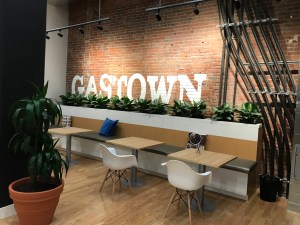
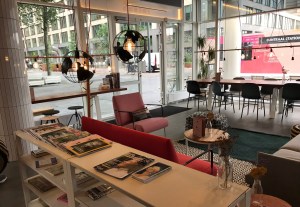
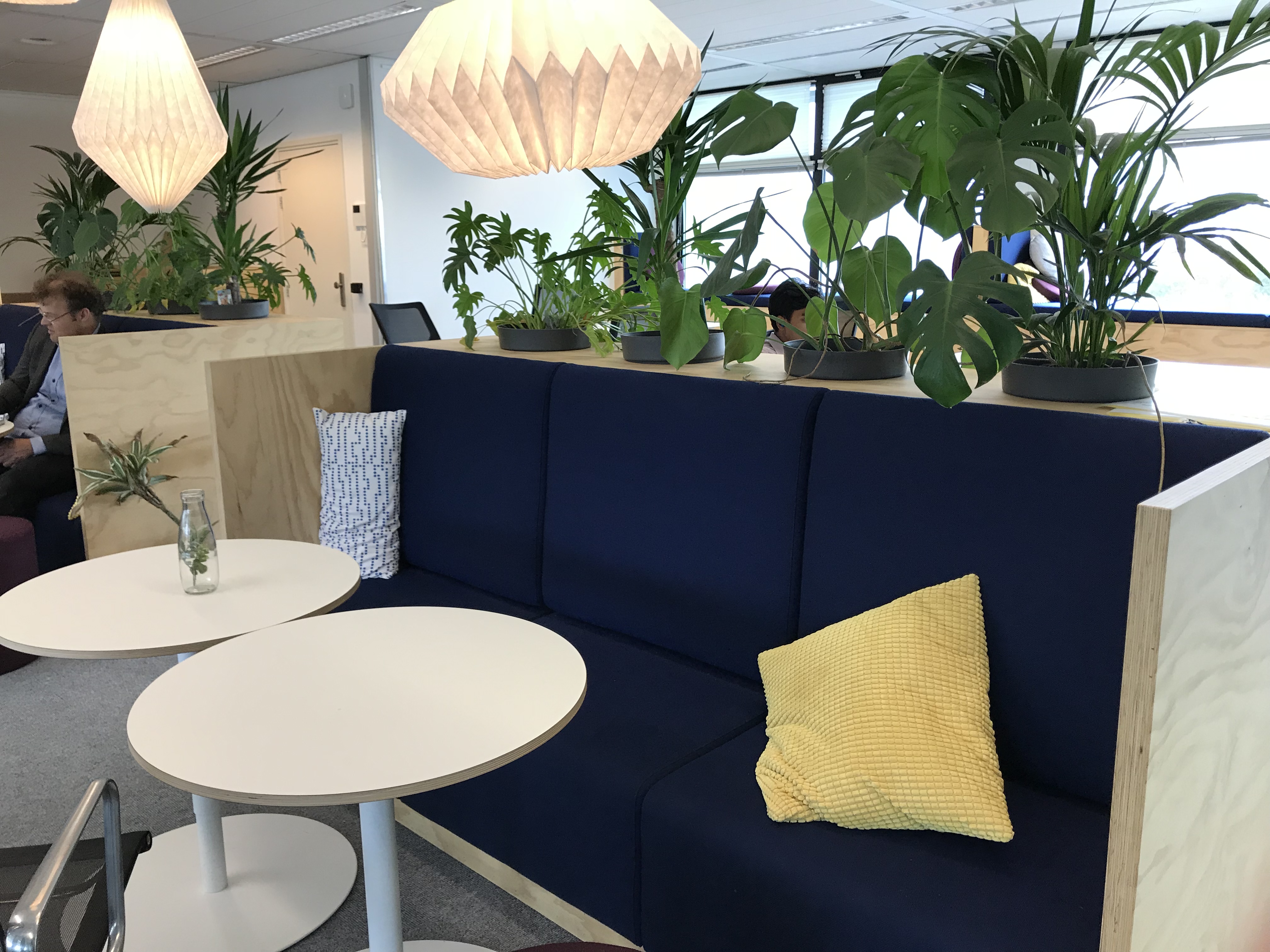
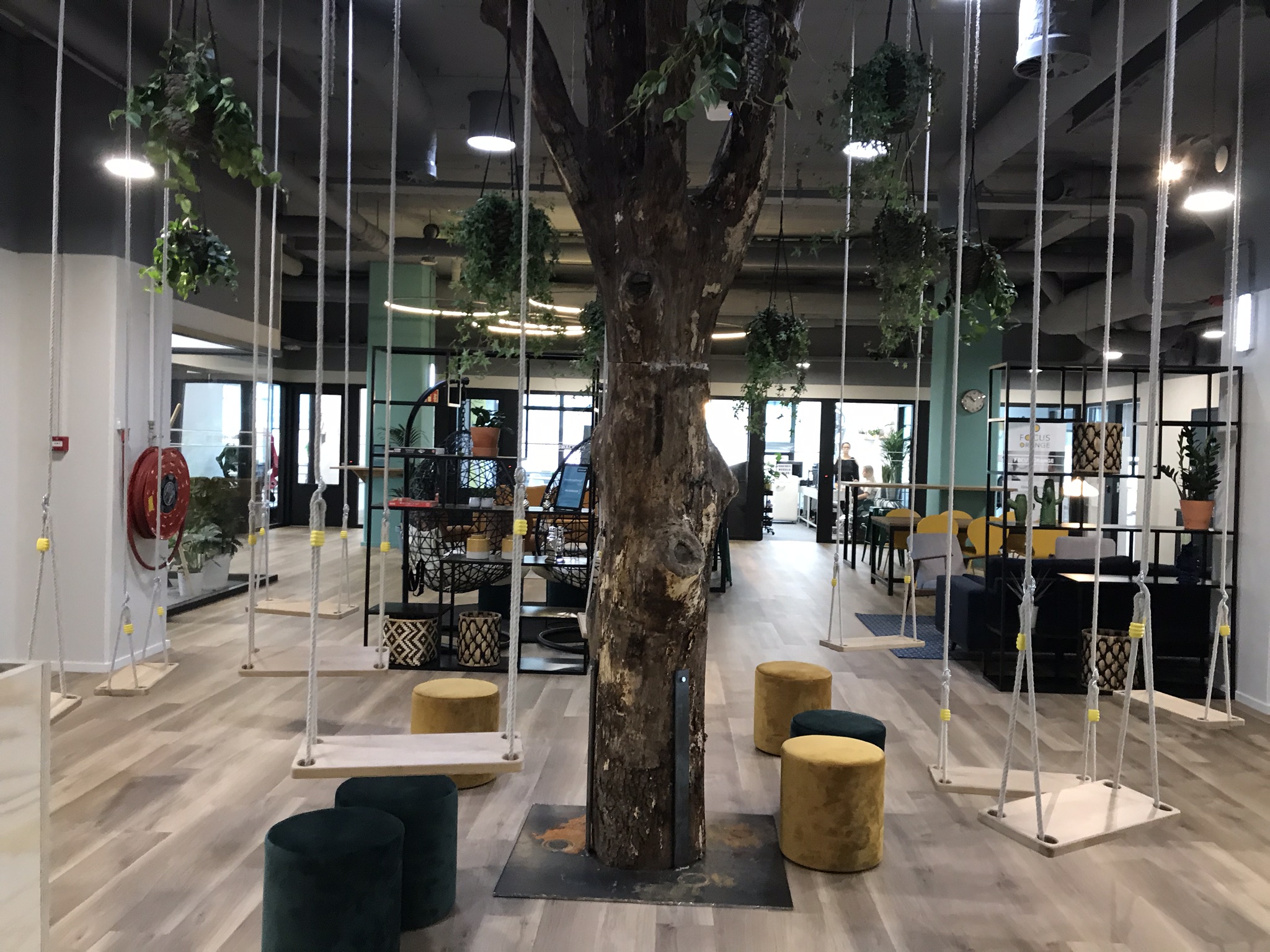
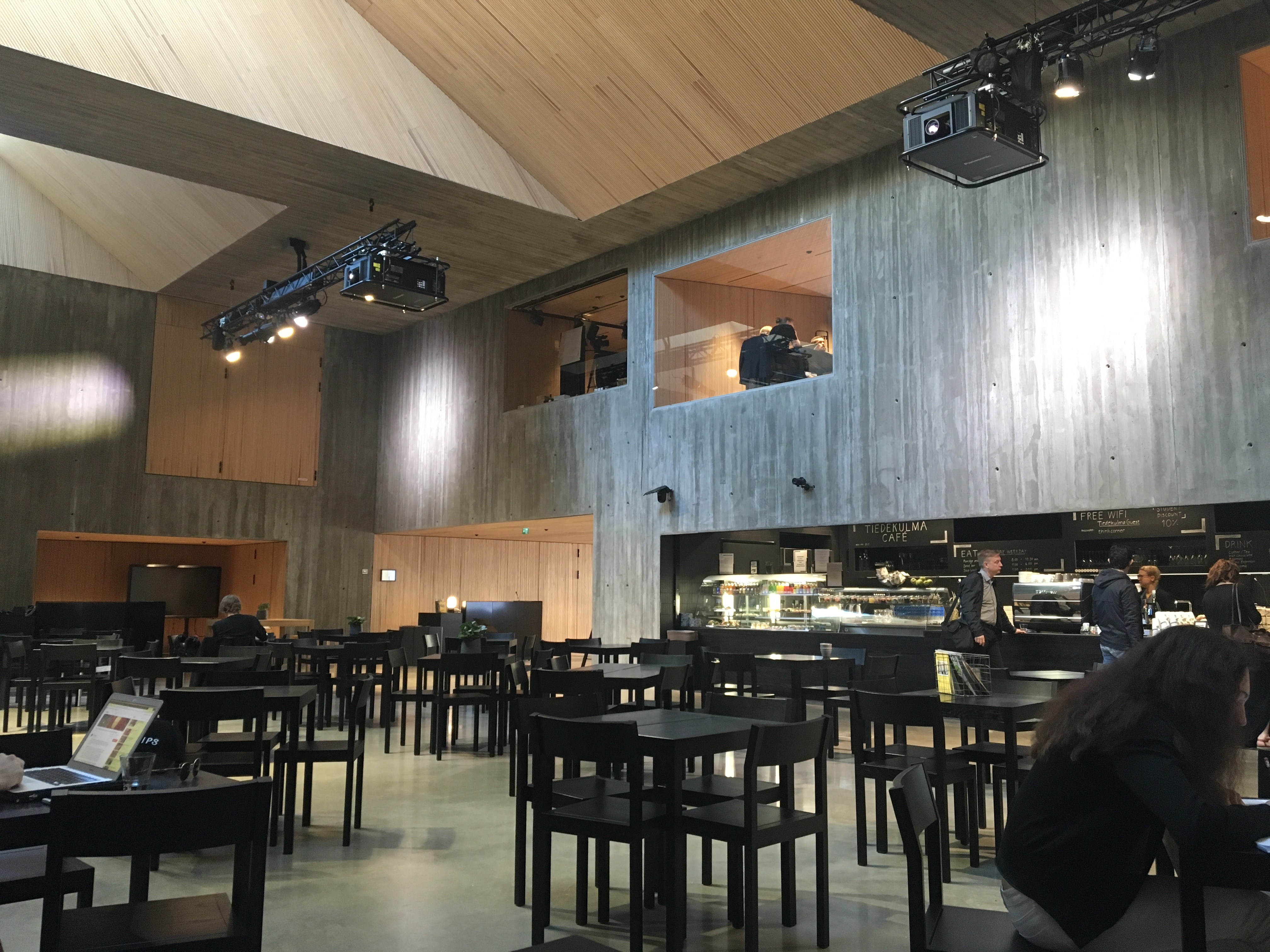
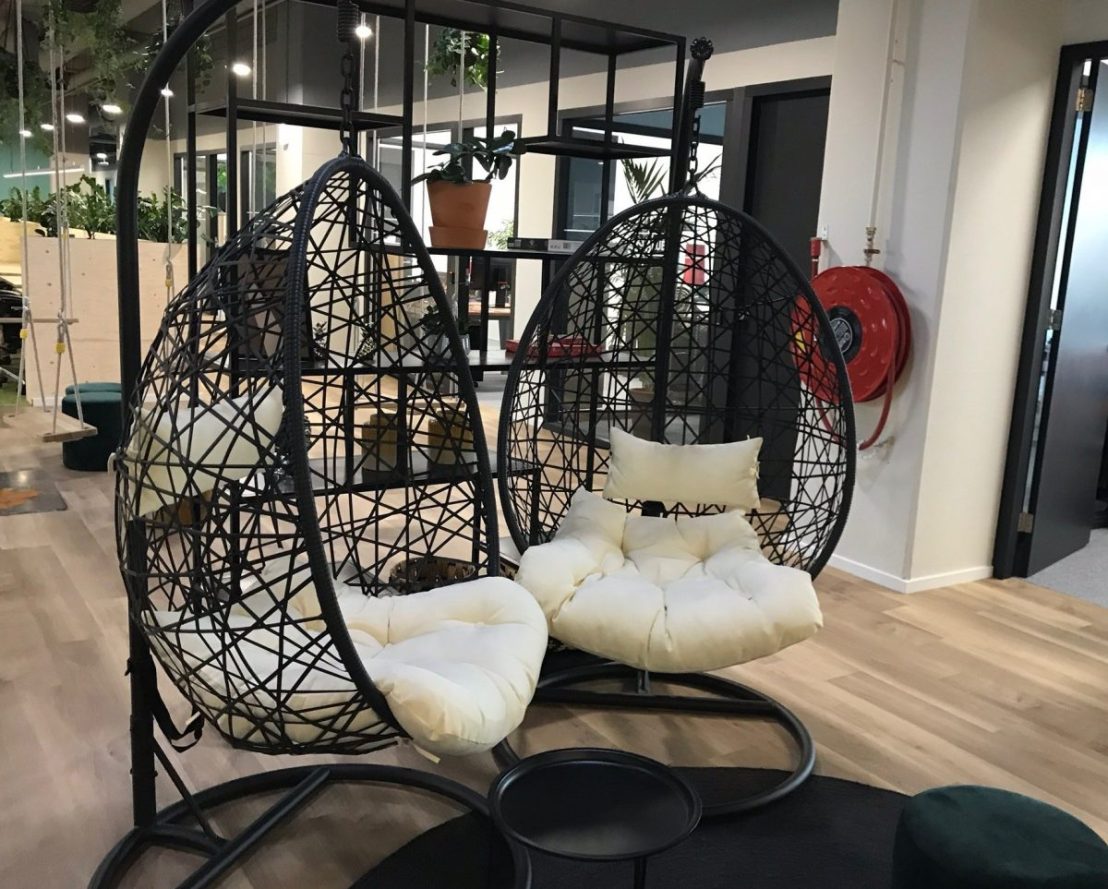
As this remote worker research journey continues, so far we have visited 8 cowork spaces (Canada, Finland, Amsterdam & Germany), and as many specialty coffee shops (ok, more than 8 cafes, but that’s for another blog). Each space presents it’s own unique feel and appearance; some have similar characteristics while others are so diametrically opposed, it’s bizarre. Still, all have the intent of providing a place where individuals and teams can work effectively outside the realm of a traditional collocated work space.

To generalize, we have observed two main areas of differences: 1) the physical layout and elements of the space and 2)the culture or ‘feel’ of the space. Let me give a further explanation of each. Physical layout is easy to describe and observe…as they say, a picture paints a thousand words.

As you can see in these pictures, some spaces are open and airy, most have dedicated office spaces and hot desks you can rent on a monthly basis, or you can choose to ‘drop in’ and use an open space when it suits, simply paying by the day. You can choose to work in a living room type area, or have a conversation while sitting on a swing. Perhaps you need to use a board room for some presentation, or alternatively require a higher level of privacy for an on-line conversation and access a phone booth type space with a drop down desk. One day you may decide that sitting at a large work table with 8 other people is what you want, while the next a quiet, tucked away couch is what’s called for. And, not to be ignored is the need for socializing. That may look like a game of ping pong, or grabbing a cup of tea or coffee with a coworker…or stranger. Alternatively, depending on the day, or time of day, or country, you may help yourself to a beer on tap while you chat with a business startup or a remote worker from another part of the world. You may enjoy wide open work spaces or prefer more intimate, communal type spaces. No matter what your preference, in all likelihood there is a space that fits you.

The cultural differences between spaces are not quite so easy to identify, or describe. Pictures don’t adequately portray the ‘feel’ of the space. And, the ‘feel’ can be rather subjective in many cases. For example, one space we visited felt like a great fit for Nathan, while I felt like a stranger, an outsider when we walked in. Even after working there for82EB5C5C-7103-448E-AE78-0E3D1A883299 a couple of hours, I still felt like I didn’t belong; Nathan could have unpacked his knapsack and set up shop! Yet another space we visited felt uninviting to both of us; it seemed to lack any attention to the importance of aesthetic value in making it’s users (or visitors) get a sense of the occupants and users of the space. On the other hand, a couple of the other spaces we visited provided such a warm and welcome feel that we immediately felt a sense of affinity with the space and it’s users.

Being in these different locations has caused me to consider the importance of space as it relates to how effective, creative, innovative, or productive a person can be in the pursuit of doing their ‘work’. When an individual works for a business that is colocated, their space is provided for them…it is generally dictated by way of assigned offices, departments, geographic location…the worker does not ‘choose’ their workspace, or choose where to set up the framed pictures of their families, friends, or pets. Finding or created a space or spaces to work is not a matter that calls for much thought or attention (not as much perhaps as it should?). This is not as true for individuals who work remotely either as freelancers or for distributed companies. Finding appropriate places and spaces to work, to create, to innovate, calls for greater intentionality when the F5CB46FD-CB4C-49C1-B482-7D360A826E2D
traditional office (or desk) doesn’t exist. Knowing what kind of space to use is also a challenge when the option, or need, to do so has not previously existed. So what’s person to do? I would suggest that a foundational need for the remote worker is to have a clear self awareness and understanding. A perfect work space for me is not the same as a perfect work space for Nathan…even though our values, work ethics, and passions are very similar (never mind the fact that I represent ½ of the duo that raised him). Still, we both recognize the fact that different stages of work development calls for
different spaces, and what a creative space looks like for me may not be the same that of Nathan’s choosing. When work gets frustrating or overwhelming, you may need a space that allows for quiet reflection while a co-worker may need a rousing game of pool. To work through a challenging client issue, you may need a room with several white boards to storyboard the problem, while someone else may need space to walk and talk through the muddle until clarity breaks through.

The point is, the need to know yourself well enough to actually identify the type of space you need in order to work, and simply be the best version of you, could possibly make or break your ability to operate successfully in a remote work context.

55cbec33-125a-48f9-9ad6-66aaa58245bb-e1529530702743.jpeg Continue reading “The importance of space…”