Author: Probe 'n Ponder

The Appreciative Classroom.

It is amazing how quickly 6 weeks goes by when you’re having fun…at least for the professor! I think the best way to sum up this recent teaching experience was that of appreciation; appreciation for the students, appreciation for the diversity they brought to the classroom, appreciation for the support they demonstrated towards one another, and appreciation for their appreciation!

Let me recap somewhat. I began this summer session with the desire to bring an appreciative environment and attitude into the classroom. In my previous blogs, Appreciating and Learning and  The Learning Continues , I expressed the challenges I was facing with an increase of international students in my class. In fact, I ended a previous semester rather discouraged and overwhelmed. In the process of researching appreciative inquiry, I made a commitment to not only change my attitude toward teaching, but to create a classroom environment where each student would feel valued and appreciated for who they are and for how they have contributed to the great moments in their learning journeys. Well, the semester is finished and I am excited about their feedback as well as my own learning.

Let me share just a few of the feedback comments shared with me by a few students:

image
Results of a team activity.

* ‘I felt accepted, I was able to share my opinions without fear of judgement.’
* ‘Males from my own culture actually encouraged me to share my opinion…this is not the way it is at home.’
* ‘Students from different nations come here…professors respect this by not making the environment awkward for the foreigner.’
* ‘Our class culture is that of trust and acceptance; these are the foundations for establishing an environment in which students are empowered and comfortable. Because of this, students provide feedback to improve the classroom teaching and learning environment, which helps students to learn from their mistakes and gain achievements. Another element of the class culture was innovation; more ideas come from each students as we worked in a groups to solve the problems and teach each other.’

As already stated, I began this semester with the desire to experiment with appreciate inquiry in the classroom and it truly was impactful. Besides the incredibly positive manner in which the students responded, I learned some valuable lessons regarding cultural diversity in the classroom. Here are some highlights…

* Remember that our ‘North American’ approach to classroom facilitation can be both unfamiliar and uncomfortable for some cultures.
* Don’t make assumptions about everyone’s technical ability, no matter what generation they represent.
* Resistance to speak out in class, especially in front of the whole class, does not indicate lack of engagement…it can be an indicator of great lack of self-confidence. This lesson coming from strongly male dominated cultures.`
* Based on the previous point, small group discussion is appreciated by students and provides great opportunity to share from their own unique experiences.
* Provide opportunities for culturally diverse small groups…heterogeneous vs homogeneous.
* For many cultures, living in the moment overtakes the desire to get the work done…if a friend is in need, that overrides any other commitment, even to the point of personal failure.
* Making time to meet one on one with each student is time well spent! The time taken greatly enhances the ability to make the learning relevant…and builds trust between student and teacher.
* Speak openly about diversity…intentionally invite the sharing of opinions from various perspectives; and listen with respect creating a safe, enriched environment
* Don’t ever stop checking our own assumptions and stereotyping; don’t be afraid to ask students for clarity and understanding regarding cultural differences.

Each one of these lessons call for deeper reflection, in fact they compel me to imageruminate, to probe, to ponder, and to enter into meaningful dialogue to further explore the ramifications of each.
As I work through each, I then need to consider how these learnings will impact other aspects of classroom facilitation…evaluation being one area that comes to mind. In the past, team evaluations have taken the stance of deducting marks from those who did not equally contribute to an assignment…in other words, finding a practical way to deal with social loafing. What would a team evaluation look like if marks were awarded from the perspective of the great contribution each team member made to the outcome of an assignment? Would this appreciative approach help group members to focus on the strengths of their team mates rather than their lack of effort? Worth investigating!

This semester provided the platform for me to learn and experiment with one class made up of 21 students, representing 5 diverse cultures. Is it possible, or even realistic, to replicate and build on this with 4 different classes of 30-40 students each? I intend to find out and continue my learning journey. I love the idea of starting from a place of what works and building on that…appreciative classroom facilitation!

The learning continues…

I am committed to taking a positive approach to teaching and learning…join me in the journey?

5 classes are now finished, and I am very much enjoying getting to know my students individually, and applying what I’m learning to deliver a more effective learning experience for them.

As mentioned in my previous post, we began the first class with a discussion around positive learning experiences, and how they personally contributed to that learning.

The follow up to that activity was one on one meetings between the students and myself. The stories they shared were humorous, inspiring, emotional, and insightful; it was wonderful to see how positive their body language was, and how animated and excited they were as they reflected on the joy of those experiences.  I can’t stress enough how eye opening those 15 minute ‘chats’ were. Using the questions on the hand-outs as a foundation, the students shared information from their lives in their home countries, and how life has changed since they came to Canada (70% of this specific class are from countries other than Canada). Without exception, they love this ‘new world’ (this in no way minimizes how much they miss their families back home).

One topic we discussed this week was values…a potentially hot topic when dealing with cultural diversity; having 5 different cultures represented in the class it was inevitable that there would be varying opinions regarding what each holds close as a value or guiding principle. I’m happy to report that, once again, the class discussions were rich with mutual learning and respect. The class started with an exercise that dealt with one of my values…punctuality. Based on the various student arrival times to class, I was fairly certain that this was not a shared classroom value. Here is a brief overview of that activity.

IMG_2789

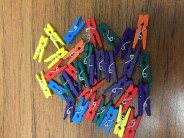
  1. As students arrive pass out coloured mini clothes pegs (one colour to those arriving early, another for those arriving just on time, another for those arriving late)
  2. Introduce the topic of values and the importance of understanding and respecting the values of those we work with (the context is a class of business students).
  3. Let them know that I have a high value of punctuality, but that I realize it may not be a shared classroom value.
  4. Explain the meaning of the different colours of clothes pegs, and have student divide into those groups.
  5. Stage one discussion is to dialogue around whether or not punctuality was a shared value, and how their opinion was reflected in their actions.
  6. Stage two, mix the groups up so that each group has representation from the ‘early arrivers’, ‘on timers’, and ‘late arrivers’. In these groups they are to discuss how they feel about the actions of others, and how they are impacted by other’s actions.
  7. The final instruction…I would not be in the room to facilitate the discussion. I explained that I didn’t want my presence to in anyway influence the discussion.
  8. After what I thought was an acceptable amount of time I came back in the classroom, but was immediately told that they needed more time! I was thrilled that the self-directed discussion was so energy filled.

The activity went well, I could hear laughter, the murmur of discussion, and also silence. The ah-ha learning? It appears that I was the only one that was really bothered by people coming in late. The collective opinion was that if you come in late and miss some of the learning, it’s your choice and the responsibility is on your own shoulders. The tension came when I asked how they feel when someone shows up late for a meeting or event that they have planned…would they be OK with that? At first I was faced with shrugged shoulders and comments such as, ‘it depends on the situation’. However, as small group discussion continued, they did agree that this would not be so favourable.

So, how are those perspective reconciled? I would suggest that the outcome is indicative of how truly values based we all are. In organizational behaviour we talked about stated values and actual values; perhaps this is an example of that being played out individually. It also made me consider how my values are lived out…in this situation, I needed to be willing to accept tardiness if I truly want the classroom to be about my students, and about shared values. I need to be true to my value of punctuality by showing up on time (in this case, early), prepared, and ready for whenever the students show up. I also need to honour those students who are punctual and start class on time…even if only 3 students are there! I think it’s also important to add that from experience, the cultural mix has an impact on the outcome of such a discussion. Students in other classes I have facilitated included punctuality in their classroom agreement (or code of conduct).  The learning for me? A reminder that every class is different and unique. What works for one will not necessarily work for another…even if the subject material is the same.

And so the learning continues…for me, and for my students.

Appreciating and Learning!

It’s been a while since I last blogged; amazing how life gets in the way of creative time. Don’t get me wrong, I love all that I do, it’s just that building time into a full schedule for such things ends up being easily overlooked.

imageSo what am I ruminating on? Anything to do with appreciate inquiry (AI). New concept? A great definition can be found on The Appreciative Inquiry Commons …“Appreciative Inquiry is about the coevolutionary search for the best in people, their organizations, and the relevant world around them.” I was first introduced to this approach back when working on a masters in leadership and management…I immediately connected with the concept, it simply made sense to me. However, over the years I haven’t given it much thought…until recently when teaching AI in Organizational Behaviour. In one class I had the students engage in an appreciative experience that was very impactful; so many of these students had never been affirmed for their strengths, successes, and amazing potential. From that experience I also began looking at Appreciate Inquiry in light of organizational change…again, not a new concept to me, but one that had left my radar.

I don’t know about you, but I find that when a topic grabs my attention, I end up seeing and connecting to resources (both print and people) that contribute to my drive and passion to learn more! I’ve been introduced to great authors on the topic, and other professionals from various industries who are applying the concepts in their practice. One connection I made with a professor from Royal Roads University really impressed me with his application of AI to enhance the student’s learning. Which brings me to where I am right now…

At the post secondary institution where I teach, we are experiencing an increase in the number of international students enrolling in our business program. This is wonderful! I love the diversity it brings to the classroom, and the sharing of experiences it affords. However, it also brings challenges that I have found, at times, overwhelming. At first I was very discouraged, doubted my ability to effectively facilitate learning, and very saddened by hurtful emails received from unsuccessful students. BUT…once I got over the hurt and frustration, the fighting started. Not with the students or the institution, but with myself. I love classroom diversity, I love a good challenge, and I am not a quitter!

Brave words, but what to do about it? Back to AI. My personal mission is to ‘Equip and encourage others to discover their strengths and use them to reach their fullest potential’. That holds true no matter the focus…family, friends, clients, AND students. So, how am I taking that mission, that commitment, and living it in a diverse classroom? This quote inspired me to start figuring it out.

“Appreciative leaders hold each and every person in positive regard. They look through appreciative eyes to see the best of people. They seek to treat all individuals positively, with respect and dignity, no matter their age, gender, race, religion, or culture—even education or experience. They believe that everyone has positive potential—a positive core of strengths and a passionate calling to be fulfilled—and they seek to bring that forward and nurture it.” Appreciative Leadership by Whitney, Trosten-Bloom & Rader

First step…help my students appreciate who they are as learners, focus on positive learning experiences, consider what they contributed to those successes, and consider what they can continue to do in their current learning environments to realize similar success. I did this in the first class by giving the students a handout asking  questions that would help them identify and think through such experiences. I allowed an appropriate amount of time for them to reflect and write down their responses to the questions, then share their reflections with a small group. The experiences shared were varied and provided a wonderful opportunity for students from 5 different cultures to share about their learning successes.

Second step…our next class started by inviting group members to share about how individuality is celebrated in their country of origin. Again, wonderful discussions that embraced their diversity in a positive manner.

So far so good…but it has only been 2 classes. The next major step happens this week as I have one on ones with each student for the purpose of getting to know them, and talking about their learning experience reflections. I will be asking them to share how they could apply what they learned from their past successes in realizing their learning goals for this semester; I’ll also invite them to identity how I can support them in this endeavour.

Stay tuned…this is a new learning journey for me…and my students!

Mental Health in the Workplace is everybody’s issue.

I was asked by a friend to write something that normally would not have been a topic of choice, an area that feels very exposing. However, if I truly believe in integrity and transparency, I need to pull open the blinds of a challenge shared by many.

Time to take off the masks.

It all starts with volunteering… something I believe strongly in, not out of a sense of duty, but because I want to, and I know how rewarding it can be when you find the right fit.

The cause I am currently engaged with is the Canadian Mental Health Association; I believe in the work CMHA does, I can relate to the issues they deal with, and the folks at our local association deeply care about what they do, and who they do it with.

What do you think of when you hear the term ‘mental health’? Does it make you cringe? Is it something that only affects ‘other’ people? Or does it stir up feelings that are all too real…too close to home. You’re not alone! The specific area that I’m engaged with is mental health in the workplace, an issue that is very real to employers and employees alike. Did you know that everyday in Canada; over 500,000 people miss work due to mental health issues? That’s huge! Think of the impact those absentees have on the individual, their families, their co-workers, their organizations! And yes, the cost to business is in the neighbourhood of $33 billion each year. Take a read through this sobering Maclean’s article. These are people we rub shoulders with on a daily basis…and many of us are one of those people.

It doesn’t matter what you call it; stress, anxiety, burn-out…it’s the pile up of demands (personal, professional), expectations (others and our own), deadlines, conflicts, pressures that get us to the point of _______ … you finish the sentence. For me it looks like heart palpitations, shortness of breath, and an inability to make even the simplest of decisions.

As a training and development professional and business professor, I speak with many people who feel like an elastic band that’s about to snap; these people are from a variety of industries, representing all generations, are male and female, formally educated (or not), experienced, and capable individuals. CEO’s, leaders, and managers be aware, these are the people who are the very core and life of your organizations…many are even sitting beside you in the boardroom.

CMHA’s Mental Health Voices represents the need for greater awareness to be brought to such matters in the workplace. If you are in a role of people leadership or run a business, this is a cause that begs your attention. If you live in the Okanagan, BC, I would invite you to attend our Mental Health Voices breakfast with Brett Wilson on November 4th. Check out the website www.cmhakelowna.com/mental-health-voices for both information on the event and ticket purchase.

No matter your location, I would invite you to take some time to think through how your place of business could be proactive about this growing area of concern and join the growing crowd of business leaders who are endeavouring to take the stigma out of the mental health issue.

“In times of stress, the best thing we can do for each other is to listen with our ears and our hearts and to be assured that our questions are just as important as our answers.”
Fred Rogers, The World According to Mister Rogers: Important Things to Remember

“Unless someone like you cares a whole awful lot, nothing is going to get better. It’s not.”
Dr. Seuss, The Lorax

Change — are you ready for it?

Change…what kind of emotions, images, memories does that word bring to mind? For some the excitement level soars, while for others the response is nothing short of instant panic. The majority of us will find ourselves somewhere along the spectrum, depending on the nature of the change.

For me change is exciting…most of the time, when I feel I’m in control (yup, a bit of a control freak). Right now my life seems to be marked by change; let me just share some highlights:

  • we just moved to a basement suite and will move again in 6 months (who knew the condo market was so hot!)
  • our son and family moved to Dublin 3 weeks ago (yes, and they took all 6 of our grandkids!)
  • in a few days, deciding on my daily schedule will once again have to submit to the college calendar.
  • and of course we are starting to welcome autumn.

All of these changes are good and come with the promise of exciting outcomes. However, the impact of each greatly depends on my attitude toward the change.

I keep remembering the morning we said goodbye to our kids at the Kelowna airport. Kudos to the agents at Westjet…they were terrific with the challenges presented with checking in 2 adults, 6 kids, and all their luggage, and a flight plan that was a little messed up! The words that are forever etched into my memory came from the response our daughter in law had to a question asked by the agent: ‘So how are you feeling about this big move?’ Without a second’s hesitation, Crystal said ‘Totally excited!’. Needless to say the agents were amazed with her instant and exuberant outlook regarding what could be an overwhelming change.

When I reflect on my previous blog regarding expectations vs expectancy, I’m impressed by the link between that, and the certainty of change. I can’t imagine a life without change, nor would I want a life without change! However, I want to live a life that welcomes change with the enthusiasm of my IMG_0066grandson finding a really cool shell on the beach, or the wonder with which our youngest granddaughter IMG_0899looked at the picture of a giant rose I texted to her. I want to model the kind of attitude our son and daughter in law modelled for their children when moving to Ireland…and the sense of adventure I experienced when my parents moved us from Ireland to Canada 45 years ago.

I have a full schedule this fall and I am excited about each and every event on my calendar. I can’t control how each activity will play out, or what unexpected changes will occur. However,  I can approach each with a spirit of expectancy, positivity, and wholeheartedness.

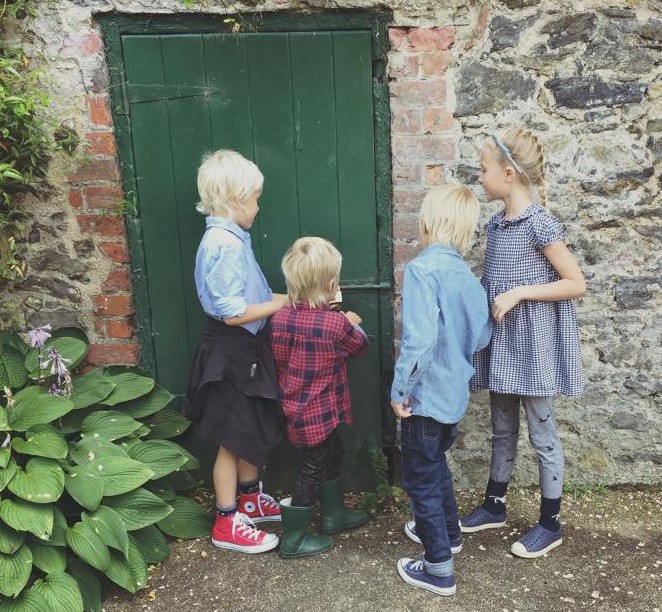
"What's behind this door?" Wonder? Curiosity? Expectancy!
“What’s behind this door?” Wonder? Curiosity? Expectancy!

Expectations or expectancy?

Rodin's 'The Thinker'
Rodin’s ‘The Thinker’

  I’ve been thinking a lot lately about expectations; we all have them. We all know the joys of realized    expectations and, I believe, it would be accurate to say that we have all felt the pain of unrealized  expectations. And yet we continue to approach life with the assumption of certain outcomes. What if instead of having expectations, we adopted an attitude of expectancy?

One of my favourite authors is Mark Buchanan (favourite because he really causes me to stop and ponder!). In his book “The Four Best Places to Live”, Mark describes expectancy this way…

 “Expectancy is a renewal of hope and anticipation. It is a spark in the soul that makes you dare  to believe that good can come from bad, that light can overcome darkness, that life can resurrect out of death.”

He goes on to say…

“It’s the small but tenacious belief that, in spite of all that has happened in your life and all that has not happened in your life, what is going to happen in your life will redeem it all.”

My oldest granddaughter is a true example of living life with expectancy. Faith’s signature question is ‘What are you excited about today?’ I love it! The anticipation of what’s to come radiates from every part of her being. Our

Shannon & Faith
Shannon & Faith (HB lemon curd pies baked by Faith)

daughter is also one of those people who loves life and values each and every person who is part of her life. We celebrated her 30th birthday this week (I should say month…Shannon really knows how to embrace any and every reason to celebrate!). We had a lovely chat about what life holds for her as she enters her 30’s; so many amazing possibilities! She could go forward with a list of expectations that may or may not be realized, but instead she chooses to go forward with great expectancy, with a sense of wonder and excitement about what great surprises life holds.

So how does this play out in daily living? For me it applies on so many levels…I think of a whole new group of students who will occupy chairs in my classes this fall, I think of the students on-line that I get to tutor, of those individuals whose lives intersect with mine on a professional level. I also think of the many friends who make up the fabric of my life, and of the incredible family my husband and I have been blessed with. I could go on! 

Buchanan states that the opposite of expectancy is expectations; so yes, I must admit that the above list of people at times are burdened by my unreasonable expectations.  Time to make a change there!

What will the new fall expectancy approach look like? Refreshing, hopeful, appreciation, excitement, letting go. Let me finish with another nugget from Buchanan…

“Expectation almost always sets us up to be disappointed, and once disappointment sets in, it quickly hardens into apathy, bitterness, and suspicion. Expectancy, on the other hand, sets us up to be thrilled. When we live in an attitude of expectancy, we’re rarely disappointed. Expectation says, “This specific thing must happen for me to welcome it.” But when we live in the House of Expectancy, we say, “Something good is going to happen—I’m not sure what—and I’m here to welcome it.”

Ready to set sail with an expectancy outlook?


Preparing to hit the ground running…

sheepAre you one of those people who can switch work off as soon as you leave the office? What about when you go on holidays, can you get into vacation mode as soon as you wrap up your final work projects? If so, count yourself fortunate! For me it takes a few days to decompress and  let go of work responsibilities and concerns.

That being said, our time away was fantastic…just what I needed. For the first while I couldn’t even concentrate on a mindless murder mystery, but that was just fine…I had the ocean to watch, walk in, and wash away any nagging work concerns. Amazing.IMG_0820

I think it’s important to recognize that vacation time isn’t meant for re-visioning and making plans for future projects. I believe that this time is truly for resting and allowing the change of pace to refresh and rejuvenate in order to prepare you for the re-visioning and planning to come. Too often we hold off the resting period until we get to the point of burnout…time off then becomes recovery! Author Mark Buchanan can relate to this.

“…when I stepped out for a vacation, I did just that: vacated, evacuated, spilled myself empty. I folded in on myself like a tent suddenly bereft of stakes and ropes and poles, clapped hard by the wind. The air went out of me.”

Buchanan, and others, have found a way to avoid the trap of entering vacation time being totally depleted…it’s not that mysterious, but it does take discipline to make it happen.  

I can already hear the groans…you figure it’s a bit Pollyanna, right? Maybe so, but that doesn’t change the value of instilling certain practices. You may not be able to take off for an extended period of time before heading into serious strategic planning…or even a really busy season, but is it possible to build in time for rest and rejuvenation on a regular, even daily basis? Would having that time built in prepare us to take greater advantage of our holidays, ‘training’ our minds to let go of stressors with greater ease? This article provides some great suggestions on this topic. Inc. talks about ‘10 ways to avoid burnout.‘ Even the Mayo Clinic has something to say about daily time set aside for my 3Rs. 

I'd love to be able to do this everyday!
I’d love to be able to do this everyday!

I don’t start teaching again until September, and my coaching/consulting work naturally slows down over the summer months. However, once the calendar registers September I need to be ready to hit the ground running! That means I am now in preparation mode…not full-out working, but the mind is engaged in re-visioning and strategic planning, and I’m ready for that!

And to be sure…part of that re-visioning and planning is making sure I build in regular times to keep life in perspective, stay fresh, and be on my game. What’s your game plan?

Pondering by the sea…

This summer was supposed to be all about relax, refresh and rejuvenate…I haven’t been doing so well at that. In all fairness there have been good reasons for the lack of follow through. Since my last blog, life has happened; teaching, case writing, surgery (I slightly under estimated recovery time), supimageporting our son and family through a decision to accept a position with Facebook in Ireland, and, most recently, listing our home. More than ever I need the 3 ‘R’s.

The good news is that we are now on holidays…by the ocean! As I write this blog my husband and I have just finished a relaxing walk along the beach—wading in the ocean—and are now sitting on some driftwood enjoying the sights, sounds, and smells of what, to me, is the most rejuvenating place to be.

There truly is something about the ocean that brings perspective to life…perhaps it’s the rhythm of the waves lapping as they inch closer to high tide, or maybe the total submission of beached jellyfish as they wait for the water to rise high enough to once more embrace them in its gentle eb and flow. Or could it possibly be the absence of schedules and deadlines that happens when we ‘clock out’ and allow for deep breaths, stillness and reflection. There’s a verse that encourages us to ‘Be still and know that I am God’. Sitting here, right now, pondering life and reflecting on recent happenings, watching and recognizing the power of the ocean, certainly brings this verse into focus.

imageWithout the intentionality of stillness, we loose sight of the fact that we are not the boss of our lives! Yes, we are responsible for our decisions and choices, and need to be wise stewards of how we use our skills and abilities. Stillness provides the opportunity to do so; what are the decision I need to consider in the days, weeks and months to come? Will I have difficult choices to make? Who do I need to seek help and input from? Planning times of stillness provides the clarity and mind space to work through such questions. And…it also provides a time of healing for the mind following an intense period of personal and professional life demands.

My time over the next couple of weeks, by the ocean, is to once again re-focus by relaxing, and doing things that bring refreshment and rejuvenation, laying a healthy mental foundation for a busy time ahead.

My ‘creative’ office space…

In my last blog I committed to do whatever I could to avoid creating cracks in my overall well being…that’s easier said than done! I can’t believe how many daily habits I am unaware of that fight against that desire.

IMG_0149
My office, office chair, view, and parking lot 🙂

A simple example is eating. My plan this week was to do research and begin developing material for a case study and summer teaching…activities I thoroughly enjoy. However, in my focused prep I loose track of time and then wonder why I can’t put two sensible thoughts together…I forget to stop and eat until my brain starts screaming for fuel. At that point I am so desperate to eat, I grab whatever is fast and convenient; sometimes my choices are good…but not always.

Then there’s the old tyranny of the urgent. I take a few minutes to check email before setting time aside for quiet reflection and meditation…you know where this is going! An hour later I’m still dealing with issues that have come up, and those led to new ‘stuff’…there goes my quiet time! Sound familiar?

Don’t get me wrong, the week wasn’t a total bust…mid-week I decided to change ‘office’ location. For a whole afternoon I sat by the lake in a comfy Adirondack chair, reading, thinking, creating…perfect! Not only did I get a lot accomplished, I ended the afternoon feeling relaxed and refreshed. 

Once again I was reminded that in order to break old habits we sometimes need a change…even if only for an afternoon. I know that being outside is what I love, especially if a lake or ocean is involved. I know that a change in scenery brings fresh thinking for individuals and teams alike. I know that when I head out on my bike (which is how I got to my ‘office’) I always throw in healthy snacks and water. I know that intentionality is key in making any change worth making.

Speaking of intentionality, I was explaining to a friend this week that my summer goal was to focus on the 3Rs: relax, refresh, rejuvenate. However, I got stopped in my tracks when she asked what that meant…what do each of those actions (yup, actions…) really entail. Great question, but I really didn’t have an answer. So, time for a little backtracking to clarify what I’m actually shooting for.

This is what I found in the Merriam-Webster Dictionary: http://www.merriam-webster.com/

Relax:

  • to become or to cause (something) to become less tense, tight, or stiff
  • to stop feeling nervous or worried
  • to spend time resting or doing something enjoyable especially after you have been doing work

Refresh:IMG_0145

  • to make (someone) have more energy and feel less tired or less hot
  • to give someone more of (a drink) : to fill (someone’s glass, cup, etc.) again
  • computers : to put something, (such as a page on the Internet) into a computer’s memory again in order to show any new information : to cause an updated version of (something, such as an Internet page) to appear on a computer screen

Rejuvenate:

  • to make (someone) feel or look young, healthy, or energetic again
  • to give new strength or energy to (something)

I need to probe and ponder these definitions and think through the actual working out of these actions and how they apply to my 3R summer…hmmm!

Rubber Ball or Glass Ball?

“Work is a rubber ball. If you drop it, it will bounce back. The other four balls– family, health, friends, integrity–are made of glass. If you drop one of these, it will be irrevocably scuffed, nicked, perhaps even shattered.”

― Gary Keller, The One Thing: The Surprisingly Simple Truth Behind Extraordinary Results

I came across this quote today and it made me pause to reflect on how it informs my 3R summer (see previous blog). I’m fairly confident in saying that in my life, family and integrity remain front and centre no matter what. (Although integrity is informed and nurtured by attention to my spirituality…yup…more attention needed there). I truly hope that my friends would know how incredibly valuable they are to me, and know that they are right up there in my life’s priorities. Health…I’m not so sure I have given this the ‘glass ball’ consideration, rather it has fallen into the rubber ball category.

As I look back over my life, I’m again reminded that my health gets most attention when something ‘shatters’. I’m not talking about serious, life threatening, life altering scares…more the kind of reminders that say ‘ok, let’s take a step back and think about how you got to this state…again!’ Being the full out, 110%, fairly driven person I am, it seems that running full speed into these reminders is what it takes to get my attention, causing me to gear down before I’m forced to slam the breaks on.

The more I think about the ‘glass ball’ analogy, perhaps it would be more accurate to say that my health gets most attention when something cracks, rather than shatters. Cracks can be repaired, however, the more cracks an object receives, chances of restoration to it’s original strength becomes diminished without some major work being done. When we were young, body parts that cracked could heal so much quicker…like a greenstick fracture. According to the Mayo Clinic (mayoclinic.org), a greenstick fracture may not even cause much pain or swelling, and a child could still have full use of the injured limb. That’s when we were young…

Do I really want to keep ‘cracking’ knowing full well what one crack too many could lead to? Absolutely not!

So, what can I do to stop this cycle? How can my ‘relax, refresh, rejuvenate‘ summer turn my ‘rubber ball’ approach to health into more of a ‘glass ball’ mentality? I’m thinking that this 3R focus is exactly what is required. To spell it out, I need to intentionally build in time to relax, so that my mind, body and soul can be refreshed. Once my whole-self experiences some refreshment, it will finally be ready for rejuvenation!

Sounds too simple…but maybe that’s exactly what it should be, simple. Slowing down means simplifying things, taking time for more deep breaths, more think time, more time to reflect, more time spent appreciating those special moments… I’m reminded of one of my favourite quotes (author unknown).

Life is not measured by the number of breaths we take, but by the moments that take our breath away.

For this week, my goal is to work towards acting on this quote…to look at preventing any more cracks. It’s tismart goal setting conceptme to practice what I preach about setting SMART goals, goals that produce the kinds of outcomes reflective of a life that makes room for relaxation, refreshment and rejuvenation.